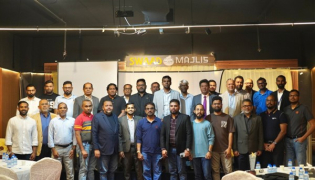
Doha: Qatar Red Crescent Society (QRCS) and the International Committee of the Red Cross (ICRC) co-held yesterday a webinar titled ‘Special Legal Protection for Medical Professionals at Times of Armed Conflict’.
The virtual event featured 83 participants from National Societies, representatives of the International Red Cross and Red Crescent Movement, Dr. Mohamed Hamad Al Asbali; Executive Director of the Islamic Committee of the International Crescent (ICIC), Eng. Ibrahim Abdullah Al Malki, CEO of QRCS and QRCS heads of mission.
In his opening speech, Secretary-General of QRCS, Ali bin Hassan Al Hammadi said the purpose of the webinar was to have a discussion, exchange views, raise issues, and propose solutions regarding the legal protection that medical and relief personnel are supposed to enjoy while performing their professional and humanitarian responsibility of helping victims of armed conflict.
“We at QRCS have lost many humanitarian providers on the ground, and many of our health facilities were rendered inoperable as a result of deliberate bombing. This is in grave breach of the principles of International Humanitarian Law (IHL), the Geneva Conventions, and their additional protocols, which stipulate the protection of all individuals, vehicles, and premises, clearly showing the Red Crescent or Red Cross emblem,” said Al Hammadi.
“While we as members of the movement practice all forms of humanitarian action both at times of conflict and peace, there is a complementary role that we have to do for the victims of armed conflicts: To ensure that they are not made victims in the first place.”
Al Hammadi said this could be done by making their voices heard. He urged the international community to intervene in their favour, forcing all warring parties in international and non-international conflicts to respect international laws and conventions and universal ethical rules, particularly the Principle of Distinction between Civilians and Combatants.
“This consultative webinar is part of QRCS’s numerous activities in humanitarian diplomacy and advocacy, through active participation in international humanitarian events, exchange of visits, and signing of agreements with different movement partners,” said Al Hammadi.
He said this webinar builds on the close historical cooperation between QRCS and ICRC, based on common mission and goals, towards integrated field relief work.
ICRC Head of Mission – Qatar, Cherine Pollini, said, “The definition of medical personnel refers to personnel assigned to the search for, collection, transportation, diagnosis, or treatment of the wounded, sick, and shipwrecked, and the prevention of disease, to the administration of medical units, or the operation or administration of medical transports.”