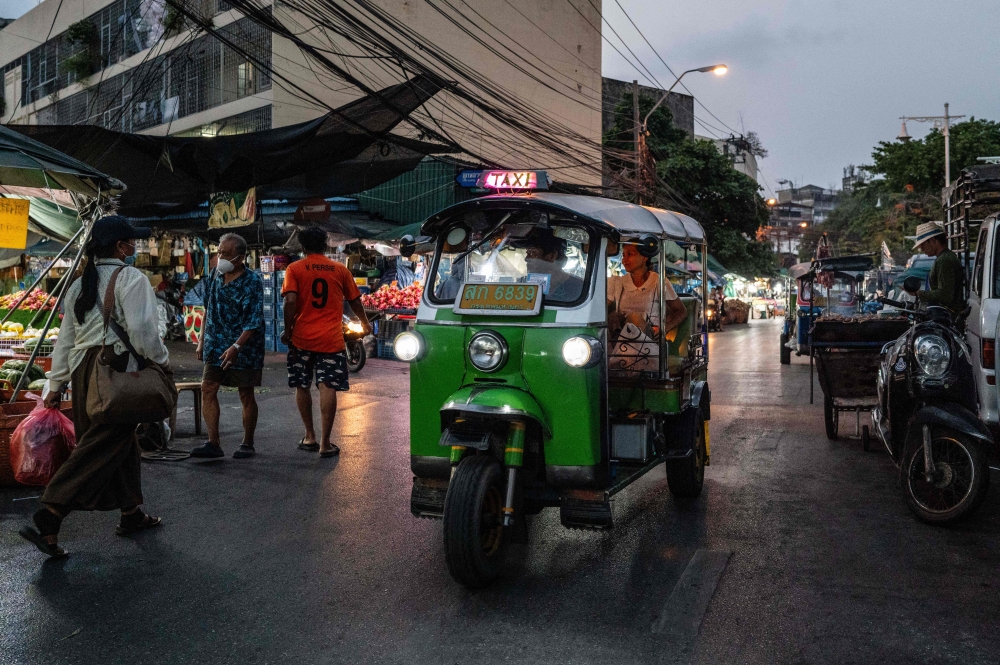
A tuk tuk drives past fruit stalls at Mahanak Market in Bangkok. (Photo by Anthony Wallace/ AFP)
Jakarta: Indonesia's parliament passed a law on Tuesday to protect the rights of domestic workers after more than two decades of deliberations and multiple delays.
The bill was first introduced in 2004 to protect the country's 4.2 million domestic workers, almost 90 percent of them women according to data from the Ministry of Manpower.
They were previously not legally classified as workers, meaning they were forced to operate in an informal and unregulated economy, exposed to exploitation and abuse.
Cheers and claps erupted from the audience as House Speaker Puan Maharani brought down the gavel during Tuesday's plenary session to indicate the law had been adopted.
"The enactment of a Law on the Protection of Domestic Workers aims to provide legal certainty for both domestic workers and employers, and to prevent all forms of discrimination, exploitation, and abuse against domestic workers," Minister of Law Supratman Andi Agtas told the plenary.
Domestic workers will now be entitled to vocational training, health and unemployment benefits.
The law also specifically prohibits the hiring of children under 18 as domestic workers -- a common practice in a country where less than a third of people complete high school.
The legislation does not quantify a minimum wage, but provides for a 12-month period to work out supporting regulations, including penalties for those who flout the law.
The Jala PRT domestic workers' rights group, which had been advocating for the law, hailed it as a "historic" moment.
"Most domestic workers are women workers who have been neglected all this time; now there is recognition and protection," Jala PRT coordinator Lita Anggraini told AFP.
But she warned "the struggle is not over" and a public education campaign would be needed to teach employers about their responsibilities.