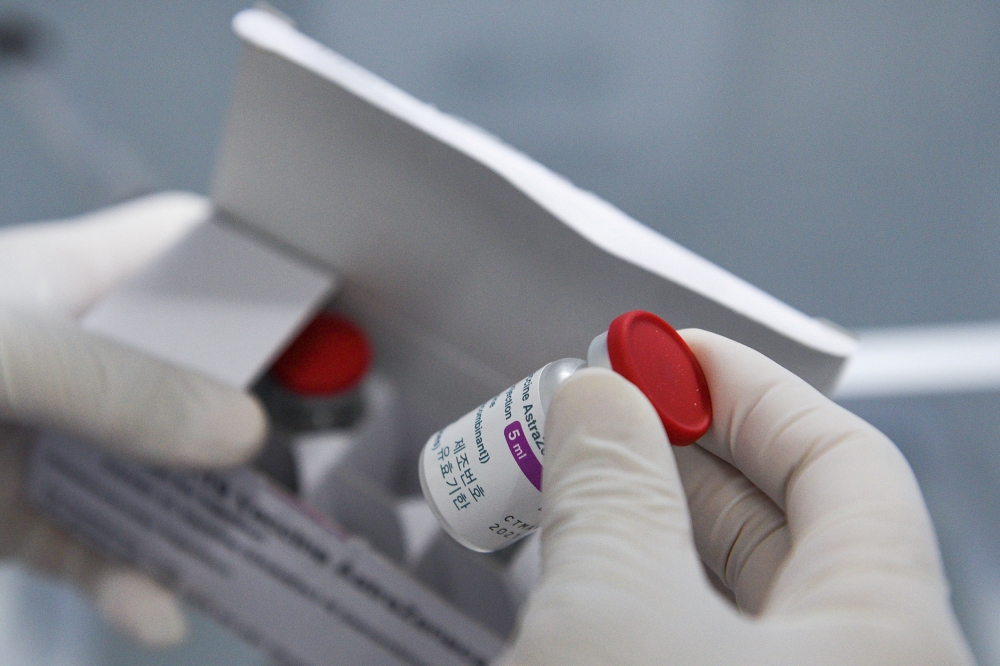
A health worker holds a vial of the vaccine as Vietnam starts its official rollout of AstraZeneca's coronavirus disease (COVID-19) vaccine for health workers, at Hai Duong Hospital for Tropical Diseases, Hai Duong province, Vietnam, March 8, 2021. REUTERS
HANOI: One million doses of AstraZeneca's COVID-19 vaccine will be transferred to Vietnam weekly starting next month to fulfil its order of 30 million doses within this year, state media reported on Tuesday.
Vietnam, which has so far received about 4.4 million doses of COVID-19 vaccines, has relied heavily on the AstraZeneca brand for its inoculation programme, which started in March.
Its vaccines have come via donations, the COVAX vaccine sharing scheme and government procurements.
"Vietnam's order of 30 million doses will be fulfilled within 2021," Vietnam News Agency reported.
The report did not state which country the AstraZeneca vaccine would come from.
The health ministry did not immediately respond to a request for comment and AstraZeneca in Britain was unable to immediately provide comment.
Vietnam's mass immunisation drive and vaccine procurement has lagged behind many countries, with only 121,681 of its 98 million people fully vaccinated so far. About 2.5 million people have received one dose.
The country has had one of the best records in Asia for containing the virus, but an outbreak since late April, its biggest so far, has hastened government efforts to shore up supplies.
Separately, Vietnam's home-grown vaccine Nanocovax has completed a phase three clinical trial on 1,000 volunteers and will continue to test 12,000 other people, the government said.