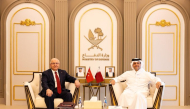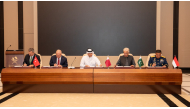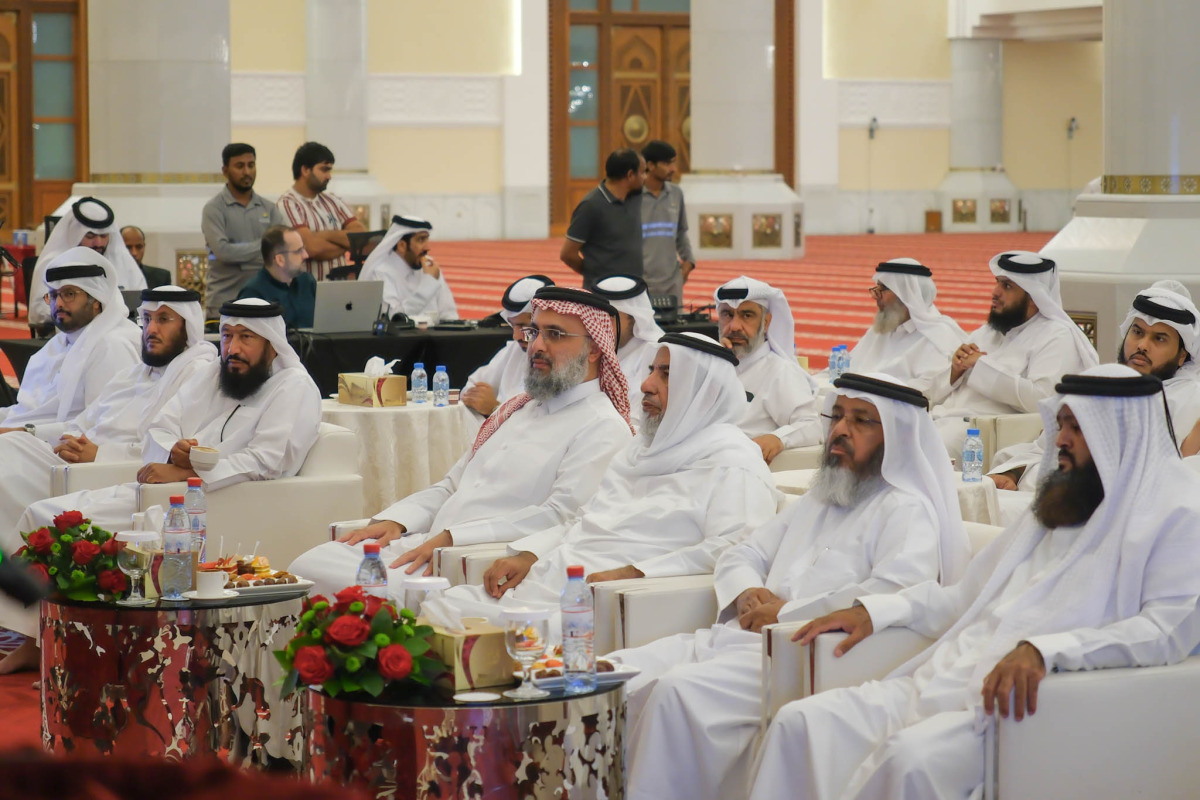
Minister of Awqaf and Islamic Affairs H E Ghanem bin Shahin bin Ghanem Al Ghanim with other officials during the event.
Doha, Qatar: The Ministry of Awqaf and Islamic Affairs has launched the fifth cultural season of its intellectual initiative, ‘Ummah Forum’, emphasising the integration of science and faith as a foundation for building civilisation, advancing knowledge and guiding human development.
Held at Imam Muhammad bin Abdul Wahhab Mosque, the opening event was attended by Minister of Awqaf and Islamic Affairs H E Ghanem bin Shahin bin Ghanem Al Ghanim, alongside researchers, academics, preachers and cultural figures.
The season, held under the theme “Science and Faith: Foundations of Building and Pillars of Advancement”, opened with a seminar titled “Methodological Foundations for Integrating Science and Faith in Islamic Thought”, featuring specialists who examined the relationship between revelation, reason and scientific knowledge.
The initiative aligns with the ministry’s 2025-2030 strategy to develop human capital, strengthen intellectual awareness and reinforce the Islamic identity of society. It also supports Qatar National Vision 2030, which emphasises building a knowledge-based society grounded in innovation, values and sustainable development.
In his opening address, Director of the Department of Islamic Research and Studies Sheikh Dr. Ahmed bin Mohammed bin Ghanem Al Thani said Ummah Forum had established itself as a sustainable intellectual project and a well-established knowledge platform for promoting sound awareness and addressing contemporary issues.
He said the choice of science and faith as the theme reflected the need for a balanced intellectual approach that views them not as opposing paths, but as complementary foundations for civilisational progress and human advancement.
Sheikh Dr. Ahmed added that the opening seminar sought to move the discussion beyond theory towards an integrated knowledge framework capable of generating awareness, supporting development and addressing contemporary intellectual challenges. Islamic thought, he said, possesses the foundations needed to reconcile the guidance of revelation with modern developments while encouraging renewal and innovation. Over its four previous seasons, Ummah Forum has brought together 48 researchers, academics and specialists for 16 scientific seminars addressing major intellectual, cultural and civilisational issues. The initiative has also produced three publications: “Cultural Environments”, “Our Values: The Pillar of Civilisation and the Path to Advancement”, and “Collective Obligations as a Path to Reform”.
Its success has paved the way for related initiatives, including the Knowledge Integration Forum and the “In Clear Arabic” Forum, broadening opportunities for academic discussion and research into contemporary challenges.
The opening seminar featured three main presentations examining different aspects of the relationship between science and faith.
In the first session, titled “The Quran and Sunnah: Establishing Principles and Foundations for Advancement”, Mohamed Jassim Al Jassim, faculty member at Qatar University’s College of Sharia and Islamic Studies, presented a paper on “Proof, Divine Laws and Reflection: A Quranic Methodology for Integrating Science and Faith”.
He outlined a framework built on three concepts: proof, understanding the laws governing phenomena, and reflection.