BY MOHAMMAD SHOEB
DOHA: Qatar-US bilateral trade in goods has jumped five-fold over the last one decade to reach nearly $7bn (about QR25.5bn) in 2014 from $1.4bn (QR5bn) in 2005, said visiting US Undersecretary of Commerce for International Trade yesterday.
US exports to Qatar in 2014 stood at $5.17bn while its imports from Qatar remained at $1.66bn, with a trade balance of $3.52bn, which was evidently in favour of the US.
However, the two-way trade between Qatar and the US during the first two months of 2015 has crossed over $1bn mark. According to the latest figures available, the US exports to Qatar (during January and February, 2015) was $818.5m, while imports stood at $232.4m, with a trade balance of $586.1m.
The world’s largest economy is Qatar’s largest destination of imports and both countries are trying to further deepen and strengthen economic ties.
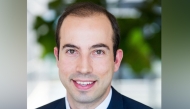
“My visit to Qatar focused on two themes. One, to underscore the importance of these commercial relationships, and two, how we can further build upon the incredible growth we have seen to create an engine of more trade and investment,” said Stefan Selig, and added “US has earned the designation of being Qatar’s number one source of imports”.
Speaking at a round table conference to the local media, Selig said: “Our relationship with Qatar is very strong and important with a lot of dimensions, including commercial, strategic and military.”
He said that Qatar’s foreign direct investment (FDI) in US was about $3.2bn in 2014. However, he said that this number may be even higher as there a lot of investments from private business. He said that given the social and political turmoil in the region “our relations with Qatar have become extraordinarily important”.
Commenting on a possible Free Trade Agreement (FTA) with the GCC, including Qatar, (which is on hold since long time), he added that there was no discussion on the issue with Qatari officials. “Currently we are focused to have FTA with about 12 Asian countries, including Japan, Vietnam and Malaysia to for a Trans Pacific Partnership (TPP).”
He said that during his visit to Qatar he held meetings with several government and private business leaders, including Saad Sherida Al Kaabi, Managing Director of Qatar Petroleum (QP); Under Secretary of at the Ministry of Finance; and Hassan Al Thawadi, Secretary-General of the Supreme Committee for Delivery and Legacy.
Asked if any agreements were singed, he said: “No agreements were signed as the key purpose of my visit was to begin relationships with the important members of the business community and government officials.”
Selig, with about three decades of business experience in leading several top US companies, was on a three-country visit to build longer term business relationships in order to be effective in implementing US policies in Qatar and the region.
He said Qatar’s economic diversification initiative has created a lot of opportunities for cooperation with the US across sectors, including IT, infrastructure development, machinery and equipment, healthcare, education and the SMEs sector.
About the possible impact of volatile oil prices on bilateral economic relations, he said: “The oil prices are going to affect the world, including countries in the region, but Qatar, Kuwait and the UAE, our major trading partners in the region, assured me during my visit that their investment decisions will not change in 2015.”
The Peninsula
DOHA: Qatar’s ‘Golden Pass LNG Terminal in Texas (US) can now be used to distribute gas to other countries in the region, said the visiting US Undersecretary of Commerce for International Trade yesterday.
As the US has become self-reliant in terms of its energy requirements due to the shale gas revolution, the world’s largest energy consumer now no longer requires Qatari gas for domestic consumption as it has also become the world’s largest producer of energy and soon going to be net exporter.
Golden Pass LNG is a joint venture of Qatar Petroleum (70 percent), ExxonMobil (17.6 percent) and ConocoPhillips (12.4 percent). The facility is reportedly facing some legal wrangles in the US.
“As you know the energy profile in the US has changed and soon it is going to be the net exporter of energy for the first time, the terminal can now be used to export gas to some other countries in the region,” said Stefan Selig.
However, he did not provide the details about his meeting with Saad Sherida Al Kaabi, Managing Director of Qatar Petroleum (QP), which owns the majority stake in the terminal.
The Peninsula