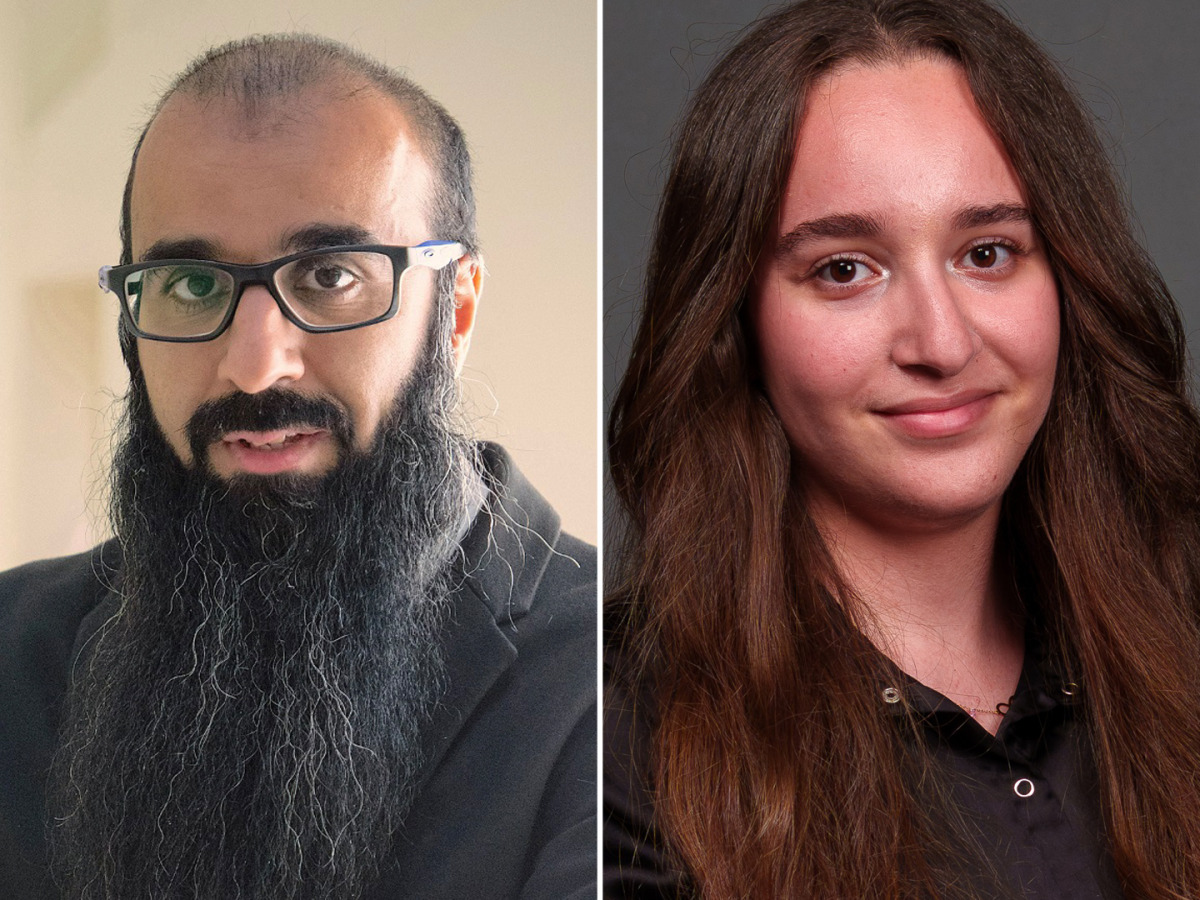
Dr. Arfan Ahmed (left) and Dounia Baroudi, a first-year medical student at WCM-Q
Doha, Qatar: A Weill Cornell Medicine-Qatar (WCM-Q) medical student and an alumna have presented research exploring the potential of artificial intelligence and wearable technology to support early detection of cardiac abnormalities outside the hospital setting.
Dounia Baroudi and Dr. Amal Alnaemi presented their short research paper, WearAware: A Wearable-Based Early Warning Framework for Out-of-Hospital Cardiac Risk Monitoring, at the 24th International Conference on Informatics, Management, and Technology in Healthcare (ICIMTH), held in Athens, Greece.
Baroudi is currently a first-year medical student, while Dr. Alnaemi graduated in May 2026. The project began as a challenge set by Dr. Arfan Ahmed, assistant professor of research in population health sciences and director of wearable AI for precision health, as part of a hackathon organised by the WCM-Q AI Center for Precision Health in 2025.
Following the hackathon, Dr. Ahmed mentored the pair as they developed the initial concept into a research project and then a peer-reviewed conference paper.
Dr. Ahmed said: “Empowering and mentoring the next generation is one of our core philosophies at the AI Center, and this project shows why it matters. AI has changed the landscape completely. What once required in-depth coding and computer science expertise no longer does, and we now have medical students here in Qatar building their own AI models. With their clinical domain knowledge and sheer motivation, they are often the ones best placed to push the boundaries. Seeing Dounia and Amal break through these glass ceilings and carry their idea all the way to an international peer-reviewed publication makes me immensely proud, and tells me we are ahead of the game.”
The paper notes that cardiovascular disease remains a major cause of illness and death, with many cardiac events occurring outside healthcare settings where monitoring and access to care is limited. Combining wearable technologies with AI-assisted analysis could help detect relevant cardiovascular signals earlier in out-of-hospital settings, giving the wearer advance warning that they should seek medical care and improving overall cardiovascular risk management.
The WearAware system combines a smart patch, clinician portal, and AI alerts for continuous remote cardiac monitoring. Initial ECG testing showed 82.7 percent accuracy of the system. Baroudi said: “Working on WearAware showed me how an idea that begins during a hackathon can develop into something much more meaningful through research, collaboration and mentorship. Presenting our work internationally in Athens was a rewarding opportunity to share what we had learned and to see how our project could contribute to the wider conversation around AI and digital health.”