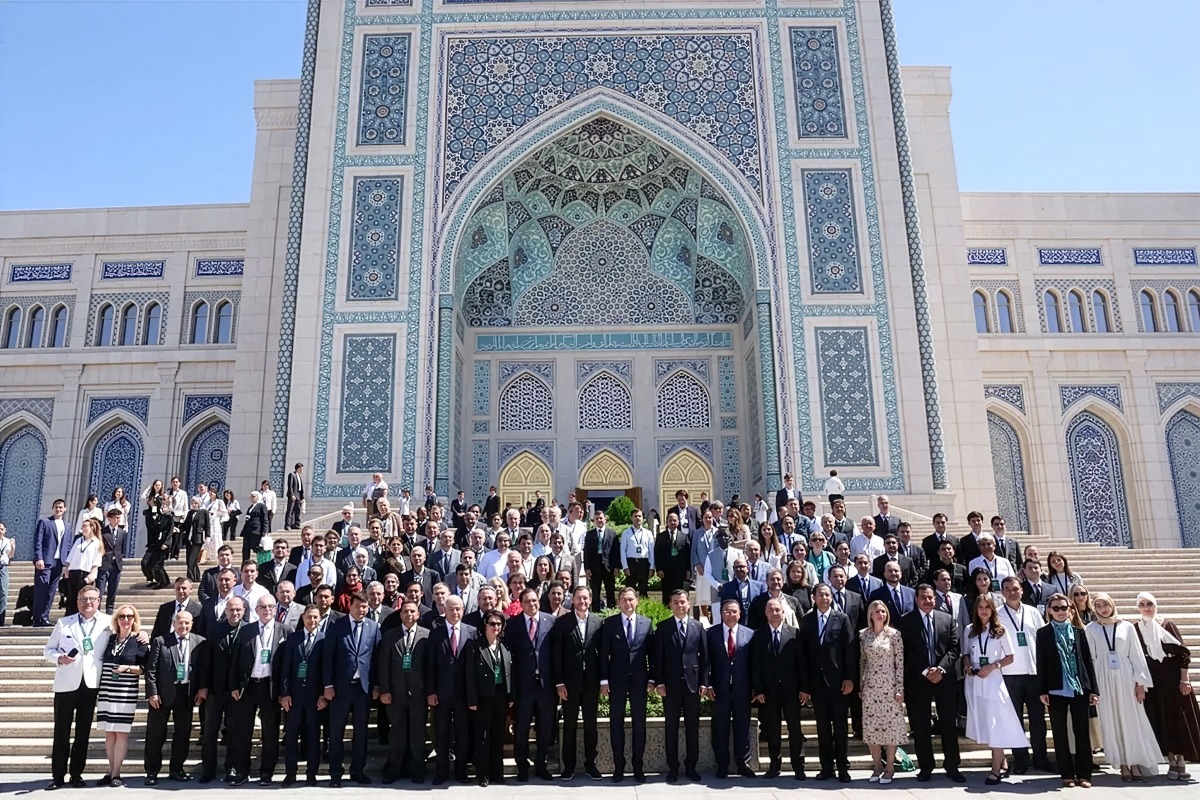
A group photo of participants of the International Media Forum, in Tashkent, Uzbekistan.
TASHKENT, Uzbekistan: An International Media Forum on Islamic civilization brought journalists, filmmakers, academics and digital media specialists together in Tashknet, Uzbekistan for a programme combining professional exchanges, creative workshops and an extensive introduction to the country's Islamic and intellectual heritage.
The International Media Forum, titled “Islamic Civilization: A New Perspective, New Discoveries,” which will officially open here in Tashkent on Tuesday, August 25, started on Monday with activities designed to examine how centuries of history and scholarship can be communicated to modern audiences through journalism, television, documentary filmmaking and emerging digital technologies.
The First-day programme included a series of exclusive creative meetings with prominent practitioners in documentary filmmaking, television, contemporary media and digital technologies and print media journalists. The gathering has drawn representatives of international and national media organisations, alongside scholars and specialists working in history, cultural heritage, filmmaking, publishing and digital communication.
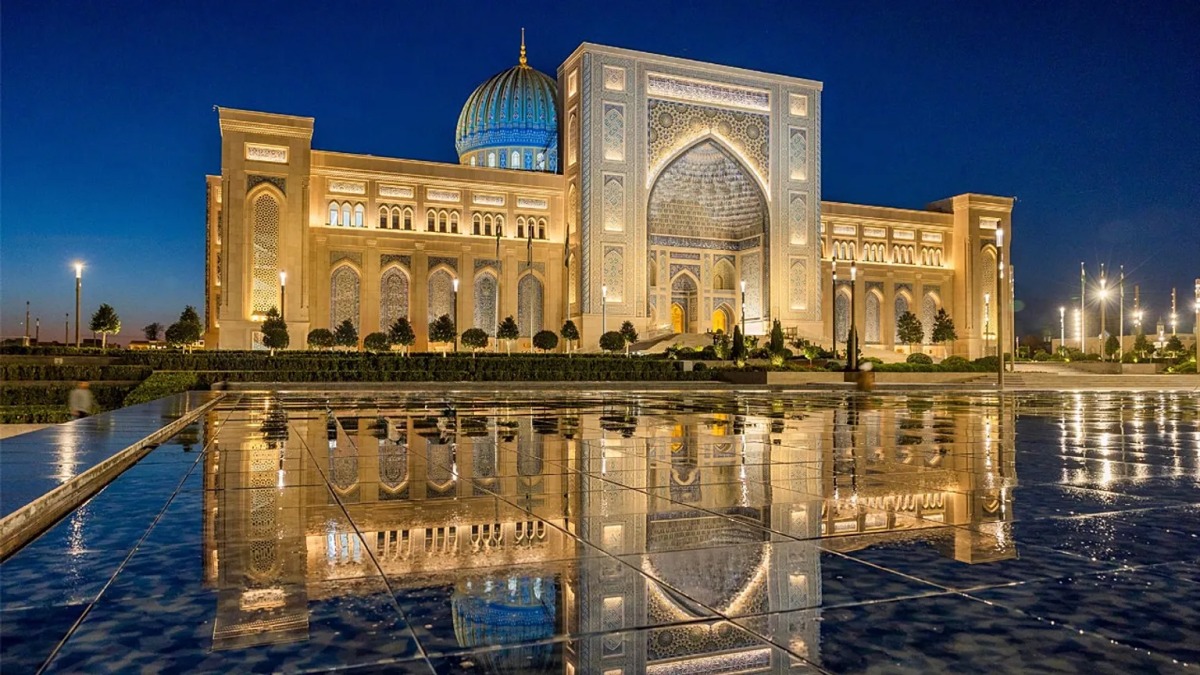
A press briefing was also held at the conference hall of the library of the Center of Islamic Civilization in Uzbekistan, where participants were briefed on the objectives of the forum and its broader emphasis on international media cooperation.
For Uzbekistan, the forum also provides an opportunity to bring greater international attention to Central Asia's contribution to Islamic civilization and to the scientific and intellectual traditions that developed in the region.
A major part of the first day's programme was devoted to the Center of Islamic Civilization in Uzbekistan, where delegates toured exhibitions and collections documenting centuries of religious, scientific and cultural development.
The Center stands near the historic Hazrati Imam complex in Tashkent and was established as a major scientific, educational and cultural institution devoted to researching and presenting Uzbekistan's heritage.
The monumental three-storey complex occupies about 10 hectares, with a central dome rising 65 metres. Its exhibition spaces trace the region's history from the pre-Islamic period through the major periods of scientific and cultural flourishing and into contemporary Uzbekistan.
For visiting journalists, the tour offered more than an introduction to a new museum. It provided historical context for one of the forum's central themes, Central Asia's place in the development and transmission of knowledge across the Islamic world.
The Center brings manuscripts, archaeological discoveries, historical artefacts and multimedia installations together to illustrate the region's role as an important centre of scholarship, science, culture and intellectual exchange.
Its galleries highlight the work and legacy of scholars associated with Central Asia and the wider Islamic world, while interactive exhibits explore achievements in fields including mathematics, astronomy and medicine.
Modern technology is integrated throughout the museum. Digital displays, immersive installations, artificial intelligence, augmented and virtual reality, 3D technologies and interactive screens are used to present historical material to visitors in contemporary formats.
The approach closely reflects the wider purpose of the media forum: connecting historical scholarship with the storytelling tools now shaping how audiences consume information.
At the heart of the Center is one of Uzbekistan's most significant pieces of documentary heritage, the Uthman Qur'an, also known as the Mushaf of Uthman.
The manuscript is preserved in a dedicated Qur'an Hall beneath the Center's 65-metre dome and is regarded as one of the oldest surviving Qur'anic manuscripts. UNESCO placed the Holy Koran Mushaf of Othman on its Memory of the World Register in 1997.
The manuscript consists of hundreds of parchment folios written in Kufic script and forms the conceptual and architectural centrepiece of the museum's collection. Other rare Qur'anic manuscripts representing different periods of Central Asian Islamic history are displayed around it.
For delegates, the Qur'an Hall demonstrated how the Center combines the preservation of fragile historical material with museum technologies intended to make its significance understandable to international audiences.
The wider complex also includes research facilities, extensive manuscript and publication holdings and spaces devoted to digitisation, conservation and restoration. Government information on the institution says its library holds more than 2,500 manuscripts and lithographs, about 40,000 printed publications and more than 350,000 electronic materials.
The Center is also displaying artefacts and manuscripts returned to Uzbekistan from abroad, alongside material illustrating different stages in the region's historical development.
The first day's activities repeatedly returned to the relationship between historical knowledge and contemporary communication.
The creative meetings at universities in Tashkent and Samarkand placed documentary filmmaking, television and digital technology alongside traditional journalism, reflecting the changing ways in which cultural and historical stories now reach international audiences.
For documentary producers, heritage institutions provide both historical material and visual narratives. For journalists, they present a different challenge: translating specialist scholarship into accessible reporting while maintaining accuracy and context. Digital technologies add another dimension by allowing manuscripts, historical personalities and archaeological material to be presented through immersive and interactive experiences.
Visitors can move from original manuscripts and artefacts to digital reconstructions and interactive installations. The institution also employs technologies including artificial intelligence and virtual and augmented reality to help audiences explore historical subjects.
That combination of preservation and innovation has become an important part of Uzbekistan's effort to position its historical heritage within a broader international cultural conversation.
Central Asia was home to influential scholars whose work contributed to advances in mathematics, astronomy, medicine, philosophy, theology and other disciplines. Yet the region's role in the wider history of knowledge remains comparatively unfamiliar to many international audiences.
The forum is seeking to narrow that gap by bringing together the researchers who study the historical record and the media professionals capable of carrying those stories to audiences beyond the region.
The first day's programme established the forum as more than a conventional conference.
By combining press briefings and professional discussions with university-based creative meetings and direct access to historical collections, organisers are seeking to encourage practical cooperation among journalists, filmmakers, scholars and digital media specialists.
The initiative comes as Uzbekistan expands investment in preserving, digitising and internationally promoting its cultural heritage.
The Center of Islamic Civilization, whose establishment was initiated by President Shavkat Mirziyoyev in 2017, is central to that effort. It was conceived as a platform bringing together historical research, education and modern technologies to present the country's contribution to world civilization.
Its March opening marked the completion of nearly eight years of work on the complex. By June 1, according to Uzbek government figures, the Center had already received about half a million domestic and international visitors.
For the international journalists attending this week's forum, however, the emphasis is not simply on viewing the country's heritage but on considering how that heritage can be reported, filmed and interpreted for audiences elsewhere.
Monday's activities provided the foundation for those discussions, moving from creative exchanges with media practitioners to first-hand encounters with manuscripts and artefacts representing centuries of intellectual and cultural history.
As the forum continues, attention is expected to turn increasingly towards international collaboration and the development of media, documentary, publishing and digital projects capable of taking those stories to a wider audience.
In that respect, the message emerging from the first day was clear: preserving the past is only one part of the task. Finding credible, innovative and compelling ways to communicate it to the present is becoming equally important.