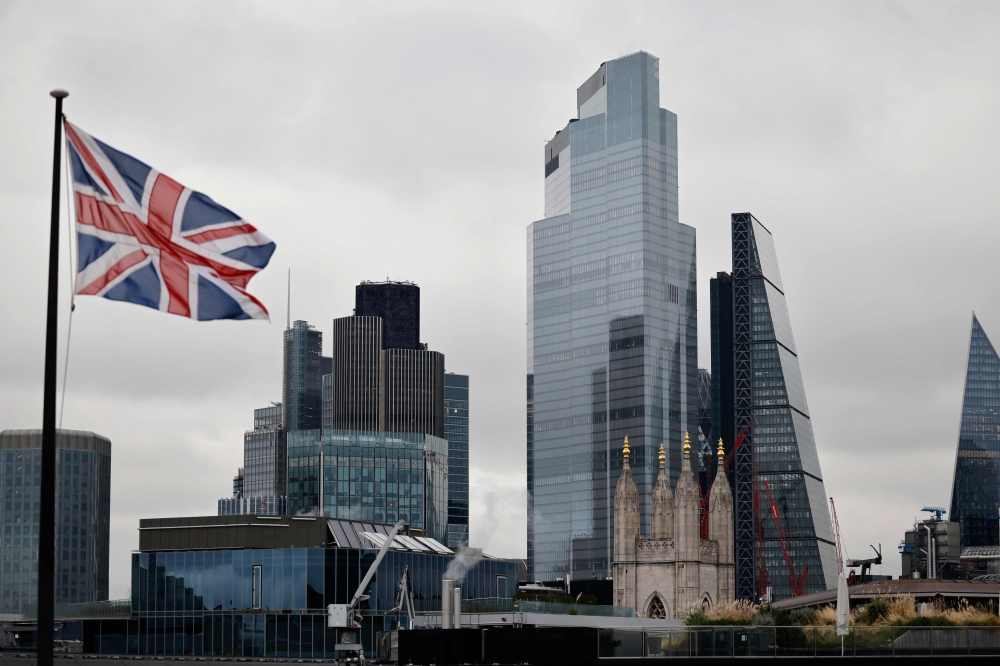
A Union Flag flutters in the wind near office buildings in the City of London in London on November 25, 2020. / AFP / Tolga Akmen
London - Britain's government on Wednesday unveiled plans to slash the foreign aid budget to help mend its coronavirus-battered finances, prompting one minister to quit and defying impassioned calls to protect the world's poorest people.
Finance minister Rishi Sunak said he would no longer meet the government's legally enshrined commitment to spend 0.7 percent of gross national income on the UK's overseas aid, which came to £15 billion ($20 billion) last year.
The intended cut to 0.5 percent of GNI, which is a broader measure than gross domestic product, would mean Britain is no longer the only G7 member to meet the target, and contradicts promises made last week by Foreign Secretary Dominic Raab to protect aid.
Sunak told parliament that he had "listened respectfully" to vocal criticism of his plan "but at a time of unprecedented crisis, government must take tough choices".
The aid budget would return to 0.7 percent of national income "when the fiscal situation allows", he said.
The cut will deprive millions around the world of healthcare and education just as Britain takes over the G7 presidency and prepares to chair UN climate talks next year, according to campaigners, former prime ministers and some mutinous Conservative MPs.
Liz Sugg resigned from her post as a junior minister in the foreign ministry and as the government's special envoy for girls' education, arguing the plan was "fundamentally wrong".
"This promise should be kept in the tough times as well as the good," she wrote in her resignation letter to Prime Minister Boris Johnson, as a slew of aid charities cried foul.
The leader of the world's Anglican communion, Archbishop of Canterbury Justin Welby, called the cut "shameful and wrong" and said it was "made worse by no set date for restoration".
"Cutting the aid budget during a global pandemic is like closing fire stations during a heatwave," said Patrick Watt, director of policy at Christian Aid.
"These are tough times and the government has tough decisions to make, but balancing the books on the backs of the poor isn't the way to do it," he added.
Johnson last week announced Britain's biggest programme of military investment since the end of the Cold War with extra spending of £16.5 billion, as the country positions itself for life outside the European Union.
But he pointed Wednesday to other UK spending on overseas assistance, including its involvement in research and future not-for-profit distribution of a vaccine against Covid-19.
"This country can be incredibly proud of what we have delivered for the poorest and neediest people in the world," Johnson told parliament. "That will continue."