By Satish Kanady
DOHA: High public investment will continue to underpin Qatari economic growth specially in the non-hydrocarbon sector. Coupled with output gains in the hydrocarbon sector related to the launch of the Barzan gas production facility in 2016, economic activity is expected to remain rather buoyant with a projected 3.9 percent growth in 2016-2017.
“With strong fiscal and external buffers, including its sovereign wealth fund, Qatar is better placed than most of its peers to negotiate the current energy downturn-a fact that was reflected in the AA credit rating status recently affirmed by rating agencies such as Standard & Poor’s and Moody’s”, NBK’s “Mena economic outlook-3Q 2016” noted yesterday.
The government’s $200bn development plan remains the lynchpin of Qatar’s economic growth. Investment spending on a range of public projects will continue to facilitate the expansion of the non-oil economy and provide employment for Qatar’s expanding population. Real non-oil growth is forecast to clock in at 6.3 percent and 6.4 percent in 2016 and 2017, respectively. This will continue to be supported by gains in the construction, financial services, manufacturing and tourism sectors.
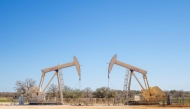
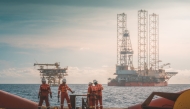
Qatar’s hydrocarbon sector output, having plateaued with the attainment of maximum LNG capacity in 2012, is expected to receive a boost from the commissioning of the Barzan gas production facility this year. Barzan should reach its full production capacity of 1.4 billion cubic feet per day (bcf/d) in 2017. It should also supply additional volumes of condensates and natural gas liquids (NGLS) for export and to the country’s refineries-including the upcoming Ras Laffan 2 refinery. The country’s real hydrocarbon GDP is forecast to grow by 1.3 percent in 2016.
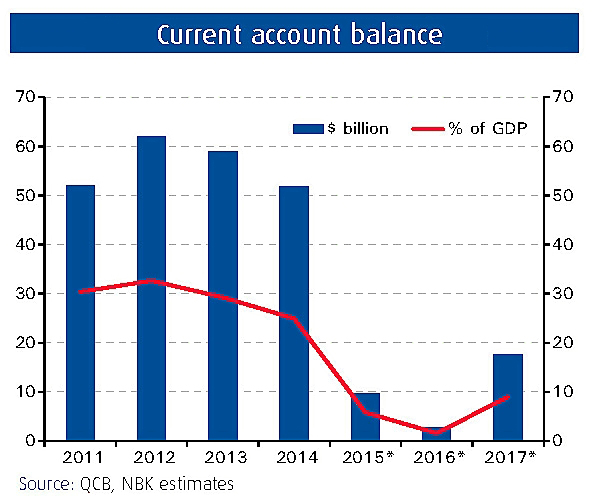
However, with hydrocarbon revenues impacted by the collapse in oil and gas prices and elevated capital expenditures, Qatar is likely to record its first fiscal deficit since 1999 this year, equivalent to -2.3 percent of GDP. Similarly, the current account surplus is forecast to narrow to a 16-year low of 3.2 percent of GDP in 2016 before rising next year in line with a further recovery in oil prices.
The fiscal deficit expected this year comes despite a concerted effort by the authorities to rationalise expenditures by restraining current spending and scaling back non-essential capital spending. According to NBK report, the government has proceeded to reform the state’s finances; introducing a QR600bn ($165bn) spending cap on new investment projects for 10 years, creating a macro-fiscal unit and public investment management department.
With an estimated $36bn in international reserves and an estimated $256bn under management by the QIA, Qatar’s fiscal buffers are sufficient for the time being to finance the deficit.
Qatari authorities have already indicated that any deficits would be financed exclusively through borrowing rather than reserve drawdowns. In addition to at least $7.5bn in domestic bonds and sukuk issued since September 2015 and a syndicated loan of $5bn secured earlier in the year, a triple-tranhce US dollar-denominated bond sale of around $9bn is expected shortly. This is expected to raise public debt from a low of 30 percent of GDP in 2014 to potentially over 50 percent of GDP by year’s end.
The Peninsula