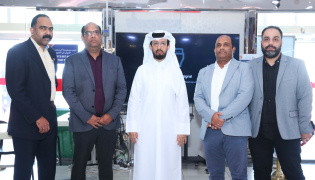
DOHA: The Doha International Family Institute (DIFI), previously known as Doha International Institute for Family Studies and Development (DIIFSD), will be hosting an expert group meeting (EGM) to discuss policies and measures on protecting the Arab family from poverty through employment, social integration and intergenerational solidarity.
Fourteen high profile experts from around the region will convene on June 2 and June 3 in Doha in preparations for the 20th anniversary of the International Year of the Family in 2014.
The panel will undertake a comprehensive review of what has been achieved in the Mena region in terms of addressing family poverty, ensuring work-family balance, advancing social integration and promoting intergenerational solidarity.
They will also highlight challenges and success, which differ from one country to another in the region, explore best practices, review policies and put forth recommendations that will be incorporated in the 2013-2014 Report of the Secretary-General in line with the 20th anniversary of the International Year of the Family (IYF). The year 1994 was proclaimed the IYF by the United Nations General Assembly.
Despite steady economic progress in some countries in the Arab world in recent decades, social exclusion, unemployment, income poverty and more importantly human poverty, which stems from deprivation of opportunities and capabilities, remain as threats in many parts of the region.
The Arab Development Challenges Report 2011 edition, produced by the United Nations Development Programme (UNDP), states that the Arab region as a whole, and most Arab countries individually, show a lower level of human development than desired. It notes that 50 percent of the Arab population is rural, while agriculture, their primary economic activity, accounts for no more than 15 percent of Arab GDP.
The Executive Director of DIFI, Noor Al Malki Al Jehani, said: “The social integration of families living in poverty should encompass meeting their basic human needs, including nutrition, health, water and sanitation, housing and access to education and employment. Ensuring access to decent work and opportunities is a key component of social integration as it provides a path way out of poverty and creates opportunities for marginalised groups including the young, the elderly, women and persons with disabilities.
“Furthermore, in this time of socio economic changes and political turmoil, many families in the Arab world are struggling to maintain the intergenerational bonds that have sustained them in the past. Factors such as youth migration, and population aging in rural communities only add to the problem,” Al Jehani said.
The Peninsula