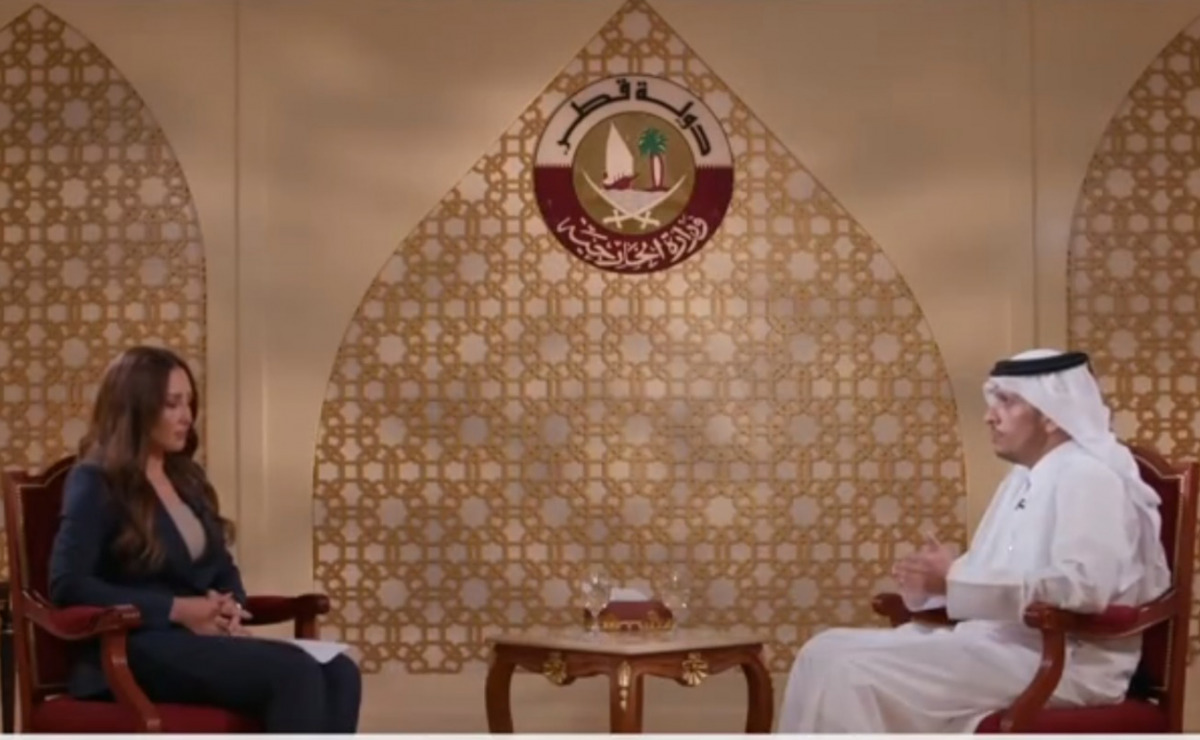
Doha: Qatar's ties with US institutions have always been positive, strong, and strategic regardless of the administration, the Deputy Prime Minister and Minister of Foreign Affairs HE Sheikh Mohammed bin Abdulrahman Al-Thani said in an interview with Al Araby TV, where he discussed a number of GCC and regional issues.
His Excellency said that every US president had a different policy with different roles in the Middle-East, noting that Qatar played the role it could in establishing security and peace in the region. He cited Qatar's efforts to de-escalate tensions between Iran and the United States during Donald Trump's administration, in addition to its efforts in Iraq and the peace talks between Taliban and the US, which yielded a peace agreement under the Biden administration.
His Excellency noted that there is a change in US policy that is more receptive of holding a dialogue with Iran, adding that Qatar's welcomes a solution to Iran's nuclear issue that sees a return to the agreement reached between the parties. His Excellency also said that Qatar sees that the GCC must play a role in the regional security calculations with Iran, stressing that this will not happen except through a regional dialogue between GCC members and Iran to address the former's concerns. His Excellency added that Iran for its part certainly has concerns it wants to share with the GCC, noting that HH the Amir called at his 2015 speech at the UN for such a dialogue.
“Qatar is willing to offer all it can to help achieve stability in the region, noting that the country enjoys good ties with all parties involved and is known for mediating between different parties, something that His Excellency said the State of Qatar is willing to do with the United States and other friendly countries to establish stability.”
His Excellency said that both sides involved in a conflict must accept the mediator for the latter's efforts to succeed. His Excellency said that the State of Qatar's duty is to provide support to both the US and Iran, and encouraging them to try and reach a solution. His Excellency noted that Qatar was only asked official to deliver message to the Iranian side calling on them to adhere to the negotiations and try to reach a resolution as quick as possible. His Excellency said that Iran and the United States communicate constantly through messages delivered by the State of Qatar and other parties such as the European Union.
In response to a question about whether there are any future steps or a Qatari role to solve the Yemeni issue, His Excellency that there was now a UN Envoy to Yemen and that the State of Qatar's current role is to provide humanitarian aid to the Yemeni people. His Excellency said that the State of Qatar's view on the subject is to adhere to UN resolutions related to the matter and to the outcomes of the national dialogue. His Excellency called for ending the war as quickly as possible, noting that there were some parties and countries working towards that end. His Excellency said that the State of Qatar was not asked to help, but would not hesitate to do so if it were to be asked. His Excellency also said that the State of Qatar viewed Saudi Arabia's ceasefire initiative positively, but expressed regret that there was no response to it.
On the visit of HH the Amir Sheikh Tamim bin Hamad Al-Thani to the Kingdom of Saudi Arabia and the state of bilateral relations, HE the Deputy Prime Minister and Minister of Foreign Affairs said that Al-Ula declaration and its outcomes ended a difficult period for the GCC, saying the State of Qatar engaged positively following the summit. His Excellency added that the State of Qatar has worked continuously and diligently since then to rebuild trust, rebuilding the relationship and framing it in the fraternal framework that it is supposed to be. His Excellency said that there is a positive vision by both the Qatari and the Saudi leadership that the two countries will overcome these differences and work to strengthen relations in the future. HE the Deputy Prime Minister also said that the visit of HH the Amir to the Kingdom of Saudi Arabia came following an invitation form the Custodian of the Two Holy Mosques, adding that there was talks on bilateral economic cooperation and enhancing the historic bilateral relations between the two countries. His Excellency acknowledged that the GCC crisis over the past four years was difficult, but maintained that all sides want to benefit from as lessons learned and work towards the future.
Concerning communication with officials in the United Arab Emirates, and whether there were any new requests submitted to the Qatari side from Abu Dhabi, His Excellency said that there were no new requests. His Excellency highlighted that the outcomes of Al-Ula declaration stated that each party involved will work on resolving their concerns in a bilateral manner, saying it was normal that different countries would more to resolve their differences at different rates. His Excellency said that the State of Qatar held a number of meetings with the UAE following Al-Ula declaration, adding that the Qatari side felt a positive vision to overcome the differences. His Excellency said the last of those meetings took place two or three weeks ago, adding that he is in contact with officials in the UAE. His Excellency maintained that overcoming the current difficult period will require some time, adding that the State of Qatar realizes that the process is difficult for everyone involved, whether the governments or the people.
On whether the State of Qatar has obtained guarantees so that the differences do not re-emerge or to avoid the blockade people were subjected to, His Excellency said that no country can get guarantees from another one. His Excellency said that based on what they have experienced with the Kingdom of Saudi Arabia so far, joint work and enhancing bilateral relations is the biggest guarantee against differences in the future. His Excellency said that there must be continuous communication without interruption similar to that which took place in the GCC crisis, if all countries involved are to avoid crises in the future, stressing that this was the State of Qatar's belief and that of the other countries based on the interactions so far. His Excellency added that Qatar believes the GCC must be strengthened as an institution by creating a mechanism to resolve conflicts, noting that the late Amir of Kuwait Sheikh Sabah proposed that initiative in 2017.
On the legal measures taken during the GCC crisis, His Excellency said that the parties involved have agreed on a mechanism to put an end to these measures.