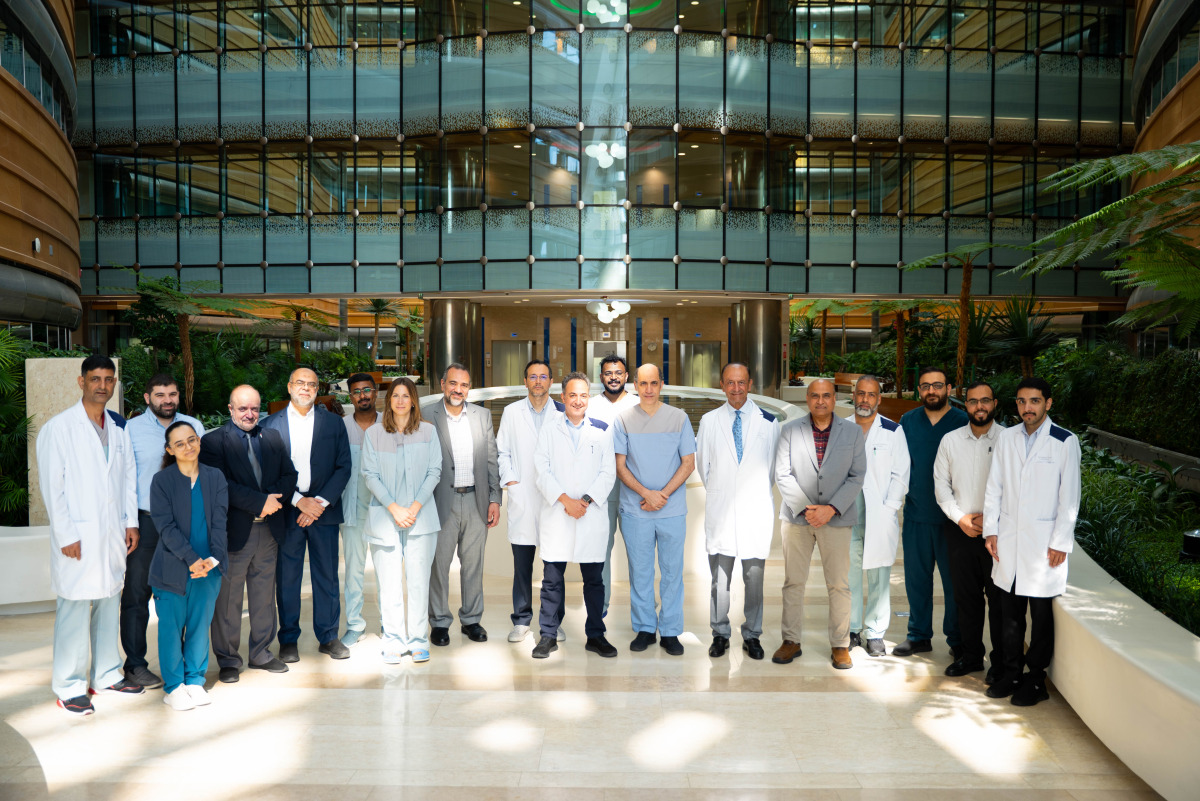
Sidra Medicine healthcare experts and officials.
Doha, Qatar: In recognition of World Heart Day, Sidra Medicine is highlighting a recent milestone in complex congenital heart surgery following the successful treatment of three-year-old Dana, who was born with an exceptionally complex heart condition.
Dana was referred to Sidra Medicine with a congenital heart condition that required the cardiac team to consider two possible surgical approaches: a univentricular repair or a biventricular repair.
While a univentricular approach would have been technically less demanding, the multidisciplinary cardiology team determined that a biventricular repair could offer Dana the potential for a better long-term outcome and quality of life. The procedure, however, was considerably more complex and required careful planning to protect her heart’s electrical conduction system.
The conduction system is the network of specialised tissue that controls the heartbeat. Injury to this delicate system during surgery can cause complete heart block. In such cases, a patient may require a pacemaker and potentially further procedures to replace the device and its leads over their lifetime.
To reduce this risk, Sidra Medicine’s cardiac team used intraoperative conduction system mapping during Dana’s surgery.
Senior Attending Physician from the Cardiovascular Surgery Division at Sidra Medicine, Dr. Husnu Firat Altin said: “Dana’s condition required us to balance the complexity of the surgery with what could give her the best possible outcome in the long term. Protecting the heart’s conduction system was one of the most critical aspects of the procedure. By mapping the conduction tissue during surgery, we were able to identify the areas that needed to be protected and plan the repair accordingly.”
During the operation, the team mapped the conduction system from inside Dana’s heart.
Cardiovascular surgeons then used the information to guide the placement of patches and closure of intracardiac defects while avoiding critical conduction tissue.
Division Chief of Division Chief of Cardiovascular and Thoracic Surgery at Sidra Medicine, Dr. Olivier Ghez said: “For children with complex congenital heart conditions, success is not only about completing the operation. We also consider how the decisions we make today may affect the child years into the future. Dana’s surgery represents an important advancement in the use of intraoperative conduction system mapping for this type of complex congenital heart procedure in the region. Our team continues to excel in the field through pioneering and innovative techniques to support better long-term outcomes for our patients.”
Dana recovered faster than initially anticipated. She completed the intensive care phase sooner than expected and was discharged from the hospital ahead of the projected timeline. Follow-up assessments showed an excellent surgical result, with a normal and stable heart rhythm and no evidence of injury to the conduction system.
Dana’s Father said: “Dana was only a month old when we learned that she had a heart condition and needed surgery. She underwent her first operation while she was still a month old, which was an important step toward preparing her for the second surgery. The years leading up to it were filled with fear and anxiety for our family, but thanks to the doctors and care team at Sidra Medicine, the surgery was successful and we have seen a remarkable improvement in her condition.”
Dana’s case reflects Sidra Medicine’s growing capabilities in complex congenital heart surgery and surgical electrophysiology. The hospital continues to invest in advanced technologies and clinical expertise to support children with challenging heart conditions.