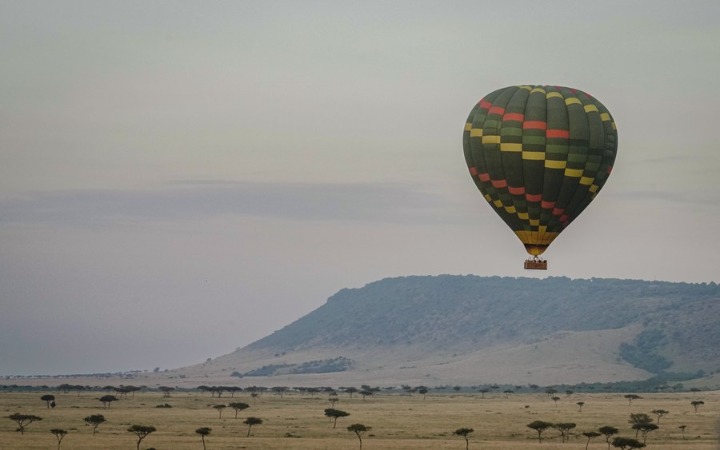
This photo taken on July 14, 2023, shows a hot air balloon at the Masai Mara National Reserve, Kenya. (Xinhua)
Kenyan consumer prices rose at the slowest pace in almost two years in December, while economic growth accelerated more than expected in the third quarter, delivering some respite for the battered East African economy.
Gross domestic product expanded 5.9% in the three months through September from a year earlier, ahead of the central bank’s forecast of 5.6% and the fastest pace since the start of 2022. The consumer price index increased by 6.6% from a year earlier.
Both data points offer some good news at a time when President William Ruto’s government, in power for just more than a year, has instituted economic reforms including higher taxation and austerity measures that have proved unpopular with many Kenyans.
Other changes included the central bank holding off from propping up the shilling, which has seen the currency extend its decline against the dollar to 21% this year, the worst annual performance in three decades, raising the costs of imports.
Policymakers have also increased interest rates aggressively to deal with the resultant price pressures.
The government reinstated a gasoline subsidy it had abandoned as part of those cost-cutting measures, which helped slow consumer price growth in December.
Still, the average inflation rate for the year was 7.7%, above the 7.5% ceiling of the target range, the Nairobi-based Kenya National Bureau of Statistics said in an emailed statement on Friday.
Transport costs rose 11.7%, compared with 13.6% in November, helped by gasoline prices being kept unchanged last month and reduced in December. Food prices, which have a 33% weighting on the basket of goods, remained sticky, rising 7.7%.
At its last meeting on Dec. 5, the monetary policy committee surprised the market with a 200 basis-point rate increase, citing the need to address pressure on the local currency and reduce second-round effects on inflation.
Loan disbursements from the International Monetary Fund, the World Bank, the Trade and Development Bank and the African Development Bank as early as January are expected to shore up Kenya’s foreign-exchange reserves and could help ease pressure on the shilling.
Good harvests are also anticipated from the current rainy season, mitigating a key risk to the inflation outlook.
Economic expansion accelerated by the fastest pace in almost two years in the third quarter, surpassing the 5.5% growth in the prior three months.
The main growth engine - agriculture, forestry and fishing, which accounts for about a quarter of Kenya’s total output - accelerated 6.7%, after contracting in the same period a year earlier
"The improved performance was attributed to favorable weather conditions that characterized the first three quarters,” according to the statistics agency.
Accommodation and food services - which reflects the performance of the tourism industry and is one of the country’s largest foreign-exchange earners - also experienced strong growth.
The central bank sees the pace of growth quickening to 5.9% next year, from an estimated 5.5% in 2023 and 4.8% expansion in 2022.