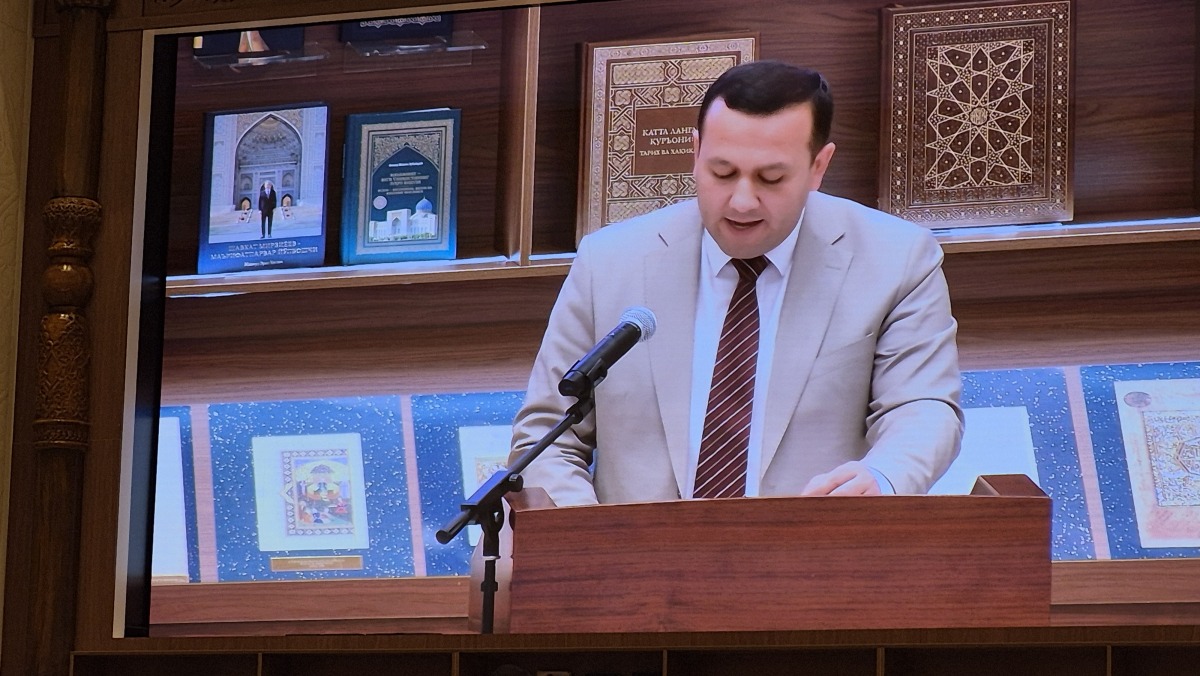
Spokesperson for the Center for Islamic Civilization Uktam Usmonov speaking to the audience during the closing ceremony of the event.
Tashkent, Uzbekistan: Participants of the International Media Forum, “Islamic Civilization: A New Perspective, New Discoveries,” have adopted an address to Uzbekistan President Shavkat Mirziyoyev, supporting closer international media cooperation and an initiative to make the forum a regular platform for dialogue among journalists and media organisations.
The address was adopted during the final session of the forum on Wednesday (August 26) in Tashkent, alongside other concluding documents of the event. The announcement was made at the formal closing ceremony of the forum’s main business programme at the Center for Islamic Civilization in Uzbekistan.
The text of the address was read by Uktam Usmonov, spokesperson for the Center for Islamic Civilization. Representing media leaders, journalists, experts and information-sector specialists from nearly 50 countries, the participants congratulated President Mirziyoyev and the people of Uzbekistan on the 35th anniversary of the country’s independence and expressed appreciation for the hospitality extended to international delegates.
The participants described the forum as an open and productive platform that had enabled media professionals from different countries to exchange views on changes in the global information landscape, emerging media technologies, artificial intelligence, reliable and objective reporting, journalistic responsibility and prospects for international cooperation.
They said the discussions went beyond an exchange of ideas and helped establish new professional contacts and opportunities for practical collaboration.
A key proposal contained in the address was to develop the International Media Forum into a regular international platform bringing together journalists, media organisations and experts. “We support initiatives aimed at developing the International Media Forum into a regular platform for dialogue and cooperation, expanding joint projects among journalists and media organisations, and promoting collaborative coverage of history, culture, science and contemporary development,” the participants said.
The address also stressed the growing responsibility of journalism as digital technologies, social networks and artificial intelligence reshape the international information environment.
The participants said objective, responsible and reliable journalism remained essential not only for informing the public but also for strengthening mutual understanding, supporting peace and stability, and promoting dialogue between cultures and societies.
The forum’s location at the Center for Islamic Civilization was also highlighted in the address, with participants describing the institution as a platform for presenting the scientific, intellectual and cultural heritage of Uzbekistan and Central Asia to international audiences.
They pointed to the continuing relevance of scholars and thinkers associated with the region, including Muhammad al-Khwarizmi, Abu Ali ibn Sina, Abu Rayhan al-Biruni, Imam al-Bukhari, Imam al-Tirmidhi and Mirzo Ulugbek, and emphasised the role of contemporary media in bringing their scientific and intellectual legacy to a wider global audience.
Regional cooperation was another theme of the address. Participants welcomed Uzbekistan’s efforts to strengthen good-neighbourly relations and mutually beneficial cooperation among Central Asian countries, while emphasising the role of professional journalism and international media exchanges in building trust and understanding between nations.
The forum brought together around 300 representatives of the international media and expert community from nearly 50 countries. Its programme included plenary sessions, international discussions and presentations on historical and cultural heritage, modern media formats, documentary filmmaking, publishing, digital projects and the use of artificial intelligence.
Masterclasses and creative meetings were also organised at higher education institutions in Tashkent, bringing together students and local media professionals with representatives of international broadcasters, news agencies, publishing houses and the film industry.
Representatives from international news agencies, publishing houses and other media organisations participated in the wider programme, alongside filmmakers, journalists and media experts from a range of countries. The forum also resulted in new joint projects and the signing of agreements, memorandums of understanding and other cooperation documents. In their concluding address, participants said the forum in Tashkent and Samarkand could provide a foundation for new professional relationships, joint media projects and long-term international cooperation.
They pledged to translate the ideas discussed during the event into practical initiatives and to strengthen cooperation between Uzbekistan and the international media community.