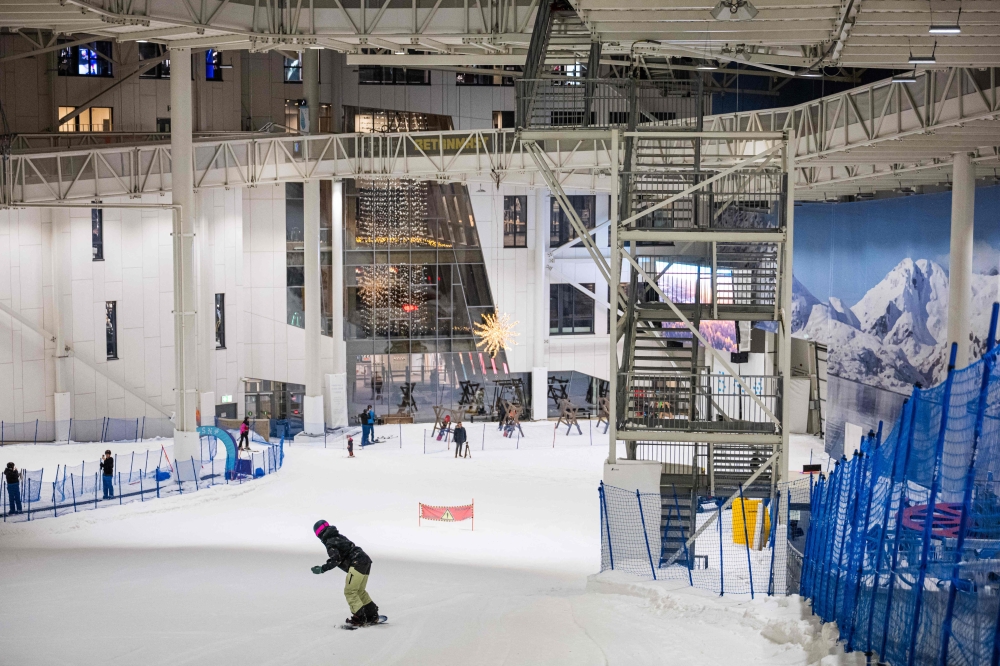
People ski inside the SNOe indoor skiing arena on January 5, 2026, in Loerenskog, near Oslo, Norway. (Photo by Jonathan Nackstrand / AFP)
Lorenskog, Norway: Skiers swish down the slope, no sun or sky in sight. It may be the middle of winter high up in the North, but lack of snow has Norwegians flocking to an indoor ski centre near Oslo.
In Norway, the saying goes that babies are born with skis on their feet. With opening ceremony of the Milan-Cortina Winter Olympics approaching Friday, the Scandinavian country has won the most Winter Olympic medals.
But how long can Norway's success last?
With shorter winters and less snow, will Scandinavians be able to continue to practice their favourite pastime, and will their athletes continue to dominate?
By the end of this century, Norwegian winters are expected to be 2 to 3C warmer, and the ski season, defined by at least 25 centimetres (10 inches) of snow, between one and three months shorter depending on the location, according to a published in October.
"Most of Norway's habitation is in coastal areas and in these areas we are actually seeing that many of the towns will not have any winter as we know it in the future," climatologist Hans Olav Hygen told AFP.
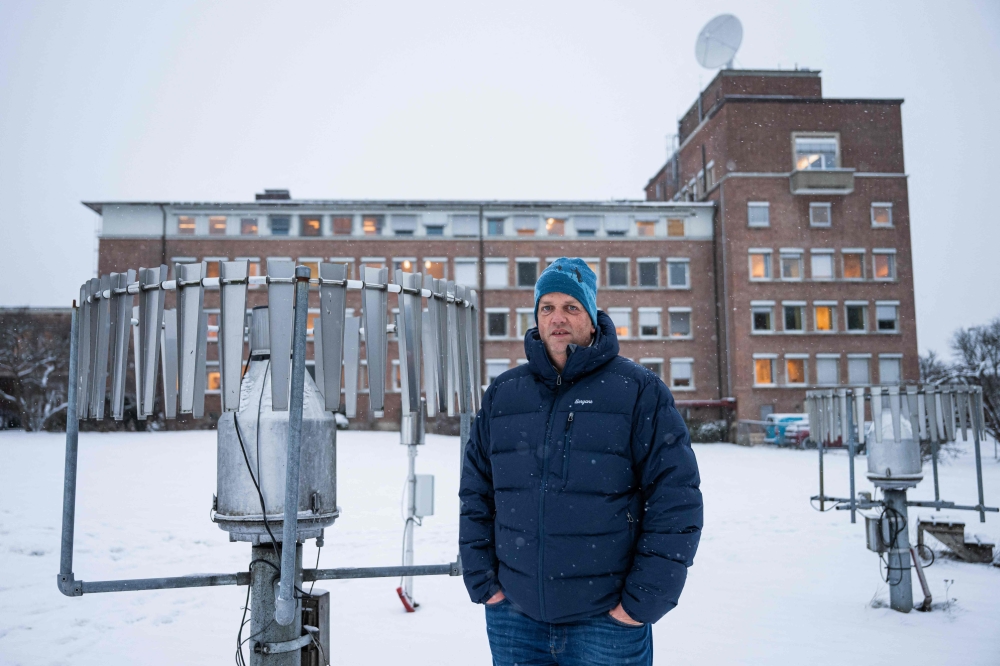 Hans Olav Kvaal Hygen, a researcher at the Norwegian Meteorological Institute, is pictured in Oslo on January 6, 2026. (Photo by Jonathan Nackstrand / AFP)
Less interest in skiing
In Oslo, the winter season already lasts a month less than 30 years ago.
There's not always snow on the neighbourhood ski slopes, and school outings to teach kids the basics are becoming rarer.
"We already see the change from skiing being a mass sport in Norway to more and more people that are not used to skiing and don't use skiing as a winter recreational activity," Hygen said.
From 2014 to 2024, memberships in ski clubs tumbled by 37 percent, according to the national ski federation.
Other factors have also contributed to the decline, including people spending more time on screens, higher costs and youths drawn to other sports with famous Norwegian athletes, such as football (Erling Braut Haaland), tennis (Casper Ruud) and golf (Viktor Hovland).
"With the challenge posed by climate change, a lot of people are turning to other activities that are more predictable and accessible," said Marit Gjerland of the ski federation.
Seeing the writing on the wall, Norway launched a "Snow for the Future" project nearly 10 years ago to explore sustainable solutions for producing artificial snow.
"In order to preserve the ski culture, it is essential to have access to snow where people live," Gjerland said.
"There is of course always snow in the mountains, but that's far for people. We want to bring it to the people."
Possible advantage?
Current snowmaking machines typically require temperatures of -2 to -3C for water droplets to freeze.
In Trondheim, the Sintef research institute has worked on solutions that function in temperatures above freezing, similar to a refrigerator.
"The challenge with that type of technology is that it's very energy-consuming," said researcher Ole Marius Moen.
Researchers therefore focused on finding solutions "to make it more energy-efficient, like utilisation of excess heat from those types of equipment, which could be used for example for heating of indoor swimming pools, office locations."
That's what's being done at the indoor ski centre in Lorenskog, near Oslo.
"It may seem a little crazy: who would have imagined a ski dome in Norway, when we have such winters?" admitted the facility's director Ole Christian Mork.
"But the goal is also to offer a stable winter experience year-round."
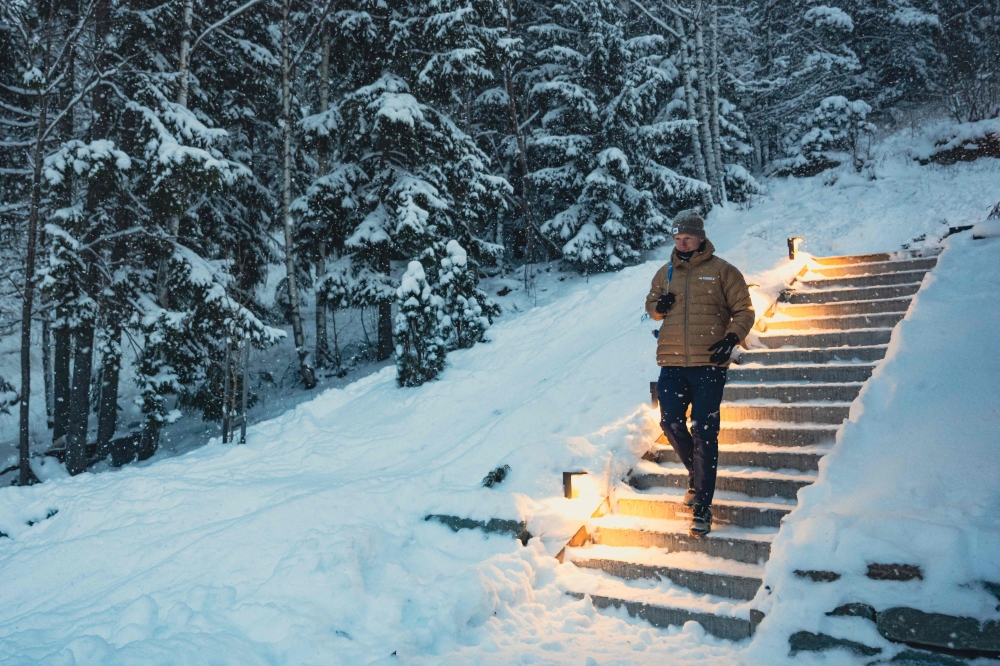 Former Norwegian biathlon star Johannes Thingnes Boe poses for a picture at his home on January 5, 2026 in Kongsvinger, Norway. (Photo by Jonathan Nackstrand / AFP)
Do Norway's top skiers worry that shorter winters with less snow will hurt their country's dominance in winter sports?
"On the contrary, I think," former biathlon star Johannes Thingnes Bo told AFP.
"Most of the preparation is done during the summer. And the cold autumn period when you can neither ski nor roller-ski is being shortened," he said.
"When I was competing, I only started skiing in the first week of November, and only a small part of my training was on snow."