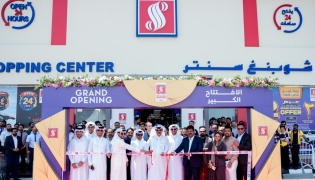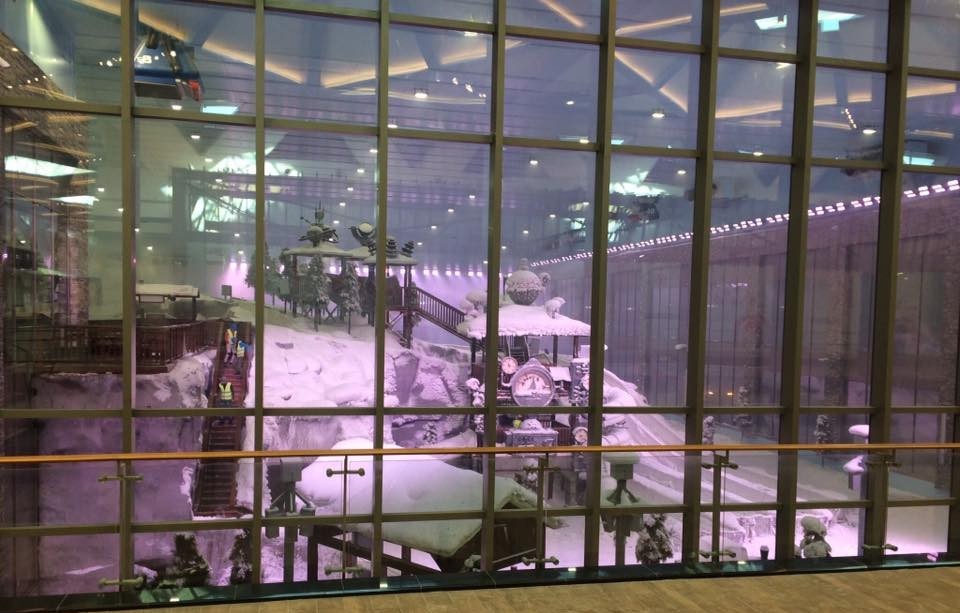
Weaving through the packed parking lot toward the Mall of Egypt, a new $700 million retail palace complete with a Dubai-style indoor ski slope, it’s easy to think that the country’s economy is well and truly on the mend after years of crisis.
In fact, Egypt’s biggest shopping center is opening its doors after household spending power was hit by a 50 percent drop in the pound’s value following a decision to lift currency controls to ease a crippling dollar shortage. Instead of sounding the retreat, companies like the mall’s developer, Majid Al Futaim, are doubling down on their commitments to the Arab world’s most populous nation as they bet on its most resilient asset: consumers.
“I’m not worried about falling disposable income because for a number of years Egypt has had an official economy that was sustained by a gray one,” the Dubai-based developer’s chief executive, Alain Bejjani, said in an interview in Cairo. “The current situation is beginning to look positive compared to where things were.”

Majid Al Futaim, whose Mall of the Emirates in Dubai also features indoor skiing, will invest $600 million to build another mega-mall in Cairo and make another shopping center five times bigger, the CEO said. And he’s not alone: retailers and producers including Nestle SA, Mars and Turkey’s BIM are expanding their business. Saudi developer Fawaz Alhokair Group, whose Mall of Arabia stands just a few kilometers away from the Mall of Egypt, plans to spend 8 billion Egyptian pounds ($441 million) to build three shopping centers over the next three years.
“As far as I can see, Egypt will continue to be considered a high growth engine for multinationals and local companies,” said Yasser Abdul Malak, CEO of Nestle’s Northeast Africa unit. Nestle plans to invest 1 billion Egyptian pounds in expansion as the country’s large but under-served population creates the opportunity for companies to achieve “exponential growth,” he said.

There’s still plenty of risk. More than four months after Egypt floated the currency to clinch a $12 billion IMF loan, inflation is at its highest level in three decades, fueling concerns that further economic reforms could trigger social unrest in a country where two presidents have been toppled since 2011. For companies, the pound’s slump will erode revenue for foreign companies that book their earnings in other currencies.
“The biggest risk for the country over the past few years was the potential flotation of the currency and that is no longer a risk,” Mohamed Zein, MENA analyst at Renaissance Capital, said in a phone interview from Dubai. “This should bring foreign investments back.”
In an early sign of recovery, the contraction in non-oil buisiness activity slowed for a third consecutive month in February, according to the Emirates NBD Purchasing Managers’ Index. Some producers expect sales to recover as early as 2018, while the government sees inflation peaking at the end of the first quarter.
As the country moves on its uphill climb to revival, the government is mindful of easing the population’s pain. Authorities are organizing a market for discounted goods ahead of the start of the holy month of Ramadan in a few weeks.
Even during the years of political instability following the 2011 uprising that toppled President Hosni Mubarak, high consumer demand made Egypt profitable for both foreign and domestic investors and companies. The country’s unofficial economy accounts for at least 37 percent of total output and employs at least 48 percent of the country’s non-agricultural workers in the private sector, according to an African Development Bank study.