Doha, Qatar: Qatar Airways Cargo played a central role during the 2025/26 financial year in the Group’s financial and operational performance. A key enabler of global trade, Qatar Airways Group’s air cargo business maintained its position as the world’s leading air cargo carrier, combining scale with precision to respond decisively to evolving market conditions and set industry benchmarks.
Over the course of the year, the Group transported more than 1.43 million tonnes of chargeable weight, advancing its position as the world’s largest air freight carrier with a 12% global market share. This performance reflects sustained demand across key markets, alongside the Group’s ability to adapt with speed and discipline, Qatar Airways Group said in its annual report for 2025/26.
On 28 February 2026, regional geopolitical conflict disrupted airline operations globally. Despite an initial impact to flights, Qatar Airways remained consistent in safely and steadily resuming operations across its network.
By the end of March, Qatar Airways’ global passenger and cargo network stabilised, GCC links were introduced across three key cities, and 93% of Doha cargo backlog was cleared. All 30 Boeing 777 freighters were fully deployed, global network ran 87 flights uninterrupted daily, and it had a flown as planned rate of 81%. In addition, 9,000 tonnes of perishables and medicines were moved, and more than 270 live animals were transported via Doha.
The global cargo markets were influenced by continued uncertainty, including new tariff regimes, shifting trade flows, and broader geopolitical change. Qatar Airways Cargo responded with agility and adjusted capacity across its network in line with customer requirements and regional growth opportunities.
Harnessing Doha’s strategic position at the crossroads of global connectivity, the cargo division serves more than 70 freighter destinations and over 170 belly hold destinations worldwide.
During the year, new freighter services were launched to Baghdad, Cairo, Erbil, Tbilisi, and Yerevan, and capacity was further strengthened across key Asian gateways including Guangzhou, Hong Kong, and Macau. In partnership with Virgin Australia, cargo capacity from Australia’s principal hubs was doubled.
Collaboration remained a cornerstone of Qatar Airways Cargo’s growth strategy. Significant progress was made on its landmark Global Cargo Joint Business with IAG Cargo and MASkargo, bringing together three industry leaders with a shared ambition to strengthen global connectivity and deliver tangible benefits for customers.
Following regulatory approvals across 57 markets, the joint business commenced a pilot launch of the collaboration, establishing a strong foundation for broader cooperation aligned with industry-leading safety and operational standards.
In parallel, Qatar Airways Group, through its cargo business, continued to expand its strategic partnership with Cainiao, the logistics arm of Alibaba, enhancing connectivity for the rapidly growing global e-commerce market.
The report further noted that the product innovation remained a key differentiator. The launch of TechLift – designed for semiconductors and high-tech cargo, and Aerospace services underscored the Group’s focus on purpose-built solutions for complex, high-value cargo. The pharmaceutical proposition further cemented the Group’s leadership position through continuous product enhancement and expanded digital booking capabilities.
Key digital transformation developments included enhancements to the cargo mobile application, the introduction of Sama for Cargo – the world’s first AI-powered digital cargo cabin crew, and the rollout of Ramp Offload and Load Supervision as part of its ramp digitisation programme.
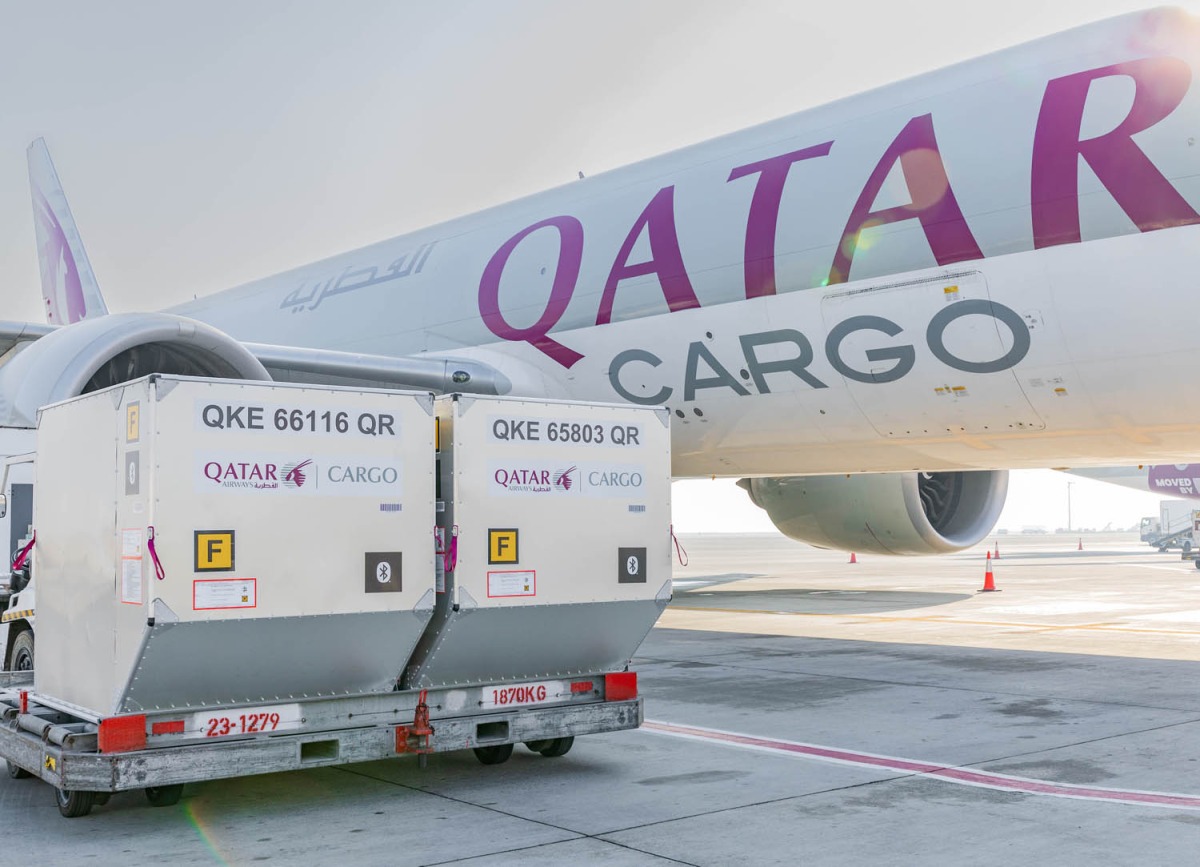
The industry’s largest Unit Load Device digital transformation enabled real-time tracking and improved operational reliability, while 98% e-Air Waybill adoption marked significant progress towards fully paperless operations.