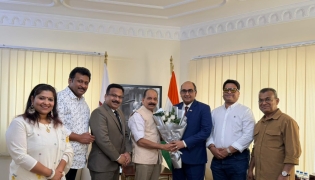
By Azmat Haroon
Doha: The concept of preaching Islam, or Da’wa, among a majority of Muslim clerics in the GCC states is limited to handing out copies of the Quran when, in fact, they should try to influence policies that affect Muslims at large, argues Canadian scholar Mohammed Robert Heft.
He said that although Da’wa groups mean well, they need to change the scale and reach of their work.
“The way people do Da’wa here needs to change. We need to change the minds of people who run the world, because the way Western world looks at us, comes to affect us here,” Heft, who was in Doha recently, told The Peninsula.
Heft embraced Islam in 1998 and runs the Paradise Forever (P4E) support group for new Muslims. He also works with several government and community counter-terrorism initiatives in Canada. His group has a de-radicalisation programme for misguided youth, some of whom look for a cause and identity in religion to justify violence.
Heft, who is serving as a bail-surety of one of the alleged terrorists, said his work with the Royal Canadian Mounted Police, the federal and national police force in Canada, has affected policies of the government regarding Muslims in a positive way.
On the issue of stereotyping the entire West as ‘evil’, he said there is a level of hypocrisy among some Muslims who criticise Western countries, and then seek to live there.
“What are Muslims doing? They are stereotyping an entire community the way we accuse them of stereotyping us. A lot of Westerns are good just like a lot of Muslims are good.
“That’s why I don’t bash them. Governments have good policies and bad policies. Canada, for instance, is my tribe and there are millions of Canadians who support justice regardless of religion.”
Speaking on the issue of discussing politics in Friday sermons, Heft said that the purpose of the Khutba (sermon) is to inspire the congregation. What people hear in the sermon should manifest in their day-to-day lives.
“If you use politics to incite people emotionally when their Iman (faith) is not in line, they get caught up in the news. It becomes destructive because we end up dividing people in a congregation and not helping a common man move his life forward in a practical way.”
He said seven years ago, many people in the GCC began calling him a CIA agent as he was an ‘easy target’.
“I’m finally getting to the point where Gulf leaders are seeing the value of my work. I teach others on how to build relationships with our government agencies. Prime ministers will come and go, but I’ve influenced the institutions in a positive way,” he added.
The Peninsula