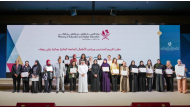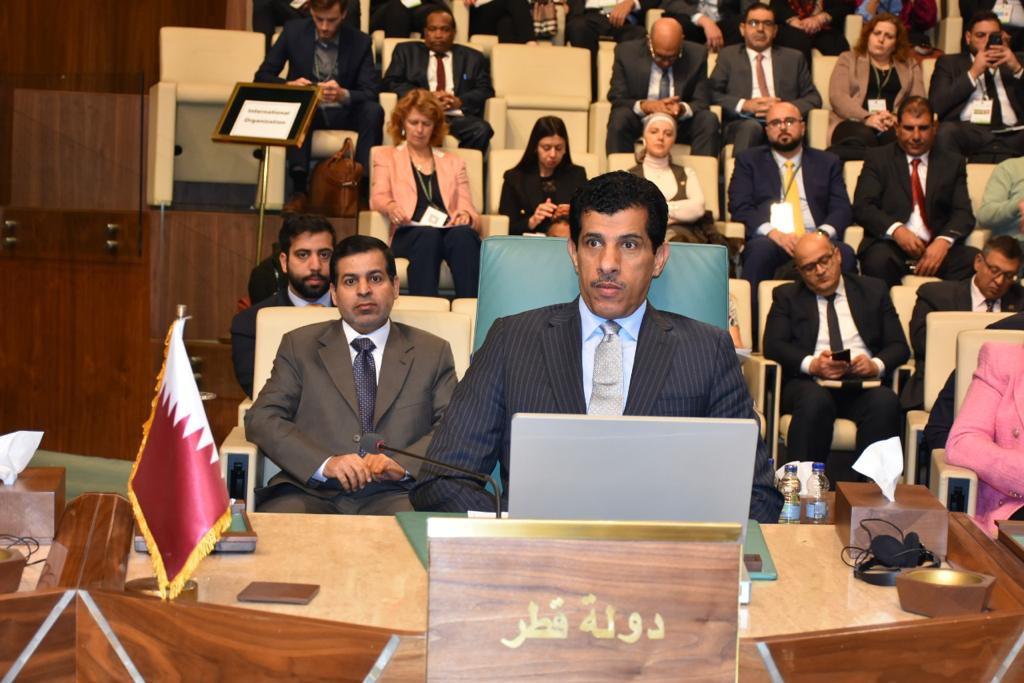
Permanent Representative of Qatar to the League of Arab States and Qatar's Ambassador to Egypt H E Salem Mubarak Al Shafi taking part in 14th session of the Arab Ministerial Water Council.
Cairo: The State of Qatar participated in the 14th session of the Arab Ministerial Water Council, and the 4th Arab Water Conference, which kicked off yesterday at the Arab League General Secretariat headquarters in Cairo.
The delegation of the State of Qatar was headed by Permanent Representative of the State of Qatar to the League of Arab States H E Salem Mubarak Al Shafi.
Held under the theme “Arab water security for life, development and peace”, the 4th Arab Water Conference is aimed at promoting policies of integration and coherence in the management of the water, agriculture and energy sectors and linking them to technology and innovation. The two-day conference seeks to strengthen cooperation in the area of transboundary waters, in line with the sixth goal of the Sustainable Development Goals (SDG6), the Convention on the Protection and Use of Transboundary Watercourses and International Lakes, and the Convention on the Law of Non-Navigational Uses of International Watercourses.
Discussions at the conference will focus on several topics related to water security and its relation to sustainable development, peace and the management of developments, and the regional and international changes affecting the water sector.
Addressing the Conference on behalf of the Arab League Secretary-General, Assistant Secretary-General and Head of the Media and Communication Sector of the Arab League Ambassador Ahmed Rashid Khattabi noted the worrying situation of water in the world, where freshwater accounts for only 3% for 8 billion people, indicating that the Arab world is classified within the poor areas in freshwater sources as it contains less than 1 percent of the surface runoff, and about 2 percent of the world’s total rainfall.
He stressed the urgent need to mobilise all capacities and potentials at the government level, the relevant organisations of the civil society and research centres throughout the Arab world, in order to achieve greater cooperation and exchange of national experiences on water conservation, which is the source of life and a fundamental human rights.