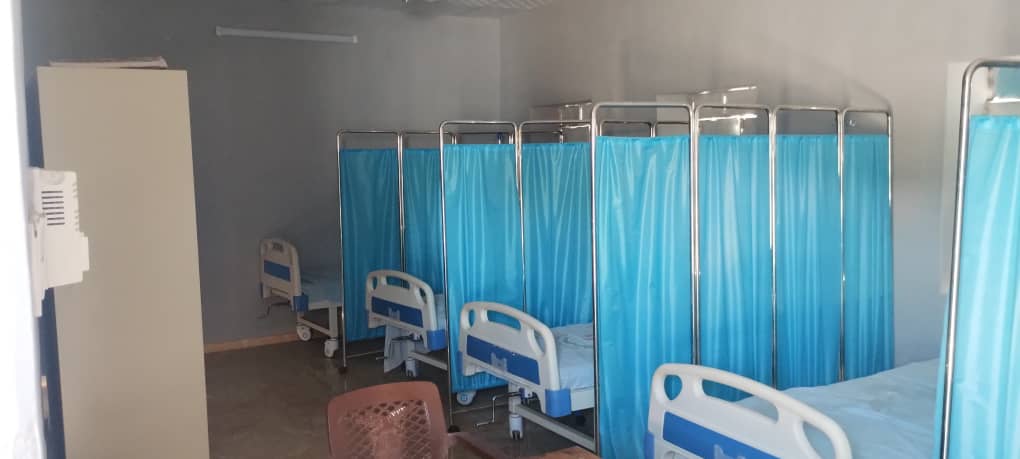
Jabalab Health Centre after completion of rehabilitation work.
Doha, Qatar: The representation office of Qatar Red Crescent Society (QRCS) in Sudan has completed the comprehensive maintenance and rehabilitation works at the Jabalab Health Centre in River Nile State, with a view to supporting health care services and ensuring the continuity of essential medical care in Jabalab and neighbouring villages.
The three-phase project involved premises maintenance and mechanical, electrical, and plumbing (MEP) rehabilitation, thus providing a safe and suitable environment for medical services.
Also, some essential medical equipment was procured, including a complete blood count (CBC) analyser, a renal function analysis meter, a glycated hemoglobin (HbA1c) analyser, and other medical and laboratory supplies.
As part of the project, the centre was fully furnished with office furniture, chairs, cabinets, and medical hospital beds, which would increase operationality and enable health care providers to better serve the patients.
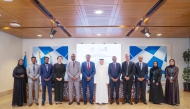
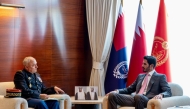
Dr. Salah Al-Din Daak, head of QRCS’s representation office in Sudan, visited the Sudanese Red Crescent Society (SRCS), met President Abdul-Rahman Belaid, and congratulated the new Secretary-General Ahmed Al-Tayeb Solaiman for his position.
The meeting discussed the bilateral technical agreement, as well as the ongoing and planned projects. They emphasised the importance of continued humanitarian coordination. Regarding relocation to Khartoum, Dr. Daak revealed plans to return to the capital in April.
In a statement, Mohamed Bader Al-Sada, Assistant Secretary-General for Relief and International Development at QRCS, explained with international health projects are important: “Health is our true wealth in life. Everyone must see a doctor for diagnosis and medical care. When illness strikes, it weakens the body, diminishes strength, and prevents one from going to work and practicing one’s normal life. That is why QRCS allocates much of its humanitarian activities every year for supporting the health systems in the less fortunate countries, with a view to building the capacity of their health facilities, improving the quality of medical services, and expanding the outreach to remotely located and underserved communities”.
According to the ‘Paths of Benevolence’ guide issued by QRCS as part of its #KeepYourBalanceOfGoodDeedsAlive Ramadan Campaign 1447 AH, a total of 57 health projects will be implemented during 2026.
At a total cost of QR85,618,656, these projects will serve 2,008,713 beneficiaries in 11 countries: Palestine (Gaza and the West Bank), Yemen, Syria, Sudan, Somalia, Niger, Bangladesh, Afghanistan, Lebanon, Jordan, and Mauritania.
During 2025, QRCS implemented 76 health projects, at a total cost of QR53,946,918, for the benefit of 2,010,460 people in 12 countries: Bangladesh, Palestine (Gaza and the West Bank), Syria, Jordan, Lebanon, Sudan, Somalia, Yemen, Mauritania, Egypt, Afghanistan, and Niger.