File photo
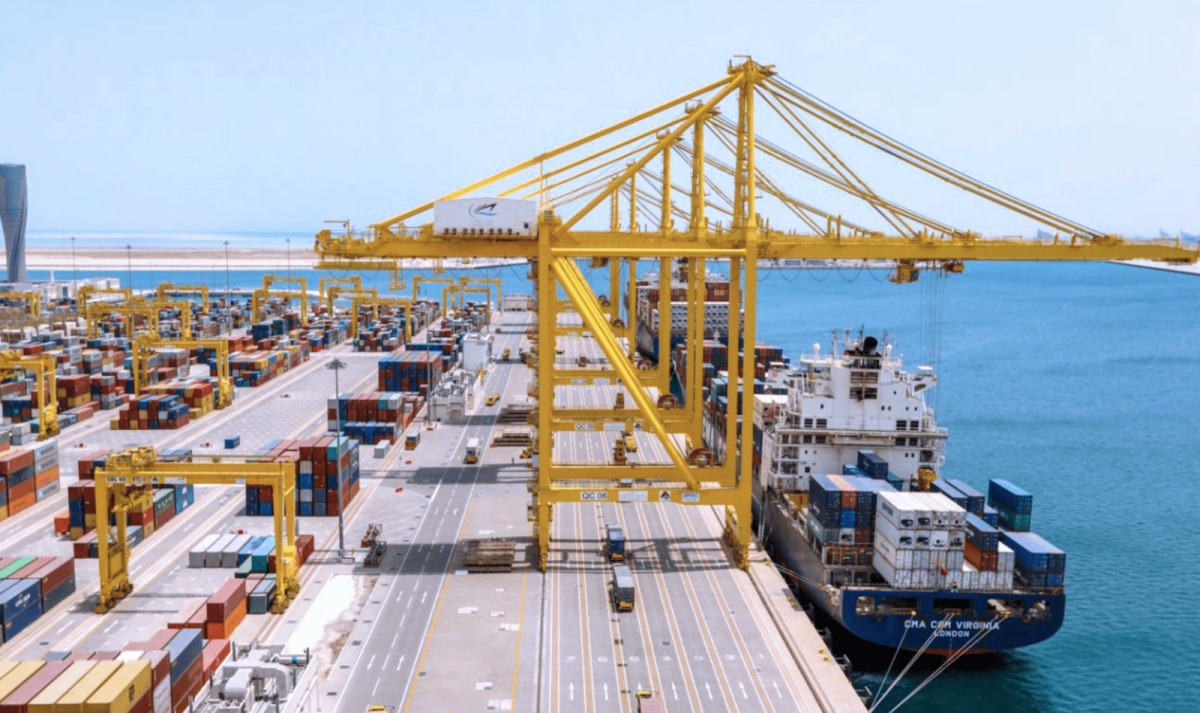
Doha, Qatar: Qatar ports (Hamad, Ruwais and Doha) witnessed growth in handling of the container and cargo volumes in March this year.
Mwani Qatar stated in a post on its X platform, yesterday “Ports received over 44,000 twenty-foot equivalent units (TEUs) in March 2026, in addition to handling approximately 31,000 tonnes of general cargo, more than 40,000 tonnes of bulk cargo, over 2,800 units of RORO, and around 10,000 head of livestock, through 85 diverse vessels.”
Positioned strategically and supported by a rapidly expanding shipping network the ports enables seamless and secure cargo flow and transshipment operations. This boosts customer experience, unlocks greater growth potential, and strengthens the country’s role as a key commercial and logistics hub in the region.
The three ports handled 44,456 TEUs containers, 30,716 tonnes of general cargo, 40,663 tonnes of bulk cargo in March this year. Meanwhile, the ports also handled 2,870 RORO units, 10,016 heads of livestock and the three ports received 85 vessels.
Recently, Mwani Qatar announced that it has activated an exceptional package of facilitations in port tariffs aimed at supporting the logistics sector and facilitating operational activities in Qatar with a focus on enhancing and supporting supply chains.
The facilitation comes as part of the Ministry of Transport’s strategy to support the private sector and strengthen partnerships. And within the framework of Mwani Qatar’s commitment to reduce financial burdens on customers, providing suitable and flexible storage options that meet the needs of various sectors, and ensuring the continuity of import, export, and supply chain operations during the critical period.
Qatar’s maritime transport sector also witnessed positive momentum as the Ministry of Transport completed 430 transactions from February 28 to March 28 this year through the Maritime Transport Affairs.
MOT’s Maritime Transport Affairs continues to operate efficiently amid current regional developments, to provide innovative services to the public with highest performance standards, enhancing business continuity.
The transactions were related to main services such as issuance and accreditation of certificates of competency (C.O.C) for safe manning, naval architect, and marine officer. The main service also includes maritime vessels (ownership transfer, renewal and registration); and foreign vessel engaged in operations in Qatar waters (data modifying and renewal).
Qatar’s main gateway to the world trade, Hamad Port is the main driver of economic activity related to maritime trade, and goes beyond the needs of the local market. It plays a pivotal role in stimulating various economic activities, especially industry, warehousing and logistics services, while adhering to the highest environmental and development standards.