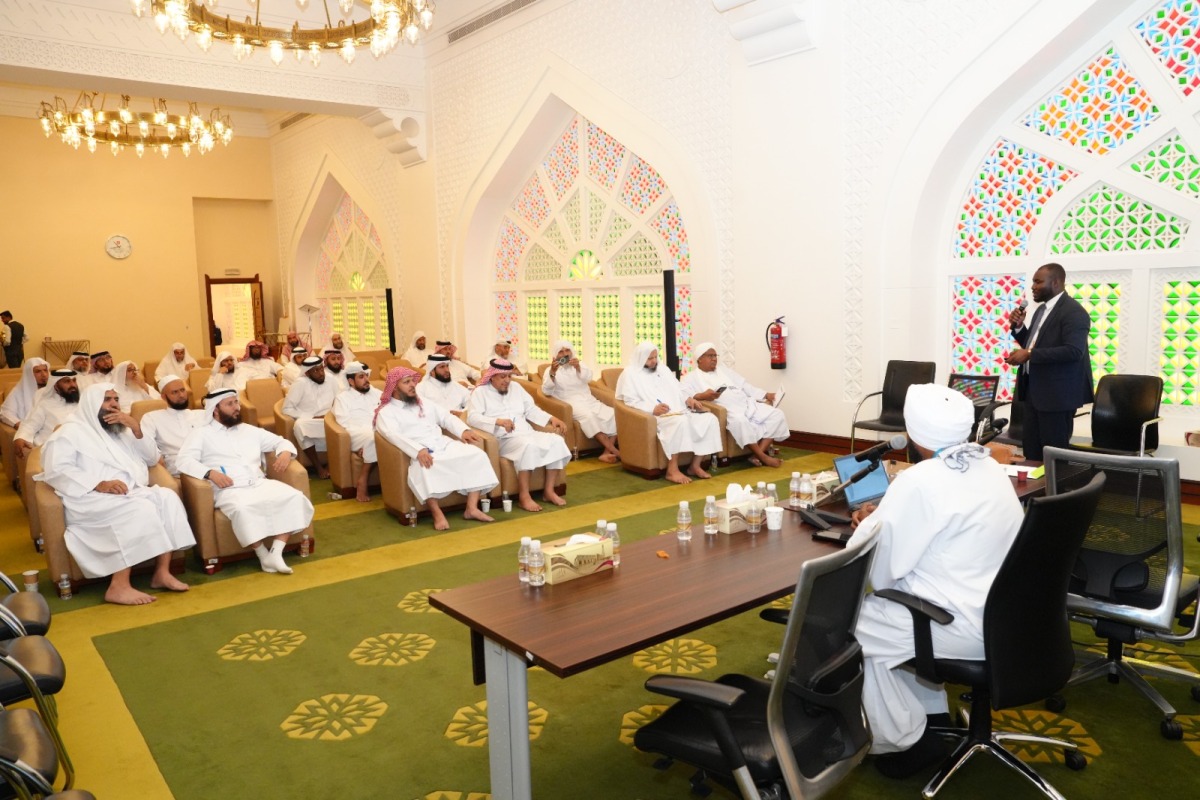
Participants during a session of training programme on addiction awareness and intervention.
Doha, Qatar: The Ministry of Awqaf and Islamic Affairs, through the Institute of Da’wah and Islamic Sciences under the Department of Da’wah and Religious Guidance, has organised a specialised training programme on addiction awareness and intervention as part of its 2026 “Zad Al-Du’at” (Provision for Preachers) initiative.
The programme, titled “Dealing with Patterns of Addiction,” forms part of the ministry’s ongoing efforts to develop the capabilities of preachers and strengthen their role in addressing contemporary social issues. It is designed to enhance the effectiveness of religious outreach and awareness efforts in safeguarding society from harmful behaviours.
Held at the Imam Muhammad bin Abdul Wahhab Mosque, the session was delivered by preacher Dr. Badr Al-Din Mohammed Othman and focused on enabling participants to better understand addiction in its various behavioural and psychological forms. The programme explored integrated religious, psychological, and social approaches to addressing addiction, reinforcing the role of preachers in guidance, social reform, and prevention.
The training highlighted the importance of raising awareness about the concept of addiction and its contemporary causes, while equipping participants with the skills needed to engage with individuals struggling with addiction through compassionate, faith-based approaches. It also emphasised strengthening the preventive role of religious discourse and building cooperative partnerships with specialised treatment and rehabilitation institutions.
The one-day intensive course featured a range of scientific and practical topics, including definitions and types of addiction, the distinction between habits and addiction, and emerging forms of addictive behaviour. Participants also examined psychological and social factors that contribute to addiction, as well as the influence of digital environments and media.
A key component of the programme focused on the Islamic approach to dealing with addiction, emphasising a balance between compassion and firmness, guided by principles of repentance and gradual reform. Additional sessions addressed communication and counselling skills, effective methods of providing guidance, and strategies for engaging with different cases.
The programme further explored the role of mosques and Friday sermons in public awareness and prevention efforts, while outlining mechanisms for referring individuals to specialised institutions and promoting collaborative work with healthcare and social service professionals.
Around 50 preachers from the Ministry’s Religious Guidance Department participated in the three-hour training session. The programme aimed to provide them with practical skills to distinguish between behavioural habits and addiction, assess individual circumstances, and respond professionally to those affected. Participants were also trained to guide individuals and families toward appropriate support services and to develop impactful sermons and lectures addressing addiction-related issues.
The initiative aligns with the Ministry of Awqaf and Islamic Affairs’ 2025–2030 strategy, which places significant emphasis on modernising religious discourse and enhancing its contribution to addressing societal challenges through evidence-based and comprehensive approaches.
Officials said the programme reflects the ministry’s commitment to expanding the preventive role of religious outreach, promoting Islamic values, and fostering balanced social awareness to address negative social phenomena, particularly addiction, in support of community stability and well-being.