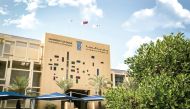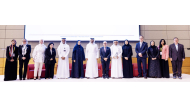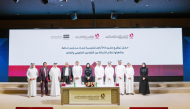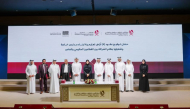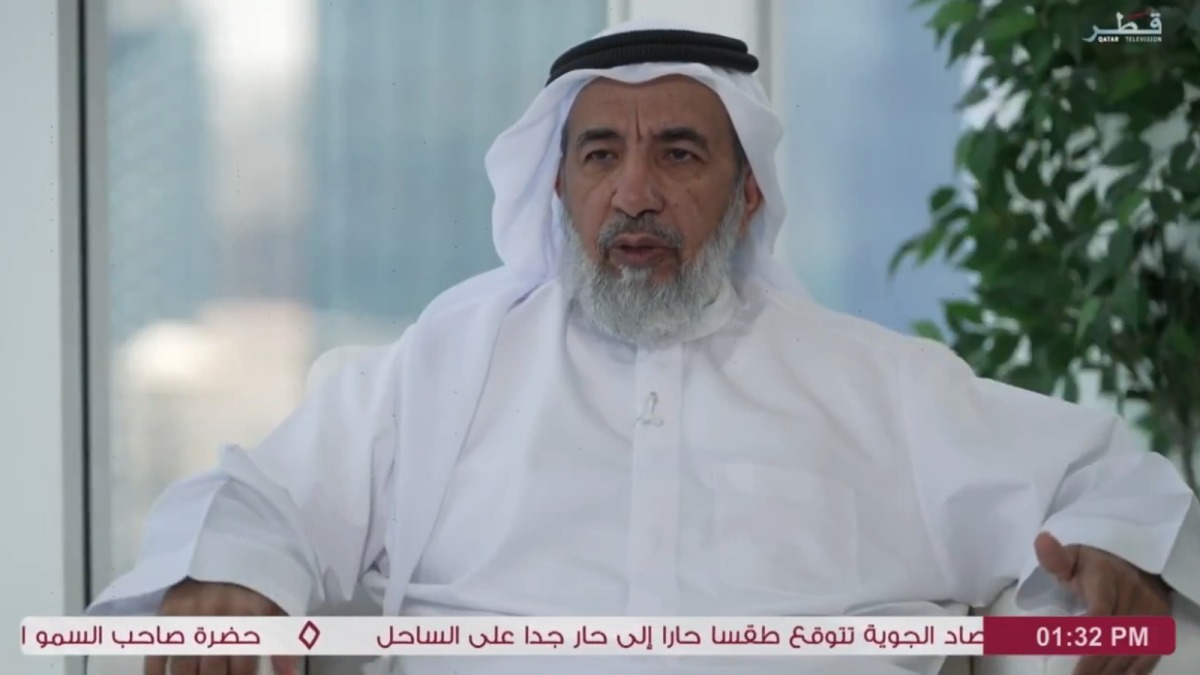
Minister of Awqaf and Islamic Affairs H E Ghanem bin Shaheen bin Ghanem Al Ghanim speaking during an interview.
Doha, Qatar: Minister of Awqaf and Islamic Affairs H E Ghanem bin Shaheen bin Ghanem Al Ghanim has said that Ministry’s 2025-2030 Strategy is designed to strengthen Islamic values, modernise religious services, expand community outreach and support Qatar’s sustainable development in line with Qatar National Vision 2030.
Speaking in an interview with Qatar TV yesterday, Al Ghanim said the strategy represents “a qualitative shift in institutional and religious work” and aims to reinforce the Ministry’s contribution to national development, promote moderation, preserve Islamic identity, and enhance institutional excellence.
Among the major projects under development is a residential endowment project valued at approximately QR800m, aimed at strengthening long-term returns to support charitable and community programmes.
He explained that the strategy focuses on developing an influential religious outreach system, strengthening the role of mosques as centres of worship and community education, advancing the waqf (endowment) and zakat system, improving the quality of religious services, facilitating religious practices, and enhancing governance, digital transformation and operational efficiency.
Al Ghanim said the Ministry is committed to promoting the values of moderation, strengthening religious awareness and developing a contemporary religious discourse that addresses society’s needs while preserving Islamic principles and national identity.
The Minister said the Ministry continues to keep pace with Qatar’s rapid urban growth by expanding mosque infrastructure nationwide. Between 30 and 40 new mosques are being constructed annually based on population growth and geographical distribution, with particular focus on newly developed residential areas.
Highlighting the performance of the endowment sector, Al Ghanim said public engagement has continued to grow, reflecting Qatar’s longstanding culture of generosity. During the first half of this year, contributions from new endowers increased by more than 200 percent, while cash endowments rose by 100 percent compared with the same period last year.
He said the General Directorate of Endowments has adopted a diversified investment strategy covering real estate, financial portfolios and long-term deposits to generate sustainable returns while utilising digital technologies and artificial intelligence to improve investment management, governance and transparency.
The Minister also highlighted the Ministry’s efforts to promote Quranic education through several national initiatives. He said the Sheikh Jassim bin Mohammed bin Thani Holy Quran Competition has become one of Qatar’s leading religious initiatives, producing large numbers of accomplished memorizers from both citizens and residents while serving as a platform for discovering and nurturing Quranic talent.
He added that the Qatar Mushaf project demonstrates the country’s commitment to serving the Holy Quran through high-quality calligraphy, printing and publication, with editions distributed both locally and internationally.
Meanwhile, government and private Quran learning centres continue to operate under a comprehensive regulatory framework using structured curricula and modern teaching methods, including digital technologies, to meet increasing public demand.
Reviewing the 2026 Hajj season, Al Ghanim expressed appreciation to Amir H H Sheikh Tamim bin Hamad Al Thani for his continued support in ensuring the welfare of Qatari pilgrims.
He said the successful pilgrimage season was achieved through early planning, close coordination with Saudi authorities and comprehensive services provided by the Qatari Hajj Mission, including travel arrangements, transportation, accommodation, healthcare, religious guidance and continuous field supervision.
The Ministry also maintained a comprehensive regulatory system for Hajj campaigns based on transparency, service quality and digital solutions, while incorporating pilgrims’ feedback into future planning.
He highlighted the role of the Sheikh Abdullah bin Zaid Al Mahmoud Islamic Cultural Centre in introducing Islam to diverse communities and fostering intercultural understanding through programmes that build bridges between cultures and reflect Qatar’s commitment to dialogue and peace.
Digital transformation, the Minister said, remains one of the Ministry’s highest priorities.