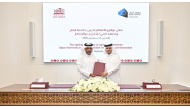
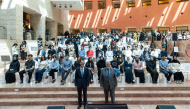
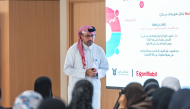
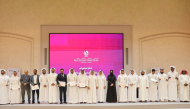
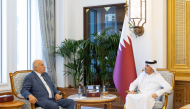
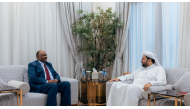
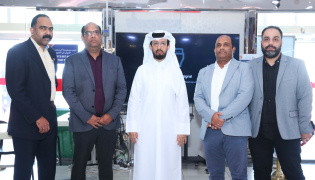
Doha, Qatar: The Ministry of Labour, in cooperation with the Building and Wood Workers' International (BWI), concluded Wednesday the roundtable discussions held over Dec. 1-2, 2025, with the participation of a select group of representatives from the relevant government entities, civil society organisations, employers, workers' representatives and the International Labour Organization (ILO).
The roundtable was attended by HE Undersecretary of the Ministry of Labour Sheikha Najwa bint Abdulrahman Al-Thani, Assistant Undersecretary for Migrant Labour Affairs at the Ministry of Labour Hamad Faraj Dalmouk, and a number of directors of departments within the ministry.
The roundtable was organized as part of Qatar's efforts to consolidate a safe and encouraging working environment that provides job security and fair opportunities for all members of the workforce, strengthens human rights and supports community well-being, in line with Qatar National Vision 2030 and the Sustainable Development Goals.
The session discussed ways to enhance dialogue and exchange views on issues related to the construction sector, including national laws and regulations and international standards relevant to the labour market, with the aim of improving the working environment in the sector and strengthening workers' rights, in addition to matters of occupational safety and health.
The session also addressed the development of a comprehensive vision and implementation plan for Qatar's construction sector, ensuring a safe, fair and sustainable working environment and promoting the alignment of recruitment practices with the best global standards.
HE Sheikha Najwa bint Abdulrahman Al-Thani emphasized that the convening of this event reflects Qatar's firm commitment to promoting dialogue on strategic partnerships, exchanging global expertise, and advancing labour policies in accordance with the highest international standards.
She indicated that the construction sector is one of the main pillars of the country's development journey and a cornerstone of the state's ambitious projects aimed at achieving Qatar National Vision 2030 and the Sustainable Development Goals.
She said that the meeting is of great significance, as it brings together senior officials, experts and social partners, alongside the BWI, to exchange ideas and explore innovative solutions to the sector's key issues, including labour legislation, occupational safety and health standards, and ways to foster a fair and sustainable working environment.
She stressed that the participants' presence is not merely a formal attendance, but a reflection of a shared commitment to strengthening international cooperation and developing an integrated labour system that contributes to building an advanced, safe and promising construction sector, aligned with national aspirations and best global practices.
The roundtable discussions covered a number of key areas with the aim of setting out a comprehensive vision for improving occupational safety practices in the sector, enhancing labour governance, aligning local legislation with international standards, improving recruitment and retention practices, and strengthening occupational safety and health procedures.
Participants expressed their aspiration to continue discussions with the aim of proposing practical solutions and tangible initiatives, leading to joint policies that enhance worker protection in the sector.
In their concluding remarks, participants highlighted the importance of maintaining regular dialogue to ensure the implementation of outcomes, noting that this step reinforces Qatar's position as a leading global hub for dialogue and policy development aimed at safeguarding workers' rights as partners in the sustainable development process.
The Ministry of Labour affirmed its commitment to continuing constructive dialogue, activating cooperation mechanisms and strengthening partnerships with all stakeholders in the construction and wood sector, and working to implement the recommendations issued during the roundtable, in a manner that contributes to providing a safe working environment for workers in the sector and supports sustainable social and economic development in the country.