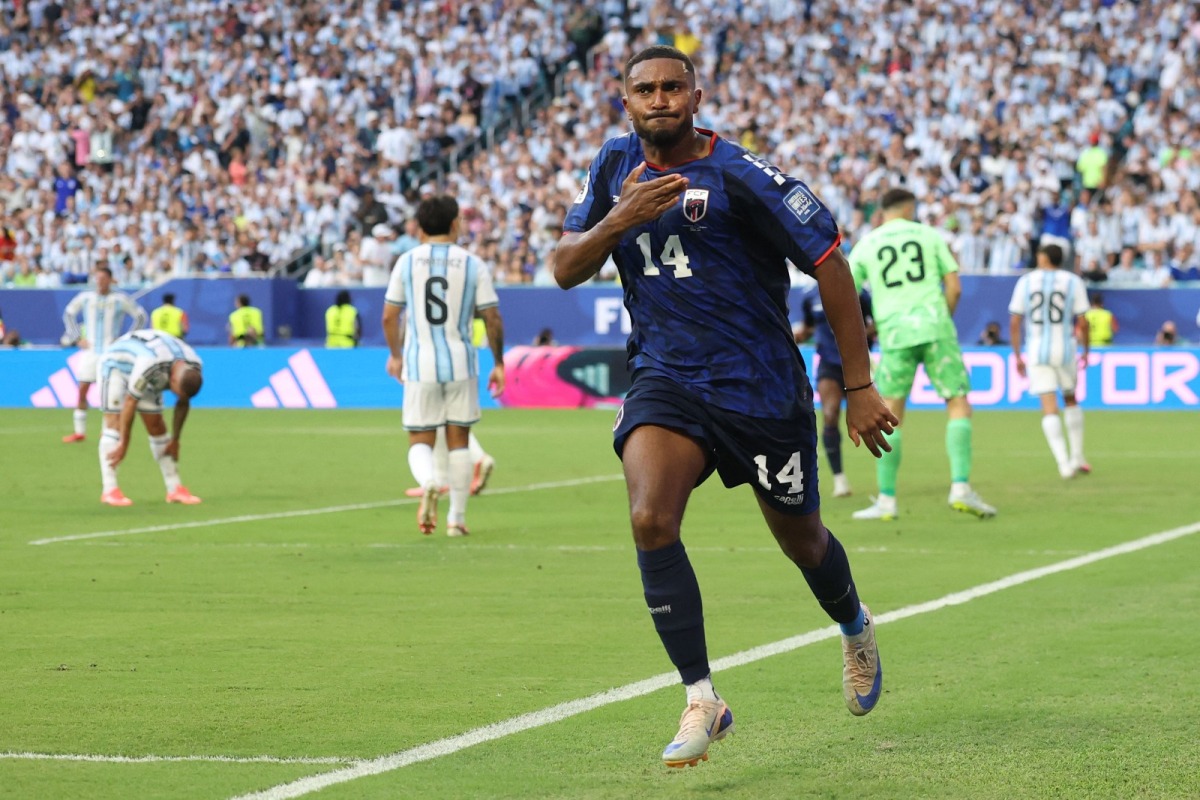
Cape Verde's midfielderDeroy Duarte celebrates scoring his team's first goal during the match against Argentina at the Miami Stadium in Miami Gardens on July 3, 2026. PIC: AFP
DOHA: Cabo Verde arrived at the 2026 FIFA World Cup as one of the tournament's biggest underdogs. A nation of just over half a million people making its first-ever appearance on football's grandest stage, few expected the Blue Sharks to leave much of a mark. Instead, they left with something far greater than victories. They left with the admiration of the football world.
From the opening whistle, Cabo Verde refused to be intimidated. Draws against Spain, Uruguay and Saudi Arabia secured a historic place in the knockout stage, making them the smallest nation by population to ever reach the FIFA World Cup's last 32. But statistics only tell part of the story. Their campaign became a celebration of resilience, identity and belief.
At the heart of that story was 40-year-old goalkeeper Vozinha.
A journeyman who had spent years playing in smaller leagues after working as an electrician, bus driver and volleyball coach, Vozinha became one of the faces of the tournament.
His unforgettable performance against Spain, where he repeatedly denied some of the world's brightest stars, announced Cabo Verde to the world. By the end of the tournament, his heroics against Argentina, including several remarkable saves from Lionel Messi, had cemented his place as one of the breakout stars of the World Cup.
Yet for Vozinha, the individual recognition was secondary.
"Our team fought. Our team did everything it could to win the match," he said after Cabo Verde's heartbreaking 3-2 extra-time defeat to defending champions Argentina. "We couldn't do it, and we're sad about the result. But we have every reason to be satisfied and proud of the match we played and of everything we achieved during this World Cup."
His words captured the emotions of an entire nation. There was disappointment at coming so close to an even greater miracle, but overwhelming pride in proving that Cabo Verde belonged on football's biggest stage.
That belief was instilled by head coach Pedro "Bubista" Leitao Brito.
A former Cabo Verde captain, Bubista built his squad around unity and national identity, bringing together players born across Europe but connected by their Cape Verdean roots.
Throughout the tournament, he consistently reminded his players that they were representing far more than themselves.
"We may be a small country, but we can play against the best teams," Bubista said after the Argentina defeat. "The players have to be proud of their performance throughout the tournament and representing our country."
Even after being eliminated by an unfortunate own goal in extra time, Bubista refused to dwell on the result.
"We have to be aware that we did work that will stay in the history books," he said. "We made history for our country. We showed that if countries like ours work with great character and stay focused on their goals, they can get there."
Perhaps no quote summed up Cabo Verde's journey better than teammate Pico Lopes' simple observation after the tournament: "Nobody has to ask where Cabo Verde is now. They know where we are."
The Blue Sharks may have left the World Cup without a win, but they departed having earned something even more valuable: respect.
Through Vozinha's unforgettable saves, Bubista's unwavering leadership and a squad that never stopped believing, Cabo Verde showed that football's greatest stories are not always written by champions. Sometimes, they are written by those who remind the world that courage, heart and identity can be just as powerful as lifting a trophy.