DOHA: Hamad Medical Corporation’s (HMC) National Programme for Early Detection of Hearing Impairment has done 135 cochlear implants on children aged between one and three years since the programme began in 2005.
About 10 cases are being prepared for implantation.
The success of the procedure is found to be between 90 and 100 percent, according to a senior official.
“Cochlear equipment used at HMC are considered the most advanced internationally.
“Qatar is also one of the first in the region to implement a National Programme for Early Detection of Hearing Impairment and is committed to detecting children born with a hearing disorder at the earliest possible stage and treating them accordingly,” said Dr Khalid Abdul Hadi, Head, Audiology and Balance Unit, HMC.
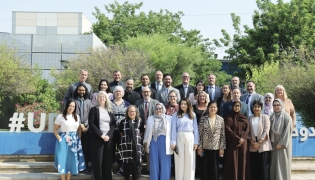
The unit recently organised an orientation meeting for children with cochlear implants and their families.
A cochlear implant is an electronic device that enhances the sense of sound for people with a hearing impairment.
The meeting was chaired by Dr Hadi and led by Dr Maha Sleiteen, specialist at the unit.
Nineteen families along with HMC specialists and representatives from the cochlear manufacturing company attended.
The event built on the unit’s regular activities to ensure success of the electronic cochlear implant and utilise latest technologies for the surgical procedure.
Several hearing and speech therapists from the unit highlighted the role of the family in children’s care and said with the family’s support about 90 percent children undergoing speech rehabilitation are able to improve.
They also presented visual recordings of children with cochlear implants and their subsequent development of speech from the time of the implant until their current stage.
Families were provided with information on functions of cochlear devices and an overview of problems that may occur when using the equipment and their solutions.
Dr Al Sleiteen stressed the importance of preparing the child before the procedure.
“Preparation includes installation of hearing aids and providing children with auditory-speech training to stimulate the hearing nerve and the brain which contributes to the success of the cochlear implantation and helps the child acquire language skills.
“Family support in training is also significant to the child’s language development,” Dr Sleiteen added.
The Peninsula