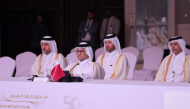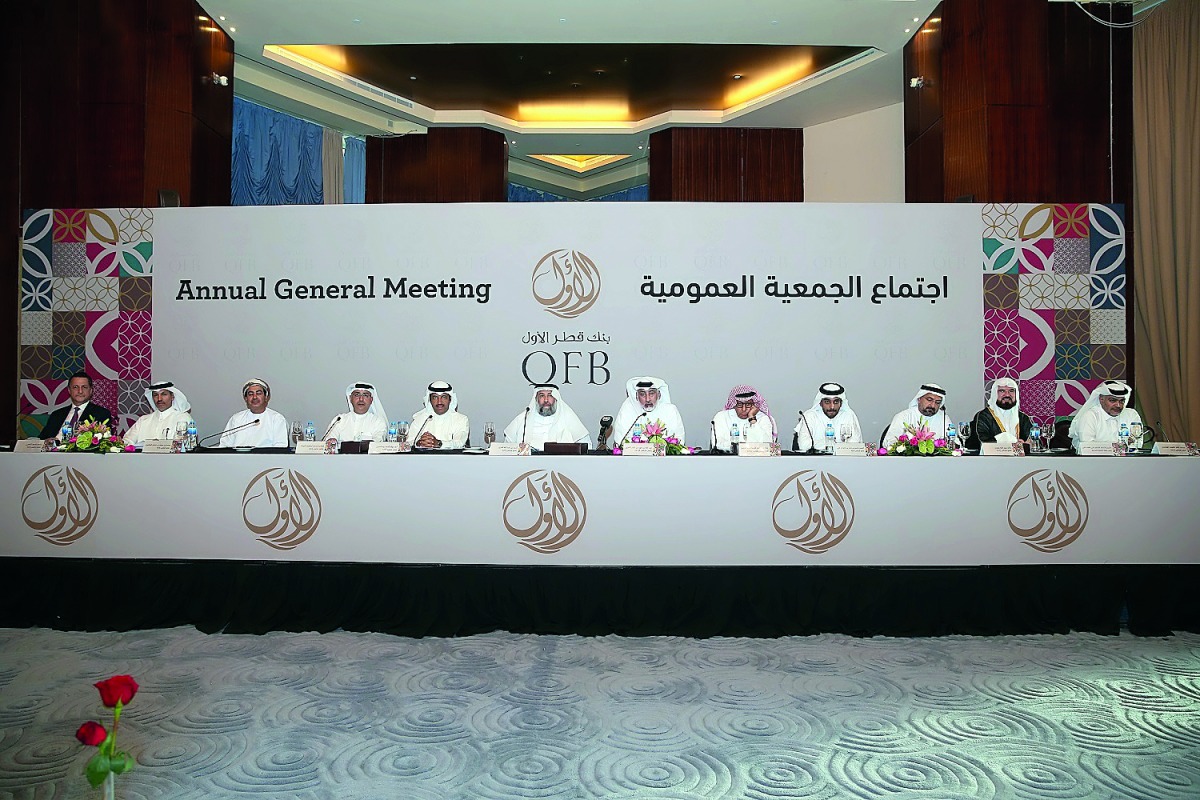
Abdulla bin Fahad bin Ghorab Al Marri (third right), Chairman of the Board of Directors of QFB and other board members at the AGM in Doha yesterday.
Qatar First Bank (QFB) announced the launch of the second phase of the cost rationalisation plan yesterday at its Annual General Meeting (AGM) held to discuss the Bank’s results and future outlook after releasing financials for the year ended December 31, 2016
QFB’s Board of Directors, chaired by QFB chairman Abdulla bin Fahad bin Ghorab Al Marri, along with shareholders and attendees of the AGM, discussed and approved, the bank’s audited financial results and the performance of the eight full year of operation, and QFB first year as a listed entity on the Qatar Stock Exchange (QSE).
Al Marri, said: “The year 2016 saw several key economic events that contributed to the stagnation of the global economy. The depreciation of major currencies, the plunge in oil prices, and the many country-specific macroeconomic and extraordinary factors; have all furthered the slowdown of the global economy. Closer to home, the geo-political unrest continues to hamper the growth of the Mena economies. Qatar, despite being one of the best performing economies in the GCC, has faced several challenges.”
“At QFB we were not immune to the prevailing global economic scene. We have recorded losses, the majority of which are unrealized, resulting mainly from the downward revision of the valuations of some of our private equity investments across several markets,” Al Marri added. Despite the write-down of QFB’s investment book, the bank’s total assets didn’t decline and closed at almost QAR 6 billion, mainly driven by the increase from financing assets, which increased by 33 percent.
Moreover, the investment portfolio continued to generate healthy dividends (QR13m). QFB’s Sukuk book continued to generate positive returns close to QR30m. The Bank’s income from placement with financial institutions has tripled mainly from cash deployment in Shari’ah compliant money market funds.
As the global investment market continues to go through major challenges since the beginning of 2016, QFB’s private equity portfolio has been negatively impacted by country-specific events mainly in Turkey and the UK. The decrease in the valuation of the bank’s investments reflects the effect of the macroeconomic and extraordinary factors that both countries have been facing. The main impact came from the depreciation of currency, Turkish Lira and British Pound Sterling, against the US Dollar and from the weakness of the real estate sector in the United Kingdom.
QFB’s private equity portfolio had consistently generated significant returns over the last 6 years. The bank’s Turkish investments are still 47 percent higher than their acquisition price and will continue to grow in sales and profitability and occupy leading positions in their respective industries of Healthcare and Retail. Additionally, QFB’s UK investments are still significantly above their acquisition costs, both in Pounds and Riyals.