Sri Lanka's president will not resign and instead will face the country's political and economic crisis, a key government minister said Wednesday despite the continuing huge protests that are demanding his resignation.
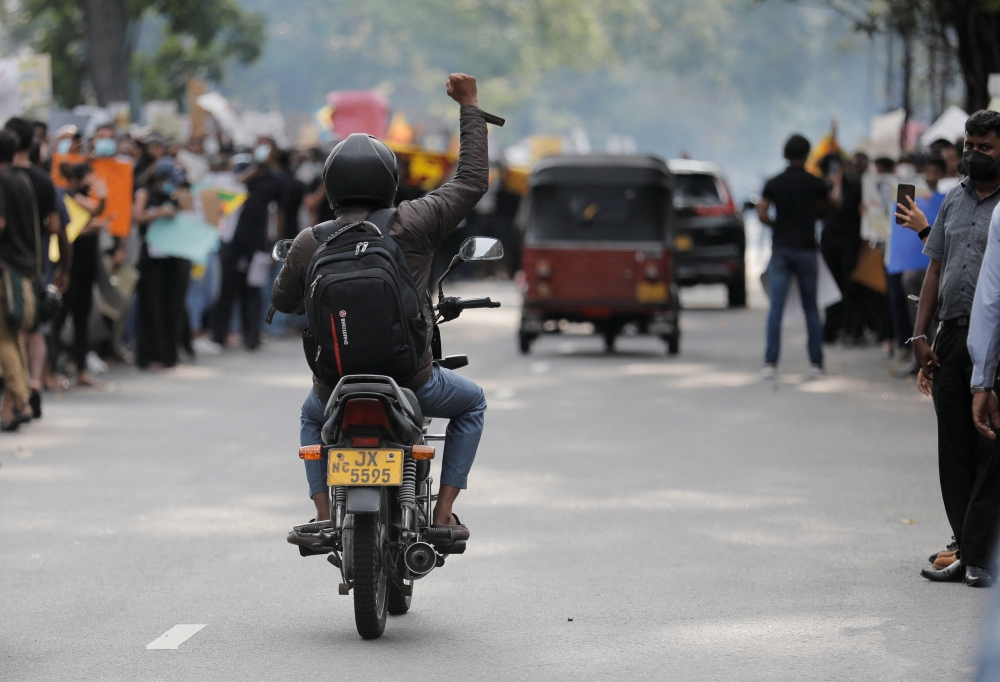
Sri Lanka has endured months of shortages of fuel and other essentials, and the protests over the economic troubles have spread nationwide and expanded to criticism of President Gotabaya Rajapaksa and his politically powerful family.
Rajapaksa has resisted the calls for him to resign even after members of his own coalition made them this week, with governing party lawmakers saying an interim government should replace his and failing to do so would make them responsible for violence.
Rajapaksa "will not resign. We will face this. We have the strength to face this. We are not afraid," Minister of Highways Johnston Fernando told parliament Wednesday.
Hours earlier, Rajapaksa revoked the state of emergency that he had declared last week after crowds of protesters demonstrated near his home in the capital Colombo. The widely criticized emergency declaration had given him sweeping authority to act in the interests of public security, including suspending any laws, authorizing detentions and seizing property.
TV and social media images from Monday showed protesters stormed into the offices and houses of ruling party lawmakers and vandalized some premises. Lawmakers urged the parliament speaker to ensure their safety, and Fernando said they were prepared.
"We are ready to face if anyone comes to attack us. We are not afraid. We have the strength to face this,” Fernando said in parliament.
Rajapaksa earlier proposed a unity government be formed to handle the crisis, but the main opposition party rejected it. His Cabinet resigned Sunday night, and on Tuesday, nearly 40 governing coalition lawmakers said they would no longer vote according to coalition instructions, significantly weakening the government.
The president and his older brother, Prime Minister Mahinda Rajapaksa, continue to hold power in Sri Lanka, despite their politically powerful family being the focus of public ire. Five other family members are lawmakers, including Finance Minister Basil Rajapaksa, Irrigation Minister Chamal Rajapaksa and a nephew, Sports Minister Namal Rajapaksa.
The family's immense political clout grew in part from Mahinda Rajapaksa being credited when he was president for ending Sri Lanka's 25-year civil war with the defeat of Tamil Tiger rebels in 2009.