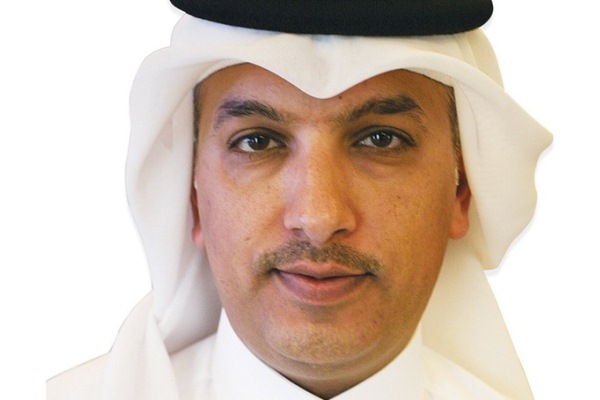
Doha: The Minister of Finance Ali Shareef Al Emadi stressed that the country will continue to see growth, but stressed that Qatar will look to rely more on the private sector.
HE the Minister of Finance was speaking at an event held by Carnegie Mellon in Qatar on the progress of the Qatari economy in the past 20 years. Despite Qatar's reliance on oil, HE the Minister said that the country aims to move towards a knowledge-based economy. Numbers show that Qatar has succeeded in establishing strong growth over the past 20 years. Back in 1995, Qatar's GDP was around $8 billion. It has grown to $162 billion in 2005. By 2014 the economy has grown 26 times compared to 1995.
His Excellency noted that one of the main challenges facing the Qatari economy is that it maintains its LNG global market share. Currently, Qatar supplies the world with 30% of its energy needs. Used at the current pace, Qatar's LNG resources would run out in 140 years.
As for the budget, HE the Minister noted that it was at $4 billion back in 1995. It has grown to $300 billion last year. His Excellency noted that the international events, particularly World Cup 2022, requires investments worth $200 billion from 2014-2022. That means, HE the Minister said, that the country needs to spend $500 million every week until 2022. His Excellency noted that Qatar has never had a budget deficit over the past 15 years, although the decline in oil prices will change that. Despite this, the deficit will not represent a problem to Qatar's ability to finish its infra-structure projects, which will end on 2024.
In terms of foreign reserves, Qatar's reserves in 1995 were less than $500 million. It has grown to $157 billion in Qatar Central Bank. There are also reserves available to Qatar Investment Authorities that have not been announced, His Excellency added. Additionally, Qatar has an AA rating from Fitch, which reflects a very strong credit position.
QNA