Doha, Qatar: From the legacy of the World Cup to the horizons of the Olympics, Qatar is writing a new chapter in its sporting journey as it pursues its ambition to host the 2036 Olympic and Paralympic Games. This bid builds on accumulated experience in organizing major global championships, as well as a robust network of sports facilities, infrastructure, and organizational expertise developed over years.
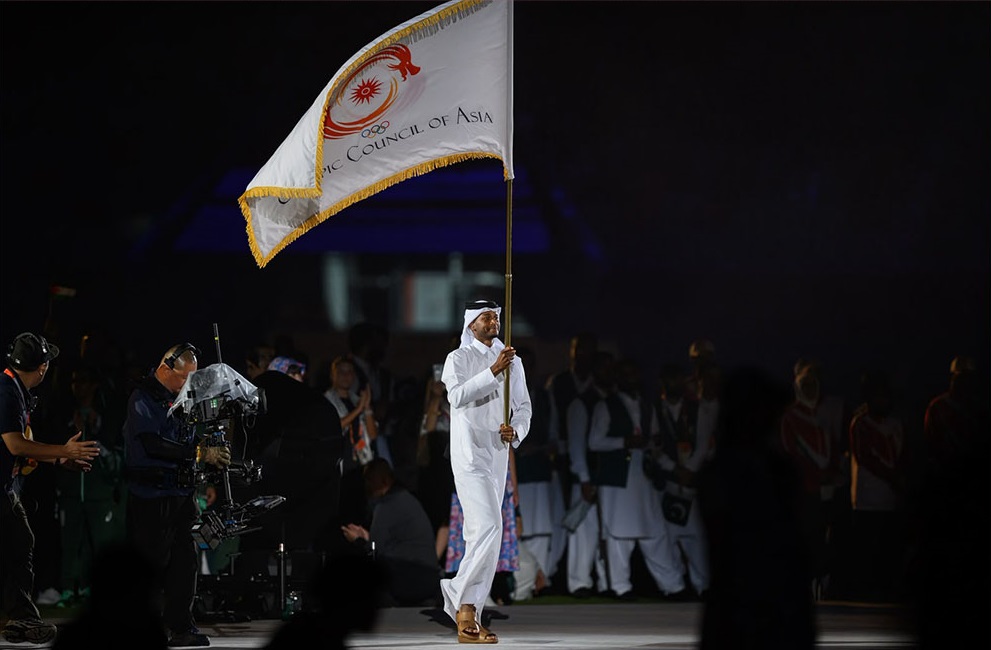
With Qatar's receipt of the flag for the 2030 Asian Games, a new milestone begins along this path. The upcoming Asian Games will serve as a practical test for the readiness of the country's facilities and organizational framework, and for their capacity to accommodate large-scale continental competitions and events.
Moreover, the upcoming hosting of the Asian Games carries significance that extends beyond the boundaries of competition. It demonstrates the trust placed by the Olympic Council of Asia and the continent's sports community in Qatar's ongoing capability to host major sporting events.
Qatar enters the race to host the 2036 Olympics-guided by its extensive experience in organizing major global sports events-toward a new ambition: seeing Doha one day host the world's largest sporting event.
The International Olympic Committee's official inclusion of Qatar on the list of countries interested in hosting the 2036 Games provides a solid foundation for its bid.
This step reflects the country's growing presence on the global sports map and opens the door to an Olympic project whose ambition transcends hosting a single sports event, aiming instead to deliver an exceptional experience that showcases Qatar's ability to turn aspirations into reality.
Qatar's ambition to host this event is not merely an attempt to enter the bidding race; rather, it is anchored in years of investment in sports, venues, and organizational expertise.
This positions Qatar to present a bid centered on operational readiness rather than the construction of new infrastructure specifically for the event.
Qatar's efforts to host the Olympic and Paralympic Games date back to July 2025, when the Qatar Olympic Committee, headed by HE Sheikh Joaan bin Hamad Al-Thani, President of the Qatar Olympic Committee and chairman of the bid committee, confirmed its participation in ongoing discussions with the International Olympic Committee regarding hosting the Games.
As part of its bid assets, Qatar boasts an advanced sports ecosystem. Estimates indicate that roughly 95 percent of the infrastructure required to host the Games is already in place, reflecting years of work to develop sports venues and supporting facilities to international standards, while leveraging the legacy left by Qatar's hosting of numerous major tournaments and sporting events.
This ecosystem includes modern stadiums and specialized facilities for various sports, alongside training and preparation centers, aquatic complexes, athletics and team sport facilities, and an integrated network of hotels, lodging, medical, and logistical services. These are supported by advanced infrastructure in transportation, roads, and transit, providing a comprehensive foundation to welcome athletes, delegations, and fans.
This readiness takes on special significance given the nature of the Olympic Games, which require hosting dozens of sports across multiple venues, alongside training, accommodation, transportation, and auxiliary services of the highest efficiency-requirements that Qatar has advanced far in fulfilling through its continuous sports and developmental investments.
The strengths of the Qatari bid are not limited to infrastructure. Qatar has also accumulated broad organizational experience by hosting global, continental, and regional sports events, contributing to the development of an integrated system for managing major competitions and enhancing related human, organizational, and technical capabilities.
In the broader dimension of the bid, the concept of sports as a vehicle for bringing peoples and cultures closer together stands out. This was emphasized by HE Sheikh Joaan bin Hamad Al-Thani, President of the Qatar Olympic Committee and chairman of the bid committee, in July 2025, when he underscored the power of sports and their impact on empowering individuals and unlocking their potential, particularly youth.
This approach carries a dimension that extends beyond the organizational aspects of the event, linking to Qatar's vision of the role of sport in building bridges of communication, strengthening mutual understanding among peoples, and supporting the values of peace and rapprochement-principles that Doha seeks to highlight within its vision for hosting the world's largest sports gathering.
Qatar's bid to host the 2036 Olympic and Paralympic Games has gained a pan-Arab dimension with the ministerial-level support of the Arab League Council, a stance reflecting regional backing that complements the bid's technical and organizational strengths.
This support, alongside the country's advanced readiness and expertise, underscores that competing to host the 2036 Games is not about building a new Olympic city from scratch. Instead, it relies on utilizing and adapting an existing sports ecosystem to meet the event's requirements, while maintaining a long-term vision for sporting legacy after the competitions conclude.
As the International Olympic Committee continues its consultations and selects the path for determining the host city, Qatar is putting forward its credentials as a nation with advanced sports infrastructure, experience in organizing major events, a supporting infrastructure network, and a vision linking the Olympics to broader goals of sports development, youth empowerment, and cross-cultural communication.
Consequently, Qatar's bid for the 2036 Games transcends a typical Olympic competition. It serves as a test of a model built on leveraging pre-existing sports infrastructure and accumulated organizational experience, turning that legacy into a foundation for a Games designed to leave a sustainable impact on sports, society, and the region.
This readiness rests on a broad network of sports facilities spanning various disciplines, alongside stadiums built and upgraded for the FIFA World Cup Qatar 2022, which have since become part of the nation's sustainable sports legacy.
This ecosystem extends beyond football pitches to include specialized indoor arenas and facilities for team and individual sports, aquatic disciplines, and athletics, providing a multi-sport foundation suitable for an Olympic program.
Within this framework, the Aspire Academy for Sports Excellence stands out with its world-class indoor arenas, fields, and training facilities, alongside specialized sports preparation and rehabilitation centers, making it a key pillar of the hosting and training infrastructure.
Al Janoub Stadium serves as another example of how venues from the FIFA World Cup Qatar 2022 continue to play a role on the global sports stage. Transformed into a multi-use sports facility after the tournament, it is preparing to host matches for the 2027 FIBA Basketball World Cup, reflecting a strategy of preserving major venues and deploying them for successive international events. The same applies to Lusail Stadium, which cemented its status as one of Qatar's premier sports landmarks after hosting several marquee football matches, remaining part of a reusable sports legacy.
Qatar also possesses an extensive network of specialized facilities across numerous sports, training camps, lodging, and medical and logistical services, supported by advanced roads, public transit, hotels, and service amenities. This includes the Doha Metro network, which offers fast and seamless transit between various areas of the country and its sports venues.
This integrated system gives visitors significant mobility, allowing fans to attend multiple sporting events in a single day without navigating long distances. This was evident during Qatar's hosting of the FIFA World Cup Qatar 2022, the AFC Asian Cup 2023, and the FIFA Arab Cup Qatar 2025, where the close proximity of venues and their integration with transit networks allowed fans to attend two or three matches on the same day-an advantage that adds value to any Olympic and Paralympic hosting concept.
The bid is further supported by Qatar's diverse tourism assets, blending cultural and heritage landmarks with modern entertainment destinations, alongside pleasant winter weather that makes the country an attractive destination for visitors during competition months.
Attractions that appeal to athletes, fans, and delegations include museums showcasing Qatari history and culture, Souq Waqif representing local heritage, the Doha Corniche along the waterfront, the Katara Cultural Village, and the modern city of Lusail with its high-end tourism and entertainment amenities.
Mild winter weather enhances the feasibility of organizing sports and tourism activities under favorable conditions, while the country's compact geography allows visitors to combine attending competitions with exploring cultural sites in a short timeframe.
This geographic proximity also benefits athletes by minimizing travel times between accommodation, training sites, and competition venues-a critical factor for a multi-sport event featuring thousands of participants.
These options enable visitors to combine athletic competition, cultural discovery, heritage exploration, and entertainment into a single trip, boosting Qatar's appeal as a host for a global gathering of the scale of the Olympic and Paralympic Games.
Readiness extends to human resources, with Qatar boasting national personnel possessing deep expertise in managing and organizing major sporting events. Some of these professionals contributed to the operational planning and preparation for the 2026 FIFA World Cup in the United States, Canada, and Mexico, building on experience gained during the 2022 World Cup.
This participation reflects the export of Qatari expertise to international sports forums, as national cadres acquire practical knowledge in planning, operations, venue management, and event execution for global-scale events.
This human capital represents a vital element of the legacy for any future Olympic hosting. Success on this scale depends not only on venues and infrastructure, but also on qualified personnel capable of managing daily operations, running sites, and coordinating across sectors-expertise accumulated through successive major sporting events hosted in recent years.
As the 2036 Olympic race approaches its final stages, Qatar presents a bid driven not merely by the desire to host, but by integrated readiness and assets built over years of investment in sports, infrastructure, organizational know-how, and tourism.
If the Olympic Games seek cities capable of welcoming athletes and fans while delivering a seamless experience, Doha enters the race with an established sporting legacy, aiming to translate its experience and venues into an Olympic vision whose impact extends far beyond the closing ceremony.