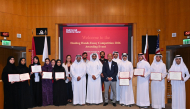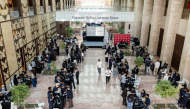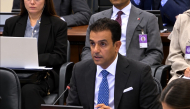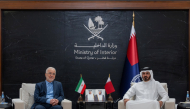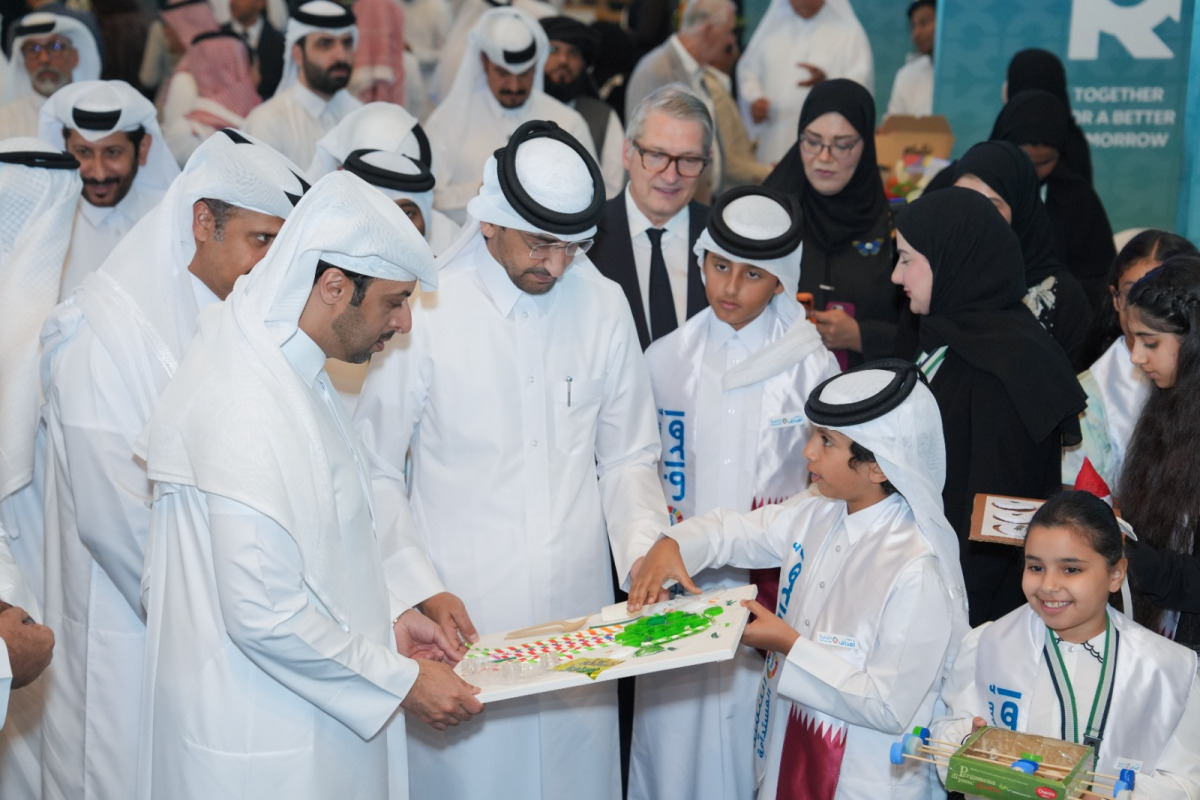
Minister of Municipality H E Abdullah bin Hamad bin Abdullah Al Attiyah, Minister of Justice and Minister of State for Cabinet Affairs H E Ibrahim bin Ali Al Mohannadi interacting with exhibitors during the event.
Doha, Qatar: Qatar’s recycling sector has expanded to 61 factories, as the sixth Recycling Towards Sustainability Conference and Exhibition 2026 opened in Doha yesterday, highlighting the country’s growing efforts to turn waste into resources and accelerate its transition towards a circular economy.
The two-day conference, organised by the Ministry of Municipality at Raffles Doha, with broad participation from government and semi-government entities, private-sector institutions, local and international companies, experts, specialists and decision-makers in recycling, sustainability and the circular economy.
The opening ceremony was attended by Minister of Municipality H E Abdullah bin Hamad bin Abdullah Al Attiyah, Minister of Justice and Minister of State for Cabinet Affairs H E Ibrahim bin Ali Al Mohannadi and other dignitaries.
In his opening speech, the Minister of Municipality said the conference represents a national platform bringing together government entities, the private sector, academic and research institutions, experts and specialists to exchange knowledge, showcase innovative solutions and build partnerships supporting the future of recycling and sustainability in Qatar.
He said the platform would contribute to Qatar’s transition towards a circular economy and support sustainable development by strengthening cooperation among the different stakeholders involved in the sector.
Highlighting Qatar’s progress, the Minister said 45% of household waste was diverted away from landfills in 2025, while the Waste Treatment Centre generated more than 276,000 megawatt-hours of electricity during the year.
The centre also processed more than 10,000 tonnes of waste tyres, produced more than 34,000 tonnes of organic fertiliser and sorted and recovered more than 37,000 tonnes of recyclable materials, according to the Minister.
“At the same time, recycled construction materials produced at Rawdat Rashid reached around 3.9 million tonnes in 2025, further demonstrating the scale of Qatar’s resource-recovery and recycling activities,” he added.
Al Attiyah highlighted the Ministry’s efforts to strengthen the role of the private sector and develop recycling industries, noting that the number of factories allocated in Al Afjah Recycling Industries Zone reached 61. Of these, he said, 29 factories are operational, 19 are under construction and 13 are in the development phase.
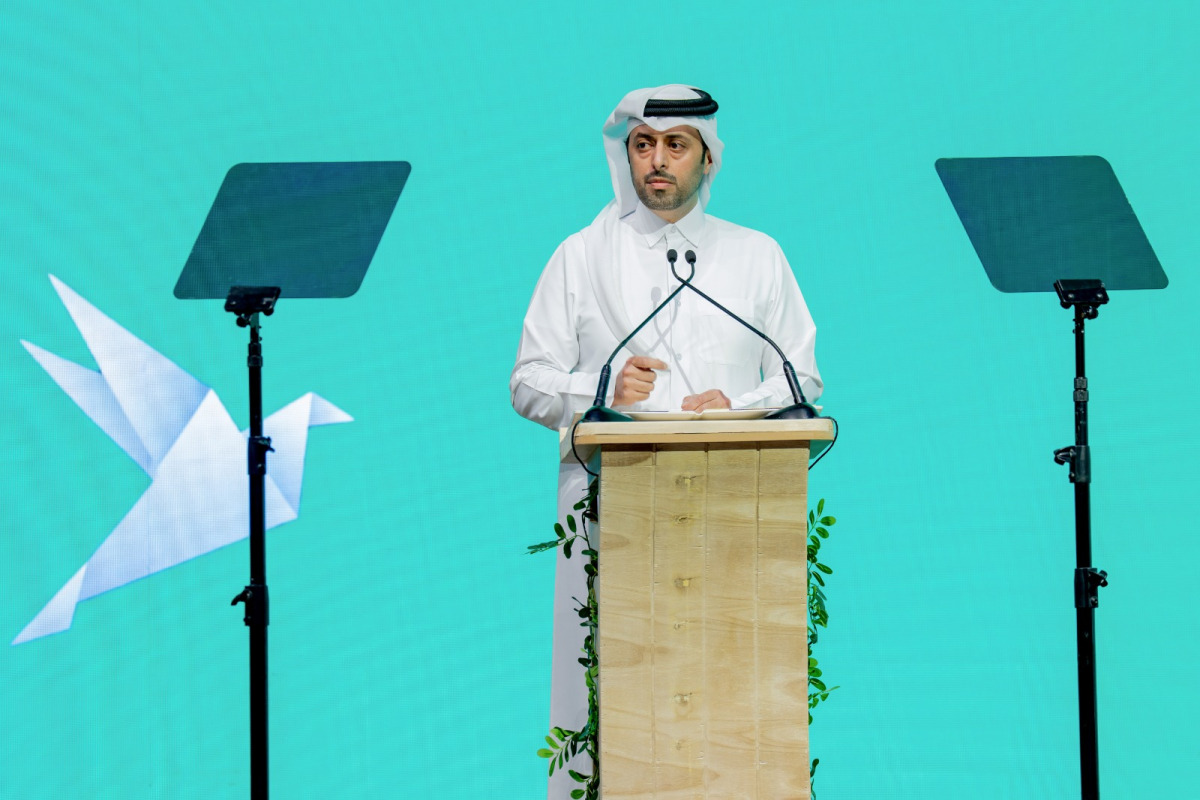 H E the Minister of Municipality speaking at the event.
The Minister also pointed to the impact of investment opportunities offered by the Ministry in 2025. Nine investors were selected to establish new recycling factories, a move aimed at increasing private-sector participation, developing recycling industries and supporting the diversification of Qatar’s national economy in line with the objectives of the Third National Development Strategy.
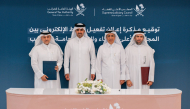
As part of the conference, lease agreements were signed with four of the nine selected investors to establish new recycling-industry projects on land allocated for this purpose.
The agreements represent a step towards translating investment opportunities into actual projects and expanding the industrial base supporting recycling and the circular economy.
Al Attiyah said the Ministry is working to establish an integrated and sustainable waste-management system based on optimum use of resources, greater recycling and the deployment of modern technologies.
He outlined a number of strategic projects being implemented under the Zero Waste Initiative, including the development of a new engineered landfill in Mesaieed, rehabilitation of existing landfills, establishment of a central station for sorting and recovering recyclable materials, and development of an advanced facility for generating energy from municipal waste.
“The Ministry is also developing a national smart and integrated waste-management system based on digital solutions and unified databases.
“The system is intended to improve service efficiency and monitoring, enhance data quality, support planning and decision-making, and achieve higher levels of operational efficiency,” said Al Attiyah.
The Minister stressed the wider importance of sustainability, saying that “sustainability is no longer an additional option, but has become a fundamental pillar in planning for the future and a key driver for enhancing economic efficiency, protecting resources and improving quality of life.”
He also stressed that achieving a successful transition towards a circular economy requires integrated efforts by the government, private sector, academic and research institutions and society. This, he said, means “turning ideas into projects, technologies into applications, and partnerships into tangible results.”
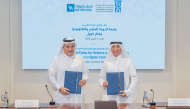
The conference also witnessed the signing of two memoranda of understanding with the Gulf Organisation for Research and Development (GORD) and the University of Doha for Science and Technology, strengthening cooperation in sustainability, innovation, research and development and capacity building.