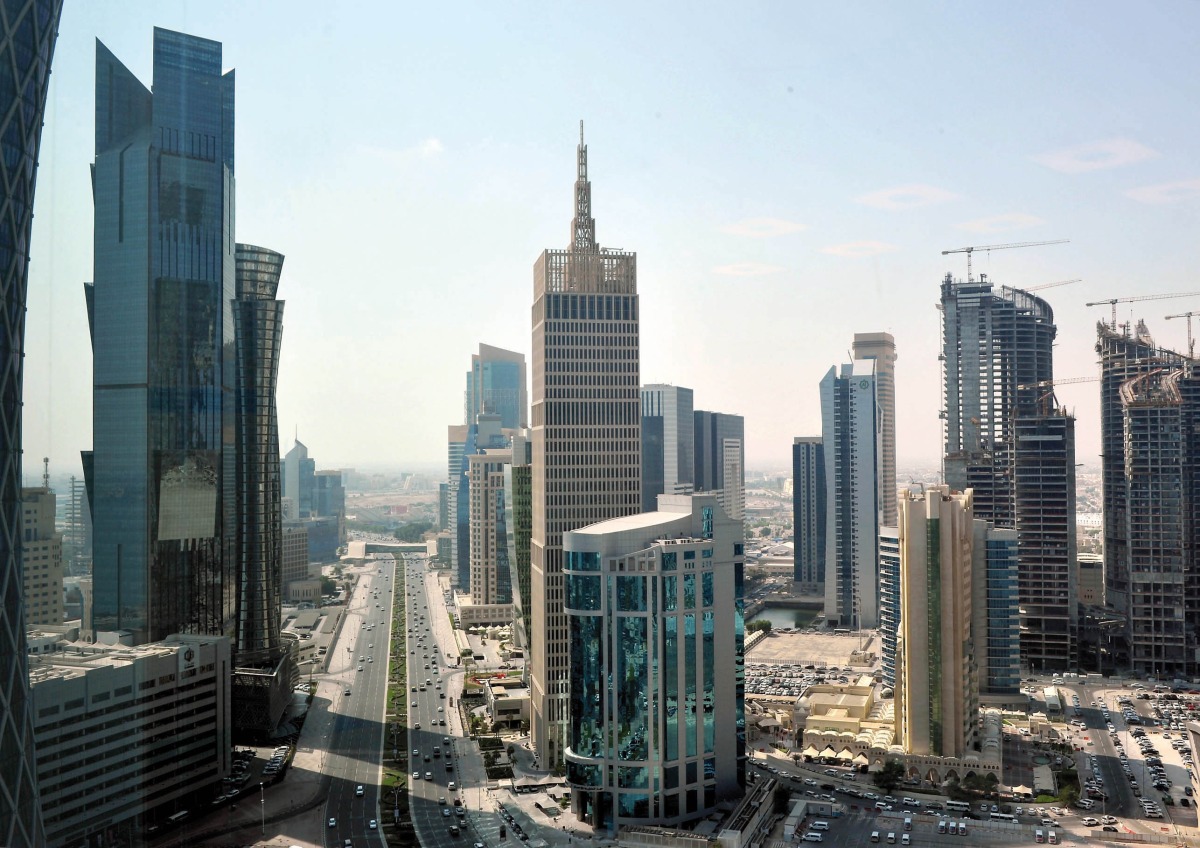
Doha, Qatar: Qatar’s banking sector will continue to remain resilient in this year and the rapid growth of LNG production will benefit the country.
Highlighting the Qatari banks’ resilience through 2026, S&P Global Ratings report released yesterday noted that over the coming year,“we anticipate continued strong capitalisation and adequate liquidity; modest declines in profit margins due to interest rate cuts and taxes; and somewhat muted growth, despite expectation of a rapid expansion of liquified natural gas (LNG) production that will benefit the country’s headline growth and its budget and current account surpluses.
“We forecast that Qatar’s North Field Expansion project will increase LNG production by about 32% by 2027 and contribute to stronger real GDP growth of an average of 5% in 2026-2028, up from 2.7 percent growth in 2024-2025. Higher LNG production should have a positive spillover effect on government revenues and the non-hydrocarbon economy.
“However, we expect lending growth to remain at around 4% to 5% ,” it noted.
The rapid lending growth in recent years has been relatively concentrated in high-risk cyclical sectors, including real estate, real estate rental services, hotels, contracting, and commercial agencies and investment companies. These sectors account for just under 50% of total domestic credit. “Within these categories, we view commercial real estate as a potential source of new non-performing loans (NPLs),”it further said.
Qatar’s real estate market is experiencing a moderate recovery. The total number of properties/units sold in 2025 increased by about 51% year-on-year (y-o-y), according to data published by Real Estate Regulatory Authority. That was mainly driven by strong demand in the residential housing segment in key areas in and around Doha.
The ongoing recovery is supported by regulatory reforms such as the new ‘Qatar Residency by Investment’ scheme, which offers long-term residency to expatriates that invest in real estate or business. The hotel industry experienced a gradual recovery in the first three quarters of 2025, with tourist arrivals up 2% y-o-y mainly due to visitors from GCC countries.
Regarding the outlook for Qatari banking sector’s asset quality, the report stated, “We expect the estimated systemwide average non-performing loan ratio will decline to about 3.4% in 2026-2027, down from an estimated 3.7% in 2024-2025, supported by the stable asset quality of two largest banks - Qatar National Bank (QNB) and Qatar Islamic Bank (QIB).”
“We expect new non-performing loan generation to remain modest amid steady improvement in the performance of the real estate sector. Still, legacy real estate exposures will contribute to significant Stage 2 loan exposure for some mid-sized banks.
“Nevertheless, we expect interest rate cuts, precautionary provisions booked over the past few years, and a combination of recoveries and write-offs should help stabilise asset quality. We estimate that systemwide coverage ratio stood at about 128% as of as of September 30, 2025 and will remain above 100 percent in 2026-2027,” it added.