By Fazeena Saleem
DOHA: Governments and international bodies were urged yesterday in Doha to provide youth with education and awareness to prevent crime.
The wellbeing of youth must become a major priority for every nation and work must start within communities, to address the burden of crime among youth, said experts at the first Doha Youth Forum on Crime Prevention and Criminal Justice.
“In reality many children in the world are denied basic and fundamental rights. This is a serious problem that we need to examine critically in the context of implementing law and crime prevention. Poverty and illiteracy lead to juvenile crime and human trafficking. The best solution is education, as education is a tool for economic and social development,” said Thai Princess Bajrakitiyabha Mahidol, in her keynote speech at the opening of the forum.
Princess Bajrakitiyabha, once worked at the Thai permanent mission to the United Nations, is involved with many social activities.
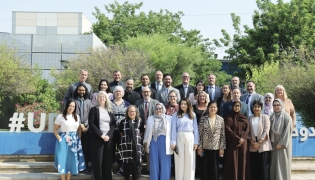
The three-day forum being held at the Qatar National Convention Centre provides a platform for 125 students from different nationalities to express their ideas and views on youth issues in the region as well as challenges faced by communities in fighting and preventing crime.
“Raising awareness, skills and giving education re the key tools to prevent youth from crime. They shouldn’t be marginalised but should be heard,” said H E Salah bin Ghanem bin Nasser Al Ali, Minister of Youth and Sports, in his opening speech.
The Doha Youth Forum is initiated by Qatar Foundation and hosted along with Ministry of Interior, and the United Nations Office on Drugs and Crime.
Participants at the forum will role-play the 13th United Nations Congress on Crime Prevention and Criminal Justice under three themes. The first theme addresses successes and challenges in implementing comprehensive crime prevention, criminal justice policies and strategies to promote the rule of law at national and international level, and support sustainable development.
The second questions national approaches to public participation in strengthening crime prevention and criminal justice.
The other theme will engage the students on their responses to evolving forms of crime such as cybercrime and trafficking in cultural property, including lessons learned and international cooperation.
Besides familiarising youth with the role and functions of the United Nations, the forum will engage them in various discussions on criminal justice and how to prevent crime through concrete and practical solutions.
“It provides a platform for youth to represent them and share their thoughts, as its critical to engage youth in finding solutions,” said Sheikha Alya bint Ahmed bin Saif Al Thani, Permanent Representative of Qatar to the united Nations.
The forum will compile a final report to be presented at the culmination of the 13th United Nations Congress on Crime Prevention and Criminal Justice, scheduled between April 12 and 19.
According to the World Health Organisation, worldwide some 200,000 homicides occur among youth between 10 and 29 years of age each year, which is 43 percent of the total number of homicides globally every year. Youth violence has a serious, often lifelong, impact on a person’s psychological and social functioning. Youth violence greatly increases the costs of health, welfare and criminal justice services; reduces productivity; decreases the value of property; and generally undermines the fabric of society.
The Peninsula