Driven by the non-hydrocarbon sector, Qatar's growth is expected to pick up in 2017. Growth in the non-hydrocarbon sector was 5.6 percent in 2016. Despite low oil prices, the Qatari economy has continued to be resilient in the face of low oil prices, QNB noted in its report.
Qatar has enjoyed the strongest non-hydrocarbon GDP growth in the region throughout the oil price decline. “Going forward, we expect growth to pick up in 2017 driven by stronger non-hydrocarbon sector growth due to higher oil prices, an increase in capital spending and fading drag from manufacturing,” noted the report.
Qatar's real GDP growth was 1.7 percent in Q4 and 2.2 percent for 2016 as a whole, moderating from annual growth of 3.6 percent in 2015, according to Ministry of Development Planning and Statistics (MDPS) data.
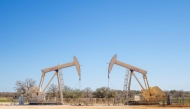
The hydrocarbon sector contracted by 1 percent in 2016. This was due to declines in both crude oil and natural gas production. Natural gas and related liquids production, the remaining 85 percent of the hydrocarbon sector, declined likely as a result of maintenance carried out on some of Qatar’s liquefied natural gas trains during the year.
Growth in the non-hydrocarbon sector was 5.6 percent in 2016. Construction sector was the largest contributor to growth, adding 2.3 percentage points (pps). Following construction, services such as finance (1.0 pps), government (0.8 pps) and real estate (0.6 pps) were the other key sectors supporting growth. Underpinning and driving growth in these sectors was robust population growth of 7.3 percent in 2016.
These gains more than offset a contraction of 1 percent in manufacturing, the largest segment of Qatar’s non-hydrocarbon economy accounting for 20 percent of the sector. However, this decline is attributable entirely to lower output in Q2 2016 and appears to be a one-time occurrence. We expect growth to pick up in 2017, led by the non-hydrocarbon sector. Supporting higher growth will be three key factors. Report expects oil prices to pick up and average between $55/b and $60/b in 2017, an increase of over 20 percent from the average level of $45/b in 2016. In addition to boosting government revenues, higher oil prices will improve consumer and business sentiment, leading to faster job creation, more spending on durable and non-durable consumer goods and higher investment. Indeed, we have seen signs of that with the recovery in the fourth quarter of 2016, which bodes well for 2017.
Second, the government announced in its latest budget plans to raise capital spending by 3.2 percent in 2017. This was also accompanied by a commitment to increase the allocation to capital spending over the next three years, providing support to future growth. The government’s commitment is buttressed by its strong balance sheet.
Third, the drag from the manufacturing sector should fade in 2017. Manufacturing subtracted 0.2 pps in 2016 compared to adding an average of 0.6 pps to non-hydrocarbon growth over 2014-15. The sector has already begun to recover, posting positive growth in Q4 2016. A rebound in the sector will also be aided by the opening of a new refinery in Ras Laffan which began production in December 2016.