THE PENINSULA
DOHA: The Endowment Studies Center at the General Directorate of Endowments, under the Ministry of Awqaf and Islamic Affairs, has released the seventh issue of its peer-reviewed international scientific journal “Waqf”, reinforcing its role as a leading knowledge platform in the fields of Islamic endowments, Islamic economics, and charitable work.
The latest edition comes in line with evolving development priorities and contemporary issues in the endowment sector, offering research contributions aimed at modernizing waqf tools and enhancing their developmental impact.
The journal seeks to provide researchers and specialists with an academic platform to publish peer-reviewed studies in both Arabic and English, while also promoting knowledge dissemination through print and digital formats. It aims to enrich scholarly dialogue and expand awareness around endowment practices and Islamic finance.
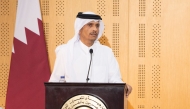
Dr. Khalid Al-Aoun (pictured), Head of the Endowment Studies Center, said the journal reflects a diversity of development-focused topics, serving as a valuable scientific reference for researchers and practitioners in the waqf and Islamic economics sectors. He described the publication as an important resource for policymakers, academics, and professionals working in the field.
He added that the seventh issue offers a strong knowledge base that supports the development of scientific perspectives and opens new research avenues through applied studies rooted in real-world waqf practices. These studies are supported by practical recommendations designed to strengthen legislation and address sector gaps. Dr. Al-Aoun emphasised that the issue highlights modern research trends focused on improving waqf tools, enhancing institutional efficiency, and keeping pace with digital and economic transformations. These efforts aim to ensure the sustainability of endowments and maximize their socio-economic impact.
The seventh issue includes a range of specialized studies, notably a strategic analysis on food security in waqf throughout Islamic history, highlighting the historical role of endowed assets in establishing sustainable food safety nets. Another study explores taxation and waqf during the Mamluk era, examining the balance between state revenue needs and the protection of endowment rights.
The issue also presents a scholarly discussion on the principle “the airspace of a waqf is itself waqf”, addressing how upper spaces of endowed properties can be utilized as productive assets in line with contemporary needs.
In addition, it features an economic modeling study of public waqf (government endowments), analyzing their contribution to macroeconomic stability and financial systems.
A dedicated section addresses Sharia governance challenges of smart waqf platforms, offering critical insights into regulating emerging endowment technologies within sound governance frameworks.
The journal’s seventh issue is available online, alongside previous editions, through the official website of the General Directorate of Endowments. The publication is supported by an advisory board comprising distinguished academics from across the Arab and Islamic world. The Endowment Studies Center invites researchers and writers to contribute their studies and research papers related to waqf and its associated fields.
The General Directorate of Endowments also called on individuals interested in establishing charitable endowments to contribute through various channels, including online donations via its official website, mobile services, and dedicated contact numbers, as part of ongoing efforts to promote sustainable charitable giving and community development.