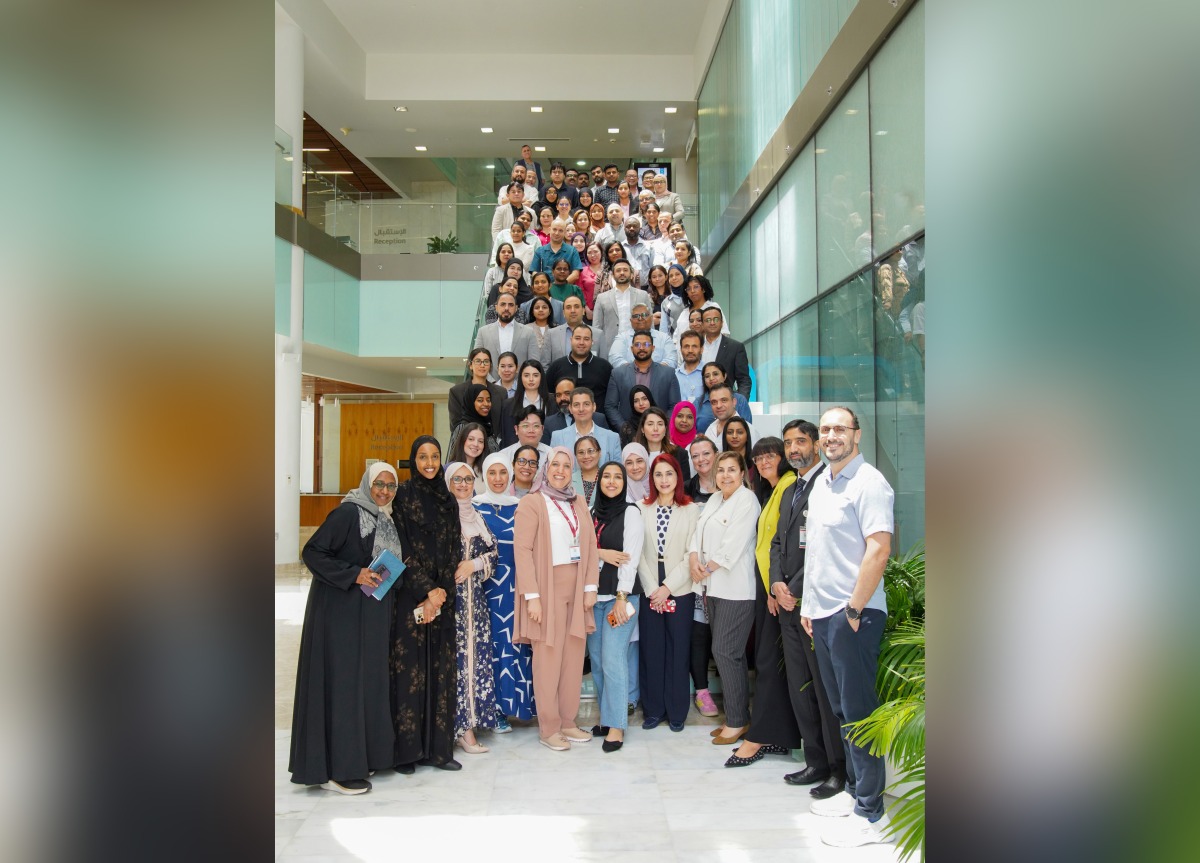
Doha, Qatar: The Ministry of Public Health recently organized a national workshop on healthcare-associated infection surveillance at Itqan Center for Innovation and Medical Simulation in Hamad Bin Khalifa Medical City.
More than 100 healthcare professionals participated in the two-day workshop, including representatives from the governmental, semi-governmental, and private sectors, infection prevention and control specialists, quality and patient safety leaders, and frontline healthcare professionals such as nurses, physicians, microbiologists, and pharmacists from hospitals, primary healthcare centers, and diagnostic and treatment facilities.
The workshop aimed to strengthen national capacities in healthcare-associated infection surveillance and support the implementation of a unified national programme based on standardized criteria and scientific evidence. Strengthening surveillance systems is considered a fundamental pillar of effective infection prevention and control programmes, as it enables healthcare institutions to identify risks at an early stage, monitor trends and key performance indicators, and implement targeted interventions that contribute to improving patient outcomes.
The workshop reviewed the key components of the national surveillance programme and its implementation roadmap through an in-depth exploration of surveillance objectives and methodologies, standardized data collection tools, and strengthening participants’ capacity to analyse and utilize infection prevention and control indicators such as surgical site infections, device-associated infections, hand hygiene compliance, and exposure to blood and body fluids. The workshop also focused on evidence-based best practices for infection prevention, reinforcing the link between surveillance and the implementation of effective preventive measures.
During the workshop, experts from the Ministry of Public Health and Hamad Medical Corporation delivered comprehensive scientific sessions covering standardized surveillance definitions and methodologies, as well as data collection and reporting approaches. Interactive discussions, simulations, and scenario-based practical exercises were also conducted, contributing to enhancing participants’ ability to apply the acquired knowledge in daily practice and bridging the gap between theory and practice.
The organization of the national workshop on healthcare-associated infection surveillance reflects the growing commitment within the healthcare sector to strengthening infection prevention and control practices, as well as the importance of collaboration and shared responsibility in supporting national healthcare quality initiatives. The results of the participant survey also demonstrated the workshop’s success in achieving its objectives.
The Healthcare Quality Department at the Ministry of Public Health continues to organize a wide range of specialized capacity-building workshops aimed at reaching a broader segment of healthcare professionals and supporting them in advancing surveillance practices. These efforts directly contribute to building a safer and more sustainable healthcare system in the State of Qatar, where patient safety remains a top national priority.
Effective healthcare-associated infection surveillance is not merely a reporting tool, but rather a fundamental pillar of patient safety. By strengthening surveillance systems, healthcare institutions can significantly reduce the burden of these infections, improve the quality of care, and ensure a safer healthcare environment for both patients and healthcare workers.