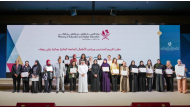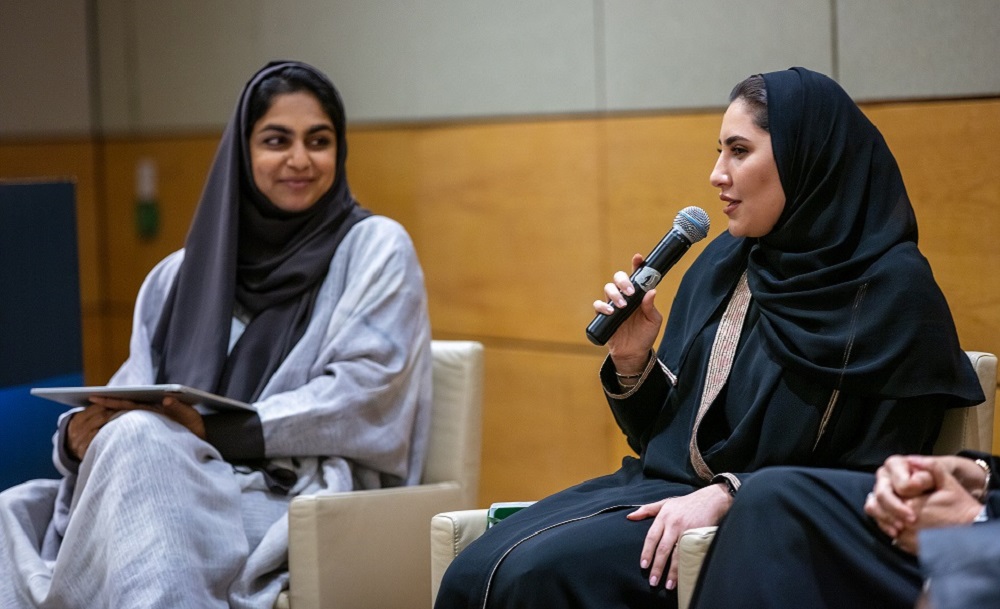
Nihal Al Saleh and Lulwa Al Darwish during the discussion.
Doha: How Qatar’s preparations for the upcoming FIFA World Cup have helped to catalyse social change for persons with disabilities – and make it the most accessible tournament to date, were highlighted during a panel discussion at Multaqa recently.
The discussion, which took place during the Accessibility Forum held by the FIFA World Cup Qatar 2022 organisers, saw Alexandra Chalat, Director of Community Engagement and World Cup Legacy at Qatar Foundation (QF), explain the organisation’s role in building a long-lasting accessibility legacy that extends beyond the tournament.
“QF has always prioritised accessibility as a key component of its mission to unlock potential and education through its schools, focused programs, facilities, and infrastructure,” said Chalat.
“Both our Ability Friendly Program and partnership with Generation Amazing provide opportunities in sports for youth with different abilities. And with hosting the World Cup, we looked at how we could scale these to reach more young people – as well as raise awareness about accessibility.
“Additionally, QF has been developing and delivering the training for the accessibility volunteers, which has reached more than 200 people. They will be directing and supporting fans, visitors and residents alike on their fan journeys,” she added.
Another speaker at the panel was Michael Richardson, a Master Coach at Generation Amazing, who emphasised what it takes to make a tangible impact.
Another session, moderated by Nihal Al Saleh, Program Manager at Earthna Centre for a Sustainable Future – a member of QF – shed light on the sensory rooms. Described as “steppingstones”, they will help people with different abilities – and their families – enjoy the games in a comfortable, safe space.
Lulwa Al Darwish, a special education teacher at Renad Academy, part of QF’s Pre-University Education, which helps children who have been diagnosed with mild to moderate Autism Spectrum Disorder, underlined the importance of providing equal opportunities for everyone in the community.
“Everybody is highlighting that we are creating a space that will allow access to remarkable events, and it’s good to be aware. But it’s also much more important to be accepting, without labelling, to treat every person as an individual that has equal rights, and to let their family know that their child is welcome regardless of their abilities or challenges,” said Al Darwish.