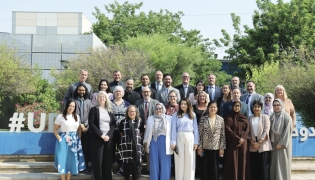
DOHA: Participants in the Doha Youth Forum on Crime Prevention and Criminal Justice, in their recommendations yesterday, urged governments around the world to convene regional youth forums on crime prevention and criminal justice which would be accessible to young people.
They also suggested the establishment of an independent Global Youth Council to discuss problems endemic to communities around the world.
The participants divided their recommendations into nine themes. The 18 comprehensive solutions will be presented to the 13th United Nations Congress on Crime Prevention and Criminal Justice, which is taking place in Qatar next week, as the Doha Youth Forum Declaration.
Over the past three days, 150 delegates from a variety of educational backgrounds, nationalities, and of various ages, worked together to create a list of 18 tangible and realistic solutions designed to address global challenges in crime prevention and criminal justice. The event took place at Qatar National Convention Centre.
The Forum encouraged participants to think creatively and served as an opportunity to nurture and develop local youth in line with Qatar Foundation’s overarching mission of unlocking human potential and promoting a culture of excellence.
Recommendations under the second theme, ‘Public Awareness and Education’, included the creation of a global awareness campaign aligned with United Nations’ efforts to implement and promote a greater human rights culture and consciousness globally.
The third theme addressed ‘Community Action and Reporting Crime Through Technology’. Delegates called upon governments, with the support of the United Nations and the private sector, to take measures to strengthen the use of technology to facilitate the reporting of crime.
The fourth topic was ‘Prisons and Reintegration of Offenders’. Participants urged governments, in partnership with non-governmental organisations, to prioritise rehabilitation programmes inside and outside correctional institutions to improve the process of offenders’ reintegration into society.
The fifth theme addressed ‘Economic Development and Employment Opportunities’.
Representatives called upon private sector entities, governments and the United Nations to join forces to promote and provide opportunities to people living in vulnerable situations and crime-prone areas, particularly young people, to serve in internship or training programmes with a view to long-term, stable employment. The participants suggested that such initiatives be offered as incentives to the underprivileged.
On the sixth topic, ‘Human Trafficking’, the participants urged member states, non-governmental organisations, the private sector and other active stakeholders in the field of human trafficking to adopt and promote comprehensive policies that support measures aimed at preventing human trafficking, and at providing assistance to victims of trafficking and protecting them from further victimisation.
The seventh topic addressed identity theft, with participants encouraging governments, social networking companies and all relevant stakeholders to take the necessary measures to prevent and punish identity theft.
The ‘Cybercrime and Other Emerging Crimes’ theme addressed the promotion of public-private partnerships designed to address the challenges of cybercrime.
The final theme was drug trafficking, and delegates suggested support to joint initiatives between countries focusing on drug seizures and border control.
THE PENINSULA