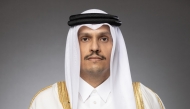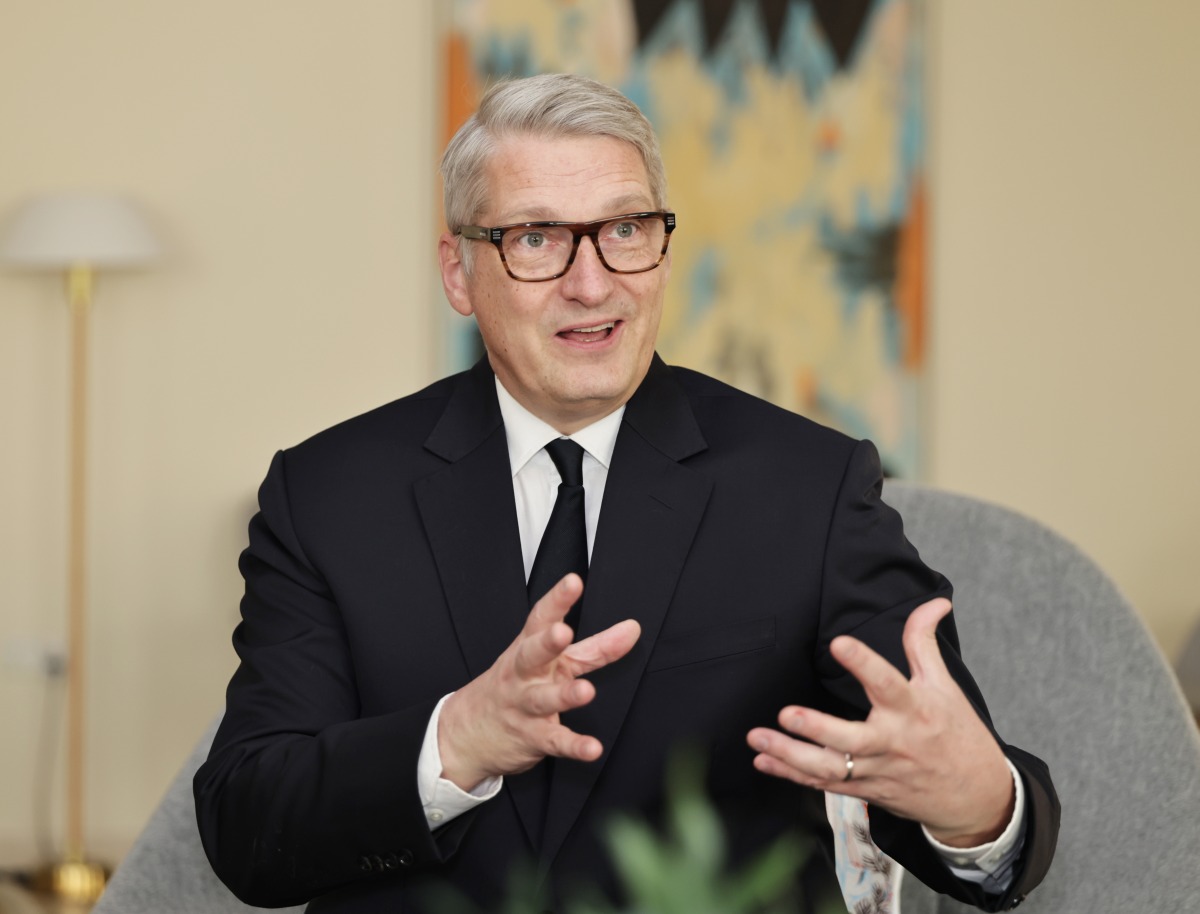
Finland Ambassador to Qatar H E Juha Mustonen
Doha, Qatar: Coinciding with Europe Day on May 9, Finland Ambassador to Qatar H E Juha Mustonen announced the publication of a new policy paper examining the evolving relationship between the Gulf Cooperation Council (GCC) and the European Union, while underscoring Qatar’s growing role as a bridge-builder in the partnership.
Speaking to the media in Doha at his residence, the Finnish envoy said the paper comes at a time when geopolitical shifts and regional developments have created “even bigger” opportunities for cooperation between Europe and the Gulf.
“We already saw this big momentum in Europe-Gulf relations,” Ambassador Mustonen said. “When the economies are diversifying here in the Gulf region, they are modernising a lot, so there opens up many opportunities for Europe and the Gulf to cooperate together.”
The ambassador said that energy cooperation, maritime security, trade routes and intercontinental connectivity have become increasingly important for both regions, particularly following recent geopolitical tensions.
“The security dependency is so evident,” he said. “The energy relations, trade, the maritime security is crucial for our supply chains, be it from Asia or from this area.”
The newly released policy paper, titled From Dialogue to Delivery: Advancing GCC-EU Relations, is based on a seminar held on January 29, 2026, at the UN House in Doha under the theme “Gulf, Nordic and Europe: The New Strategic Partnership for Human Capital and for Digital-Driven Future Economies.”
Authored by Nourah Shuaibi and Amnah Mosley, the report outlines the opportunities and challenges shaping GCC-EU cooperation. It draws on discussions involving former EU commissioners who launched the EU’s strategic partnership initiative with Gulf countries in 2022.
Ambassador Mustonen said the publication aims to “energise the debate” ahead of the anticipated EU-GCC summit scheduled to take place in Riyadh later this year.
“Now that we have strategic partnership agreements on the table and we are negotiating about them, and we are planning to have the EU-GCC summit, the heads of states in Riyadh in the latter half of this year, we really wanted to energise this debate,” he said.
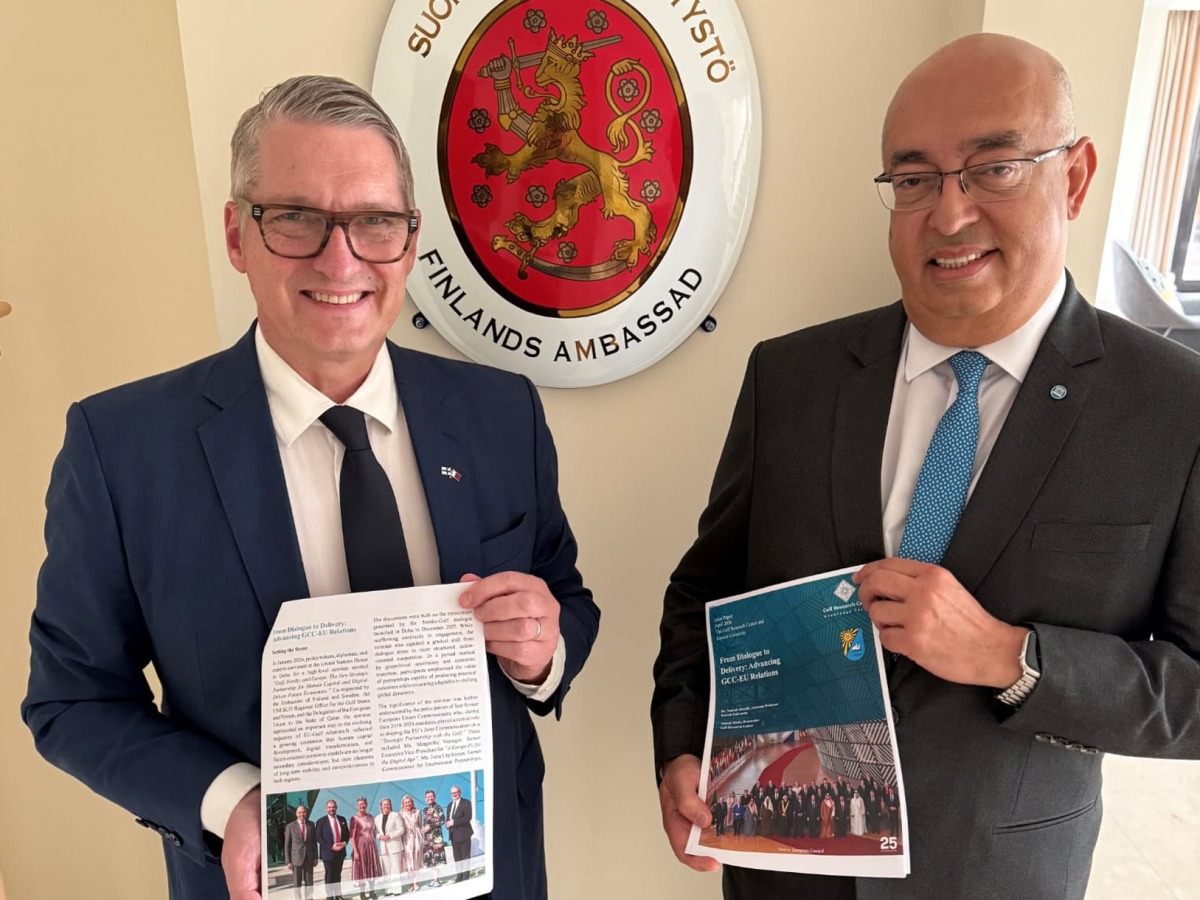 Finland Ambassador to Qatar H E Juha Mustonen and UNESCO’s representative to the Gulf States and Yemen, and Director of its office in Doha Salah Khaled, with the policy paper From Dialogue to Delivery: Advancing GCC-EU Relations.
The envoy outlined eight key observations shaping current GCC-EU discussions, including the Gulf’s growing strategic importance to Europe, the EU’s institutional adaptation through the appointment of a Special Representative for the Gulf and the establishment of DG MENA, and the Gulf’s role in Europe’s energy security, trade connectivity and financial resilience.
He also highlighted the importance of Gulf-led diplomacy and mediation efforts, saying they provide “natural pathways for cooperation” in conflict resolution, de-escalation and humanitarian diplomacy.
While acknowledging limited progress on major issues such as a GCC-EU free trade agreement and visa liberalisation, Ambassador Mustonen stressed that both sides should focus on practical cooperation and achievable outcomes.
“We need to have concrete deliverables, even if the big files like free trade agreement and visa freedom are not proceeding,” he said. “There is a lot that we can proceed in this cooperation.” He pointed to digital transformation, academic collaboration, youth exchange, and tourism and business-to-business engagement as areas with significant potential.
Discussing Qatar’s role in the evolving partnership, Ambassador Mustonen described the country as a key consensus-builder within the GCC and an important interlocutor between the Gulf and Europe.
“Qatar is playing a unique role in building the joint approach of Gulf region,” he said speaking to The Peninsula on the sidelines of the event. “Qatar understands that together, Gulf can gain and achieve more, and it’s trying its best to build these bridges.”
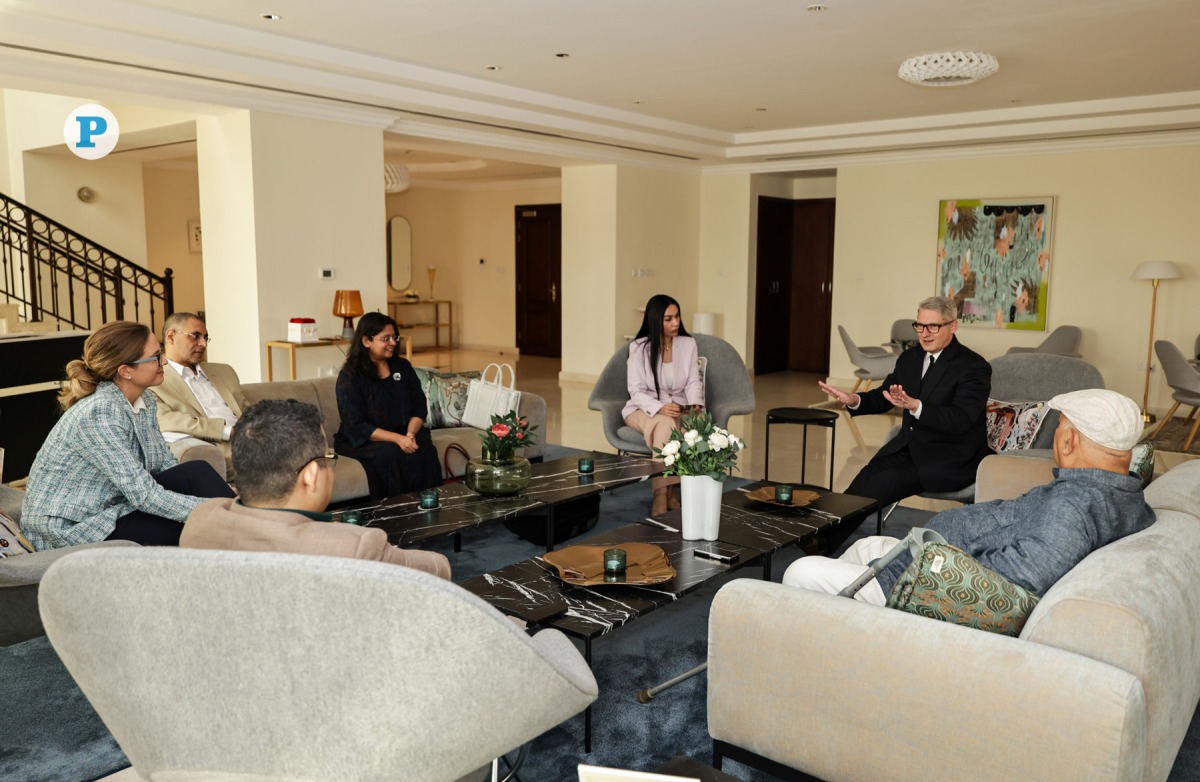 Finland Ambassador to Qatar H E Juha Mustonen during a media discussion at his residence in Doha. Pics by: Salim Matramkot/The Peninsula
He said Qatar’s experience during the blockade years strengthened its understanding of Europe and encouraged diversification of partnerships.
“During those years, Qatar became very interested in Europe and is benefiting now from that experience,” Ambassador Mustonen said. “They are among those countries who understand very well European Union.”
The envoy also recalled Qatar’s role during its GCC presidency, when the first EU-GCC summit was held in Brussels.
“His Highness the Amir was very instrumental in leading that exercise in a very deliverable outcome,” he said. “So there is a track record already.”
Looking ahead to the Riyadh summit, Ambassador Mustonen said the current regional climate has reinforced the interdependence between Europe and the Gulf.
“We really saw that this momentum is even bigger and the opportunities are even wider and deeper in these new circumstances,” he said. “The vulnerability here is also a vulnerability in Europe. And the opportunity on the other side is opportunity to both.”