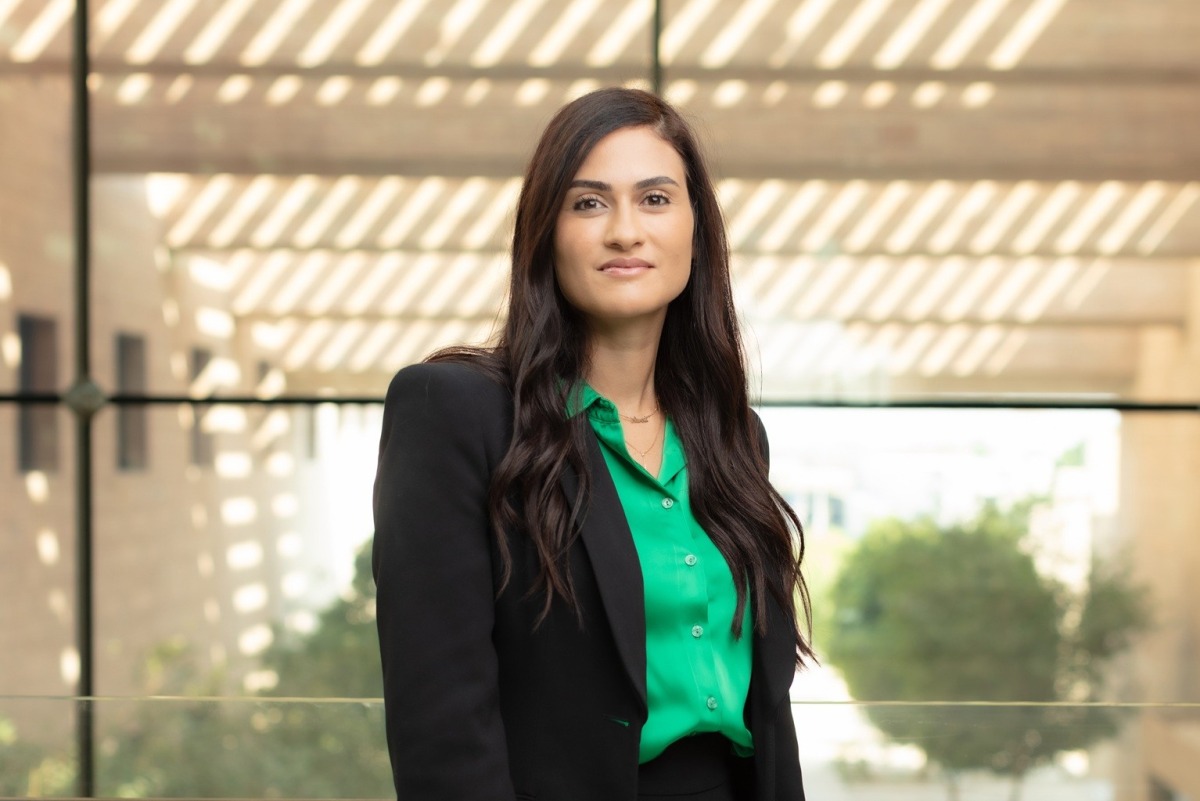
Dr. Layan El Hajj, associate teaching professor of mathematical sciences at Carnegie Mellon University in Qatar (CMU-Q)
Doha, Qatar: As the world marks the International Day of Women and Girls in Science on February 11, efforts to encourage more young women into STEM fields are gaining renewed attention. At Carnegie Mellon University in Qatar (CMU-Q), Dr. Layan El Hajj, associate teaching professor of mathematical sciences is building a vibrant mathematics community that brings together high school students, university undergraduates, educators and researchers from across the country.
“I envision a future where mathematics in Qatar is celebrated as a source of creativity and opportunity,” Dr. El Hajj said.
“One where students encounter mathematics not only in classrooms, but through vibrant communities, public events, and collaborative initiatives that highlight its creativity and real-world impact.”
Her work is rooted in the belief that mathematics is foundational not only to science and technology, but to critical thinking and problem-solving across all fields. “What inspired me was a belief in the central role mathematics plays in shaping the future,” she said. “In Qatar, there is remarkable mathematical talent across institutions, and I was inspired by the possibility of bringing this talent together into a shared, visible, and supportive community.”
One of the most visible initiatives led by Dr. El Hajj is the Integration Bee, an internationally recognised calculus competition originally founded at the Massachusetts Institute of Technology (MIT). She introduced the competition to Qatar for undergraduate students and has since expanded it to include high school participants.
“The Integration Bee is a fast-paced international mathematics competition in which students solve integrals live, testing both speed and problem-solving skills,” she said. Hosting the event locally, she said, connects students in Qatar to a global mathematical tradition while reframing how advanced mathematics is perceived.
“By presenting advanced mathematics in an engaging and high-energy format, the Integration Bee helps students build confidence and enthusiasm for the subject,” Dr. El Hajj said. “Participants gain confidence as they tackle challenging problems in a supportive, public setting, while the competitive yet collaborative atmosphere fosters a strong sense of community.”
Beyond competitions, Dr. El Hajj is also helping to strengthen Qatar’s research ecosystem through her role as a lead organiser of the newly established Qatar Math Research Forum (QMRF). The forum was created through collaboration among universities in Education City to provide a shared platform for researchers, educators and students. Through seminars, workshops and networking events, the forum supports early-career researchers and promotes interdisciplinary dialogue, helping to raise the visibility of mathematical research in the region.
A central focus of Dr. El Hajj’s outreach work is addressing the barriers girls often face in pursuing mathematics. According to her, these challenges frequently stem from limited encouragement, representation and peer support.
“One of the main challenges girls face in mathematics is lack of encouragement, representation, and supportive peer networks,” she said. “These initiatives address this by building inclusive communities that bring students, educators, and mentors together.”
She added that visible role models and mentorship play a crucial role in helping girls see mathematics as a field where they belong and can thrive.
The response from students across Qatar has been overwhelmingly positive. Dr. El Hajj noted strong participation from both universities and high schools, particularly among students studying advanced topics. “Their enthusiasm and the level of talent on display were truly inspiring,” she said.
Interest in the Qatar Math Research Forum is also growing steadily. “More and more students are stepping outside their comfort zones and attending despite the challenging nature of the topics,” she said. “Their willingness to engage with advanced ideas, ask questions, and learn highlights the depth of curiosity and potential within Qatar’s student community.”
Looking ahead, Dr. El Hajj believes sustained investment in outreach and community-driven initiatives will be key to nurturing mathematical talent and encouraging lifelong engagement with the subject.