Frankfurt: European Central Bank policy makers considered the question of whether interest rates could rise before their bond-buying programme comes to an end, according to people familiar with the matter.
Governing Council members meeting on March 9 exchanged views on ways of communicating and sequencing an exit from unconventional stimulus, euro-area central-bank officials said.
The council didn’t discuss any specific scenario or time-line and hasn’t made any formal decisions on a strategy. An ECB spokesman declined to comment.
The euro rose on the report. Euro-area bonds tumbled, pushing up yields, and European stocks erased earlier gains.
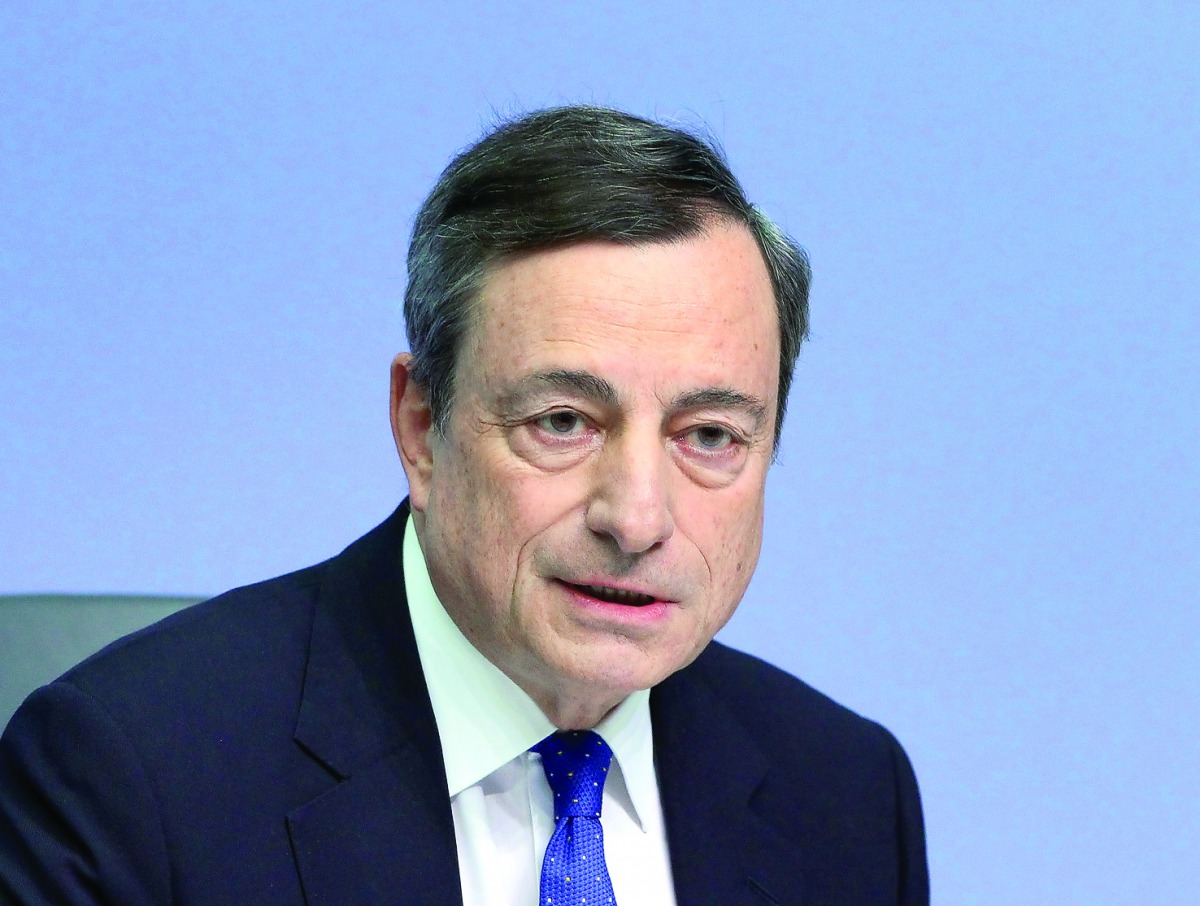
After years of extraordinary stimulus to combat economic distress and the threat of deflation, a steadily improving recovery is finally giving monetary officials room to consider normalising policy. If raising rates before the end of QE were to be considered a realistic path, that would mark a departure from the guidance on timing of rate hikes that ECB President Mario Draghi (pictured) has given since March 2016, when he lowered the deposit rate to minus 0.4 percent:
“The Governing Council expects the key ECB interest rates to remain at present or lower levels for an extended period of time, and well past the horizon of our net asset purchases.”
Asked about suggestions that the ECB may walk back from its commitment, Draghi declined explicitly to refute them.
“I don’t want to speculate,” he said. “The forward guidance now is this one and based on current information, that’s what it is.”
Part of the ECB’s reasoning for exploring the possibility of raising rates before finishing its €2.28trn ($2.4 trillion) bond-buying program lies with the structure of the euro-area economy, the people said.
The negative deposit rate is squeezing banks’ profit margins because they can’t generally pass the cost -- charged by the ECB on overnight funds kept at the central bank -- back to their customers. That potentially holds back lending to companies and households.
Some market indicators point to the possibility of a rate hike in 2018 and BNP Paribas has predicted the deposit rate will be increased this September. QE is currently intended to run until at least the end of this year, and most economists surveyed by Bloomberg before the last policy decision said they expect tapering to last until at least mid-2018.
Policy makers’ current guidance reflects the strategy adopted by the Federal Reserve. The US central bank ended QE in October 2014 and raised interest rates for the first time in December 2015.
While that approach might be appropriate in an economy financed primarily by capital markets, a different tactic may be more suitable for a region such as the 19-nation euro area, where companies rely more on bank lending.