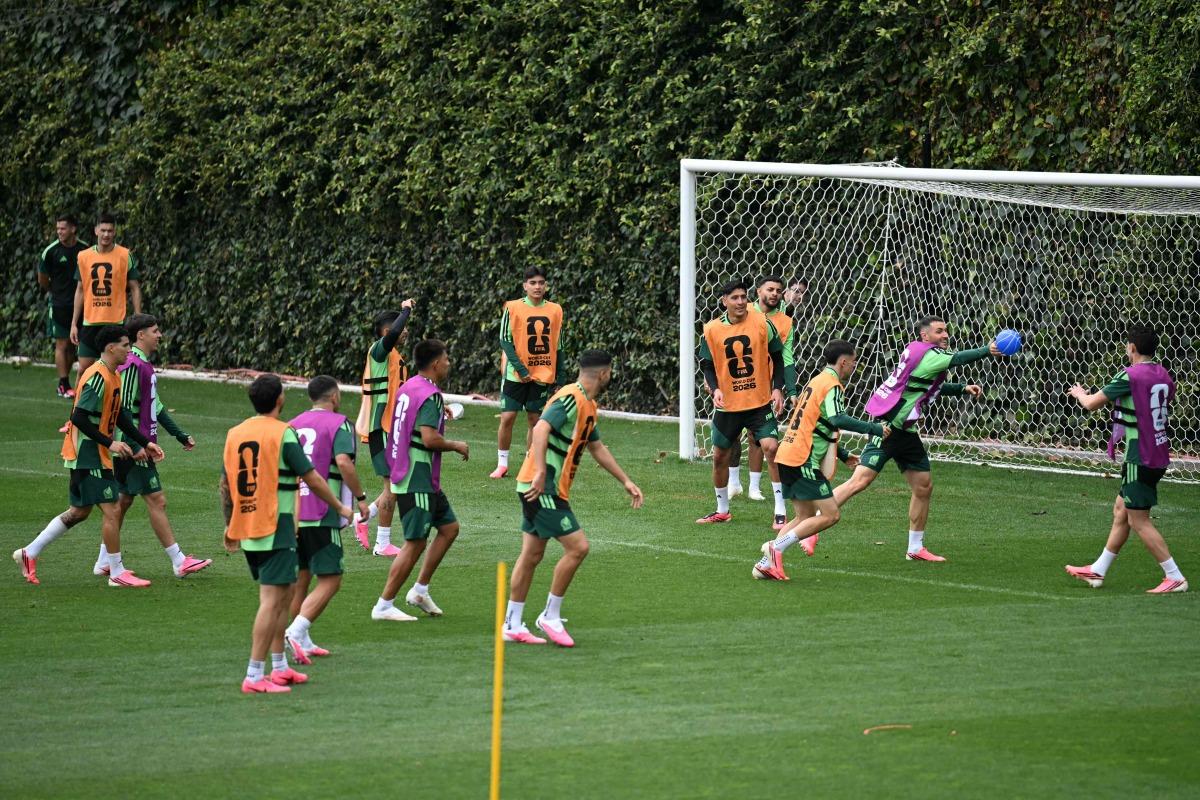
Mexico’s players take part in a training session on the eve of the match against South Africa. (AFP)
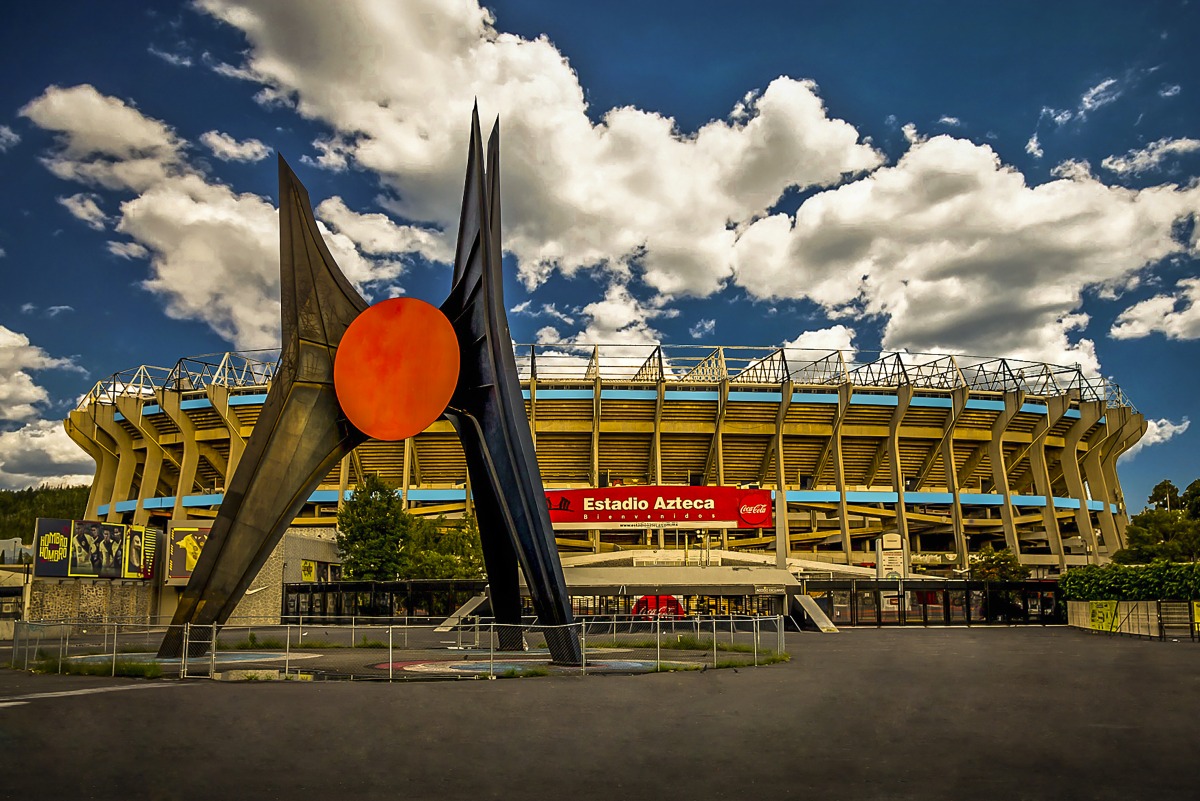
Doha, Qatar: When co-hosts Mexico take on South Africa at the Estadio Azteca tonight (10pm Qatar time), the FIFA World Cup will enter a new era.
The 23rd edition of football’s showpiece tournament is the first to feature 48 teams, expanding both the scale and reach of the competition.
Fittingly, the opening match will be staged at the historic Estadio Azteca in Mexico City, one of the sport’s most iconic venues and the first stadium to host World Cup matches across three different editions of the tournament.
Seven hours later, attention will shift to Guadalajara, where Republic of Korea face Czechia in the second match of the finals. While the fixture falls on Friday in Qatar, it will still be June 11 in North America, extending the opening day of a tournament spread across the United States, Mexico and Canada.
The World Cup will feature 104 matches across 16 cities, making it the biggest and longest edition in the competition’s history. The final will take place at MetLife Stadium in East Rutherford, New Jersey on July 19.
The tournament’s new format introduces 12 groups of four teams followed by a Round of 32, increasing the number of knockout qualifiers.
More teams, longer travel routes and varying conditions across North America are expected to test preparation and recovery as much as quality on the pitch.
For Argentina, the football showpiece begins a title defence after their 2022 triumph in Qatar, when Lionel Messi led them to a third world crown. History, however, suggests a difficult path ahead, with no side successfully defending the World Cup since Brazil in 1962.
Spain, France, England and Brazil remain among the leading contenders based on squad depth, recent form and consistency at major tournaments, with Argentina still firmly in the mix.
Spain arrive as European champions after Euro 2024, France continue to rely on a deep and balanced squad led by Kylian Mbappe, England carry one of their strongest modern generations, while Brazil again bring attacking depth and unpredictability.
World Cup expansion alters qualification and stakes
The 2026 edition will be defined as much by its structure as its participants. The expansion to 48 teams has widened global representation and created new qualification pathways across all confederations.
Jordan, Uzbekistan, Cape Verde and Curacao will make their World Cup debuts, reflecting the growing competitiveness of international football beyond traditional power bases. At the same time, regional participation has reached new levels. The Arab world will field a record eight teams including Qatar, Saudi Arabia, Morocco, Tunisia, Algeria, Egypt, Iraq and Jordan while Africa (10 nations) and Asia (9) also see their highest-ever representation.
Morocco, following their historic semi-final run in 2022, remain among Africa’s strongest sides, while Egypt depend heavily on Mohamed Salah and Saudi Arabia continue to build around Salem Al-Dawsari. Qatar return with renewed ambition after their 2022 debut, while Iraq and Jordan arrive as emerging challengers on the global stage.
Qatar aim for progress under Lopetegui
For two-time Asian champions Qatar, the focus is on improvement and competitiveness after three defeats at their home World Cup in 2022. Head coach Julen Lopetegui has maintained continuity while gradually introducing younger players into a settled structure. The squad carries an average age of around 29, blending experience with selective fresh options.
Qatar concluded their final preparations with a 0-0 draw against El Salvador in Los Angeles after a narrow 1-0 defeat to Ireland in Dublin, using both matches as final tactical and physical tests.
“It was a tough game. The conditions were very humid, but that’s what we will face,” Lopetegui said after the El Salvador match.
Qatar open their Group B campaign against Switzerland on June 13, followed by a game against Canada on June 18, which kicks off in the early hours of June 19, Qatar time. Al Annabi will wrap up their group challenge against Bosnia and Herzegovina on June 24.
Lopetegui has described Switzerland as one of the strongest sides in the competition.
“We must be ready to compete at the highest level. That is our objective,” he said.
Superstars lead global build-up
Despite structural changes, the tournament remains anchored by elite players shaping global expectations.
Mbappe continues to lead France’s ambitions, while Spain’s technical evolution, powered by Lamine Yamal, adds a new dimension to their attack. England will again look to Harry Kane for goals, while Brazil’s attacking options ensure constant threat.
Norway’s Erling Haaland remains one of the most powerful attacking forces in world football, adding another focal point to the global spotlight, while Argentina look to extend their winning cycle beyond Messi with a settled core built on recent success.
Messi, Cristiano Ronaldo and Mexico goalkeeper Guillermo Ochoa could all make a sixth World Cup appearance, extending records that underline their remarkable longevity on football’s biggest stage.
The expanded structure will also redefine how teams approach the tournament. With more qualification spots and a Round of 32 replacing the traditional immediate knockout entry, group-stage dynamics are expected to be more unpredictable.
Top sides, however, remain under pressure from the outset, as any lapse in rhythm can quickly affect momentum in a format that rewards consistency across a longer schedule. Over the next 39 days, established powers and emerging nations alike will compete in a World Cup designed to broaden football’s global stage while preserving its ultimate prize.