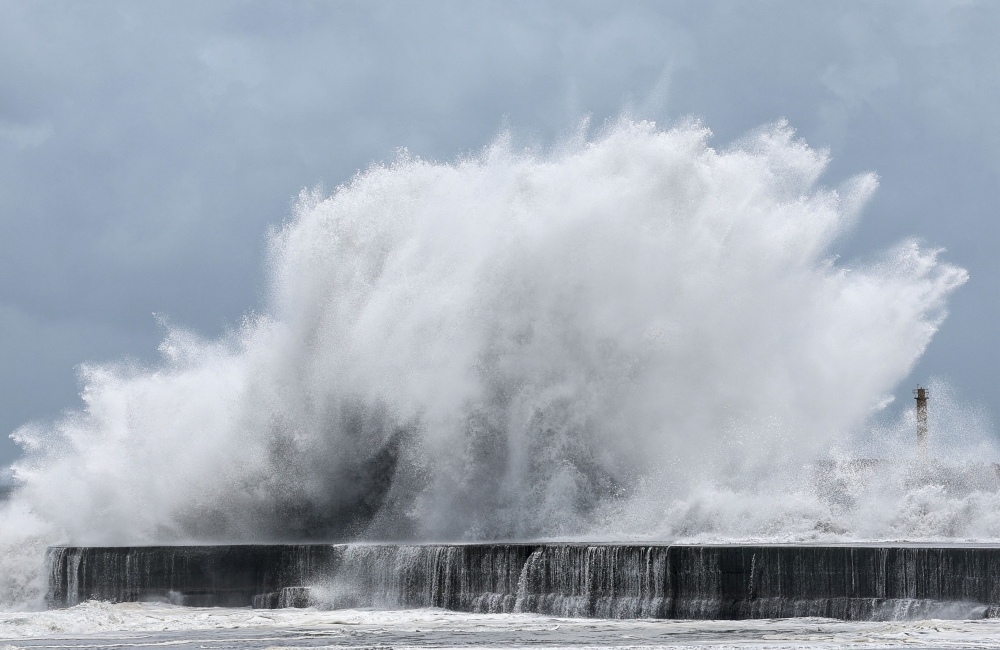
Strong waves break along the coast in Yilan on July 10, 2026, as Typhoon Bavi moves toward Northeastern Taiwan. (Photo by I-Hwa Cheng / AFP)
Keelung, Taiwan: More than 14,000 people in Taiwan have fled their homes, and many shops remain closed, as a typhoon pounding Japan's remote southwestern islands swept towards China on Saturday.
Typhoon Bavi knocked out power to thousands in Okinawa and lashed northern Taiwan as it bore down on storm-battered China, where it is expected to make landfall early Sunday.
Streets were largely deserted in Taiwan's port city of Keelung, which is expected to be one of the hardest hit areas on the island, as Bavi whipped up strong winds and dumped heavy rain.
"Everyone is afraid of the severe weather and staying indoors, but I only came out because I have orders," a breakfast shop owner surnamed Tsai told AFP.
"Some people are on duty and wouldn't have anything to eat so I still need to deliver food to them," the 50-year-old said.
"If the wind and rain start picking up in a bit, I'll be heading home early."
After hitting Guam and the Northern Marianas on Monday as a super typhoon, Bavi was downgraded to a typhoon as it moved across the Pacific Ocean.
Bavi's maximum sustained wind speeds slowed to 144 kilometres (89 miles) per hour, with gusts of around 180 kilometres per hour, on Saturday, Taiwan's Central Weather Administration (CWA) said, as the storm "weakened in intensity".
The CWA warned of "extremely torrential rain" across northern Taiwan and "dangerous waves" of up to 10 metres (33 feet) high along the coast as Bavi neared the island's north.
More than 27,000 households are without power.
"The typhoon's impact will be more significant during the daytime today," CWA forecaster Jason Cheng told AFP.
"The period of greatest impact is expected around noon through the afternoon."
Bavi had been on track on Friday to be the largest typhoon to hit Taiwan in more than 30 years, but since then its strong-wind radius has shrunk to 350 kilometres, Cheng said.
Some Taiwanese expressed frustration at the government's typhoon warnings, which caused most businesses to shut their doors on Friday and people to shelter indoors.
"The government reports make it sound absolutely terrifying, panicking everyone, right?" said another breakfast shop owner in Keelung surnamed Li, upset at the loss of business from the storm.
"Look at how it has caused people to scramble for groceries and clear out the shelves. Honestly, there hasn't even been much wind or rain these past two days."