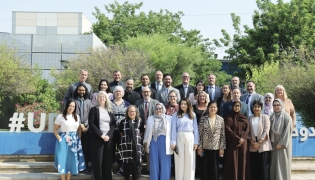
DOHA: Doha International Family Institute (DIFI), a member of Qatar Foundation, in collaboration with Social and Economic Survey Research Institute (SESRI), a social scientific survey research initiative of Qatar University, will organise the inaugural Annual Conference on Family Research and Policy at Qatar National Convention Centre on May 3 and 4.
It will focus on ‘The Arab Family in an Age of Transition: Challenges and Resilience’.
The main objectives of the forum are to focus on research, theory and practices to advance DIFI’s knowledge of the Arab family.
DIFI is keen to highlight the role of the family as a defining force in shaping society, focusing on regional trends, areas of strength and resilience and challenges affecting families in Arab countries.
“The conference seeks to promote research on the family in the Arab world and generate evidence to help develop policies to promote the wellbeing of families,” said Noor Almaiki Al Jehani, Executive Director, DIFI.
The conference will also examine the role of policy in supporting the family and consider global issues, which impact the Arab family either positively or negatively from a multidisciplinary perspective.
It will engage with scholars and practitioners in discussions that analyse mutually beneficial practices within the context of family policy.
The DIFI organising committee has invited young and senior researchers to submit abstracts through a Call For Papers associated with the event.
So far, more than 400 abstracts have been developed and submitted by researchers from more than 35 countries, with many from the Arab region, including, Bahrain, the UAE, Saudi Arabia, Kuwait, Iraq, Yemen, Palestine, Syria and Jordan.
The abstracts are diverse in content and encompass the main themes of the conference, including political, economic, and cultural challenges facing the Arab family in different regions of the Arab world.
These include marriage and divorce in the Arab world; responses to challenges in terms of marriage practices (such as Misyar, ‘Urfi, Mut’aa, mixed, marriage of minors, and living together-apart marriages); causes and consequences of separation and divorce, and the role of state policies in family formation and stability, together with the effect of the absence of such policies.
The Peninsula