DOHA: Qatar’s investment spending reached 30.4 percent of GDP in the second quarter of 2014 (Q2, 14), compared with 27.9 percent a year earlier, QNB’s ‘monthly monitor’ noted citing the Ministry of Development Planning and Statistics’ (MDPS) latest data.
The growth is driven by the implementation of major projects in preparation for the FIFA 2022 World Cup. As a result, non-hydrocarbon real GDP growth continued to expand at a double digit rate (11.3 percent) in Q2. The share of private consumption to GDP rose to 14.5 percent in Q2 (13.9 percent a year earlier). The share of private consumption remains low by international standards, but is expected to rise over the medium term.
Going forward, large scale infrastructure spending and population growth is expected to drive growth in construction, manufacturing and transportation, while hydrocarbon production is expected to recover.
The QNB analysts noted declining oil prices dented investor sentiment in October. Qatar had done best, shedding only 1.7 percent. Overall, all the regional markets ended in negative territory as investors preferred to book profits.
QNB forecasts overall CPI inflation to accelerate further in the remaining months of 2014 and average 3.4 percent in 2014 and 3.5 percent in 2015.
Domestic inflation will mainly be driven by rising rents in response to the growing population. Lower international food prices are likely to keep foreign inflation low, thus partly offsetting the rise in domestic inflation. However, there is a risk that large investment spending and the growing population could lead to supply bottlenecks owing to limited domestic capacity. This could push up domestic inflation.
The report noted Qatari oil prices fell in September 2014 owing to weak global demand.
The stagnant eurozone economy, the large Q2 contraction in Japan and the slowdown in emerging markets are all contributing to the weakness in hydrocarbon demand and putting downward pressure on international oil prices.
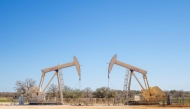
Qatar’s crude oil production fell in September to 690,000 barrels per day, but redevelopment plans should stabilise output.
In recent years, Qatar Petroleum (QP) has implemented a redevelopment programme to steady production at its oil fields. This heavy investment in existing oil fields such as Bul Hanine, Al Shaheen and Dukhan, should lead to a stabilisation of oil production around 700,0000 barrels per day.
Qatar’s international reserves increased $0.3bn to reach an all-time high of $43.8bn at end-September 2014. This compares to a level of $39.3bn at end-September 2013. The large increase reflects the strong current account surplus Qatar is enjoying. The latest data show that the import cover stood at 8.2 months at end-September 2014, well above the IMF-recommended level of 3 months for pegged exchange rates.
Qatar’s international reserves have been steadily rising over the years on large current account surpluses. Going forward, QNB Group expects international reserves to rise further in 2014 and 2015 on continued high current account surpluses.
The Peninsula