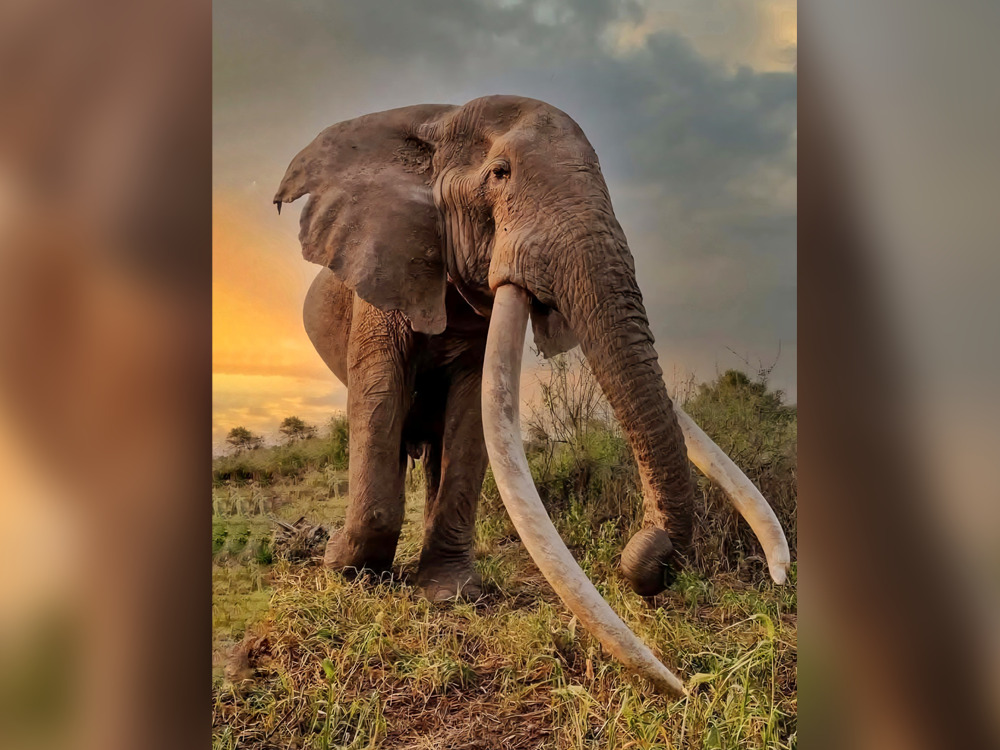
Image taken from Kenya Wildlife Service (KWS) official account on X.
Nairobi: The Kenya Wildlife Service (KWS), a state-owned wildlife management body, said on Tuesday that the preservation process for the iconic elephant known as Craig, which died early this month at the age of 54, has begun.
Renowned for his majestic tusks, each weighing about 45 kg, Craig inhabited Kenya's Amboseli National Park and was one of the few remaining super tuskers in Africa.
During his lifetime, Craig fathered many calves, ensuring the continuation of his genetic lineage across generations, and became a global ambassador for Amboseli National Park, embodying the success of sustained protection, monitoring and community partnership, the KWS said.
"In recognition of Craig's extraordinary ecological, scientific and cultural significance, KWS has initiated a professional taxidermy preservation process aimed at conserving his physical form for long-term educational, scientific and public exhibition purposes," the agency said in a statement issued in Nairobi, the Kenyan capital.
The agency added that the taxidermy process will involve meticulous preservation of Craig's skin and physical features to create a lifelike mount, enabling future generations to experience the iconic bull elephant and understand the importance of safeguarding Kenya's wildlife heritage.
Upon completion, Craig's taxidermy mount will be housed at a designated facility for public viewing, education, and conservation awareness, the KWS said.
Erustus Kanga, director general of the KWS, said that Craig's life exemplified the success of collective conservation efforts spanning decades, which have boosted elephant populations in Kenya.
"Through taxidermy preservation, we are ensuring that his legacy endures beyond his lifetime, offering future generations a tangible connection to Kenya's rich wildlife heritage," Kanga said.