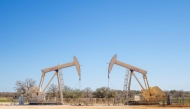
Qatar’s oil production picked up slightly to 615,000 barrels per day (b/d) in January, from 611000 b/d in December. Brent crude oil prices fell slightly by 2.0 percent month on month in January, reaching $55.7/b.
The fall in Brent likely reflects some investor concern on rising US oil production. Brent crude is expected to average $55/b in 2017, QNB’s monthly monitor noted yesterday.
Qatar’s quarterly GDP expanded to $38.6bn in Q3 2016 from $37.0bn in Q2, driven by higher investment and net exports. Investment as a share of GDP has stayed largely flat over consecutive quarters, while the shares of both government and private consumption fell as a percentage of GDP, to 22.9 percent and 25.2 percent, respectively.
Broad money supply (M2) contracted slightly by 0.8 percent year on year in January from a 4.4 percent year on year contraction in December. This was helped by a smaller than usual contraction in foreign currency deposits which fell by 10.8% year on year in January versus 18.2 percent the previous month.
Overnight interbank rates picked up to 1.40 percent in January from 1.21 percent in December; the 3- month interbank rate eased for a second month to 1.64 percent from 2.00 percent while the 1-year interbank rate picked up to 2.15 percent from 2.10 percent.
The QCB hiked its policy lending and deposit rates in December, in line with the US Fed rate hike; it also reduced the repo rate to 2.25 percent from 4.50 percent and lowered the tenor of the instrument from 14 to 7 days.
After bottoming out in September 2016, the real estate price index (REPI) picked up steadily, rising by 4.6 percent in the three months to December. However, on a year-to-year basis, the index has contracted by 4.5 percent in December. The REPI reflects the prices of land, residential and commercial transactions.
The country’s fiscal deficit narrowed sharply to QR5.1bn (3.6 percent of GDP) in Q3 2016 from QR15.2bn (11.3 percent of GDP) in Q2. Revenue declined to QR31.4bn in Q3 from QR33.2bn in Q2, while expenditure fell to QR36.5bn from QR48.3bn. The 2017 budget announced by the government projects a reduction in the fiscal deficit to QR28.4bn in 2017 from a deficit of QR46.5bn in 2016.
Both exports and imports rose in January, keeping the trade balance steady at $3.0bn for a second month. Exports grew 5.3 percent month on month, to $5.6bn, while imports grew by 9.1 percent month on month. Japan was the largest export market, with a share of 21.8 percent of total exports, followed by South Korea at 17.3 percent; China and the US were the two largest countries of origin for imports.
International reserves picked up at the start of the year to $33.8bn from $D31.6bn in December. In terms of months of import cover, this recovered to 6.6 months from 6.1 months previously, well above the IMF recommended minimum of three months for a fixed-exchange rate regime.