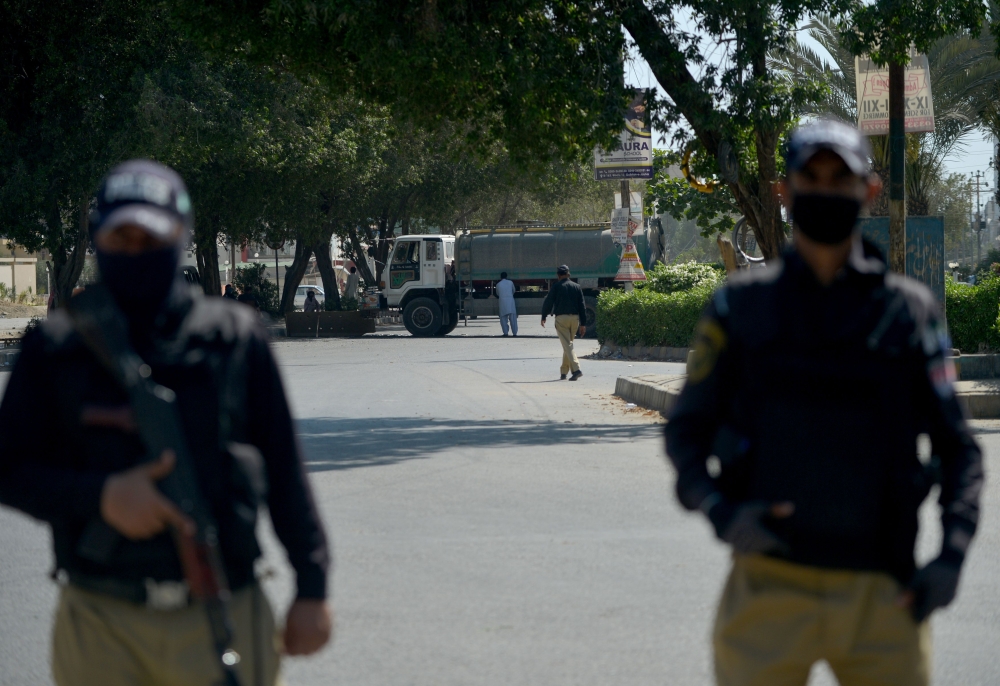
Policemen stand guard after cordoning an area during a government-imposed nationwide lockdown as a preventive measure against the COVID-19 coronavirus, in Karachi on April 12, 2020. / AFP / Rizwan TABASSUM
KARACHI, Pakistan: Pakistan on Monday announced it was extending an ongoing border closure for an additional two weeks amid a surge in novel coronavirus cases in the country.
An Interior Ministry statement said the decision to extend the closure with neighboring India, China, Afghanistan and Iran had been taken in line with the government's strategy to stem the spread COVID-19 cases in the country.
However, two main crossing points between Pakistan and Afghanistan will remain open three days a week only for cargo trucks.
On March 16, Pakistan had closed its borders with neighboring countries for two weeks, later extending this period until April 14. The latest extension brought the current end date to April 26.
Islamabad is currently also mulling whether to extend a countrywide lockdown by a week.
The lockdown has shut all educational institutions, shopping centers and markets, as well as government and private offices except emergency services. Railway, inter-city transport and domestic air operations also remain suspended.
The number of coronavirus cases has risen to 5,477 with 95 deaths in Pakistan. Some 1,095 patients have so far recovered, according to figures released by the country's Health Ministry.
Over 1.85 million COVID-19 cases have now been reported in 185 countries and regions since last December, with Europe and the U.S. being the worst-hit, according to data compiled by the U.S.-based Johns Hopkins University.
More than 115,000 people have died and almost 450,000 recovered around the world so far.