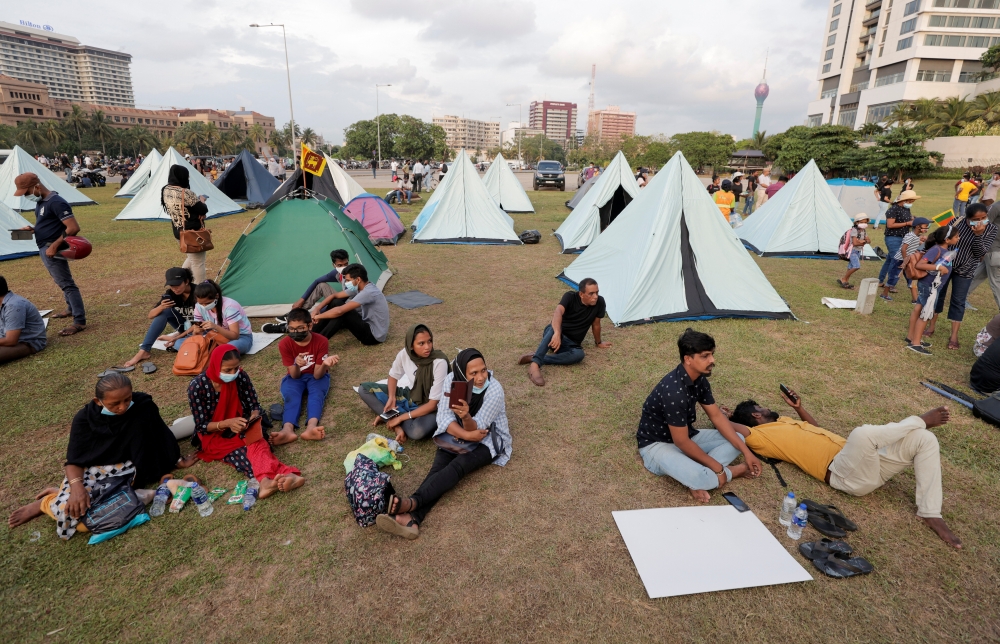
Demonstrators sit in a protest area, dubbed the Gota-Go village, near the Presidential Secretariat, in Colombo, Sri Lanka, April 11, 2022. Reuters/Dinuka Liyanawatte
Sri Lankan Prime Minister Mahinda Rajapaksa is ready to meet the protesters, who are holding rallies for the past five days and calling for the ouster of the government for its economic policies that have brought the county to the brink of a debt default.
"Understanding that this is a tough time for all of us, I invite them to meet & discuss any possible, plausible courses of action for the sake of #lka,” Rajapaksa said in a tweet.
Rajapaksa’s offer appears to be a more conciliatory after Sri Lanka warned of an unprecedented default and halted payments on foreign debt, a step taken to preserve its dwindling dollar stockpile for essential food and fuel imports.
In a televised speech Monday, Rajapaksa called on citizens to be patient as price surges and shortages worsen, while touting his family’s role in ending a decades-long civil war back in 2009.
"Every second you protest on the road we are losing dollars,” he said in the address to the nation. "Though all parties represented in parliament were urged to come forward to resolve the current crisis, no one has come forward. As a government, we will take responsibility.”
Sri Lanka’s cabinet resigned en masse earlier this month and opposition parties have declined to form an all-party government until parliament abolishes some of wide-ranging executive powers of President Gotabaya Rajapaksa, the younger brother of Mahinda Rajapaksa.
The president has said he won’t resign under any circumstances. Officials in the ruling Sri Lanka Podujana Peramuna party say they still command a majority in parliament, even after defections put that into doubt. That will soon be tested when parliament meets next week and the lawmakers who defected have declined to meet with the Rajapaksa family on Tuesday to discuss an interim government.
The main opposition Samagi Jana Balawegaya party is collecting signatures from lawmakers to initiate impeachment proceedings against the president, which can be a long process requiring support from two-thirds of parliament. Another petition for a no-confidence vote against the government is also underway.