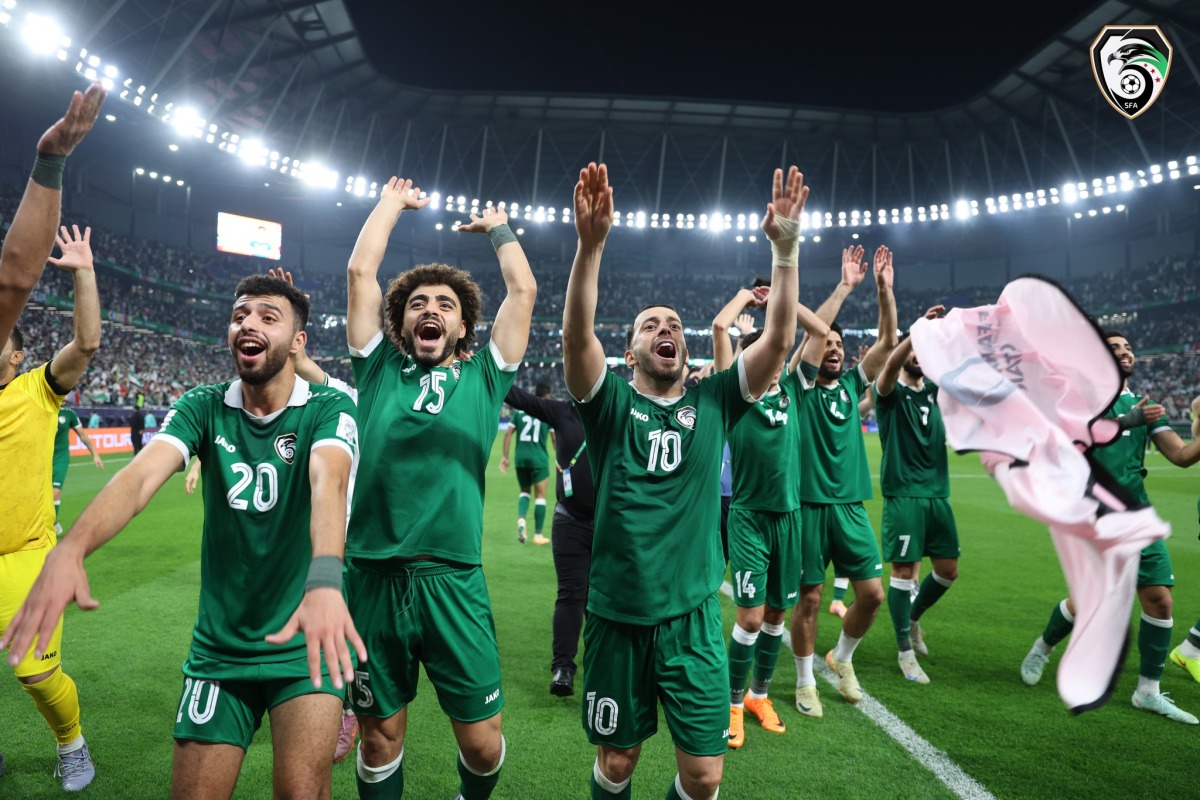
Rather than viewing their exit as a disappointing end, Syria are looking at things as the start of something really positive.
Doha: Ahead of the FIFA Arab Cup 2025, Syria were ranked below many nations that they ended up outlasting. In their group, they advanced to the knockouts ahead of FIFA World Cup 2026-bound pair Qatar and Tunisia.
Elsewhere, they lasted longer than an Egyptian side also heading to North America next year. Oman and Bahrain, fellow AFC nations that were ahead of them in the FIFA World Ranking, also exited before they did.
In the end, however, a tight and tense tussle with Morocco - the highest ranked of all Arab nations - was where Syria’s dream run was finally halted as they lost 1-0 in Al Rayyan. Rather than viewing their exit as a disappointing end, Syria are looking at things as the start of something really positive.
On a night where he made outstanding save after outstanding save, goalkeeper Elias Hadaya was in tears speaking to FIFA post-match, reflecting on a tournament where he felt his nation still had more to give.
“It’s really, really difficult right now. The team were great, we were fighting for each other and we wanted so much more and the people of Syria deserve so much more. But football is brutal, a small slip and it’s a goal,” he said. “Of course, we can reflect that we had a great tournament but we wanted more. We know though that this is a new starting point for Syria and that we will build on this. Today we are sad but tomorrow is a new day and a day where we keep building.
“For us, if we keep working and following the instructions of the coaching staff then we don’t see that we have any limits to what we can achieve.”
Syria won widespread praise for their calm approach in possession and tactically disciplined and organised efforts without the ball and much of that was down to the work of coach Jose Lana.
The highly-regarded, former Spain youth coach was quick to praise the team’s performance in Qatar and is adamant that this is just the start of the rise of Syrian football.
“I think the team is improving, it’s definitely improving. Maybe we weren’t able to have the ball a lot in the last matches. In the play-offs we were amazing with the ball, I think as well as in the previous matches before this tournament,” he said.
“Our objective today was to be brave with the ball and try to build up the game with short passes. We were able to do it many times, but we didn’t find the next option after overcoming the first lines of pressure. Every match that we play, our objective is to try to be a better team when we don’t have the ball and when we have the ball.
“I think we are on the right path and I think the future is good for us, we have a lot of skilled players here, young players. They are 19, 20, 21 or 22. That’s a really good age to play football. They have to continue working hard with the clubs. If they do, I think with the potential that they have, our future will be good.”
One of those young talents is 22-year-old central defender Ahmad Faqa, who was an imposing presence throughout for his nation. Alongside fellow centre-back Abdulrazzak Al Mohammad and full-backs Khaled Kourdoghli and Zakaria Hannan, Faqa was a calm and composed figure. “The squad has total trust and belief in the coach and 100 per cent we feel that we are building something really special here in Syria,” he said.